Blog

  • TFTD Dec. 15-21: Surprised by Light.

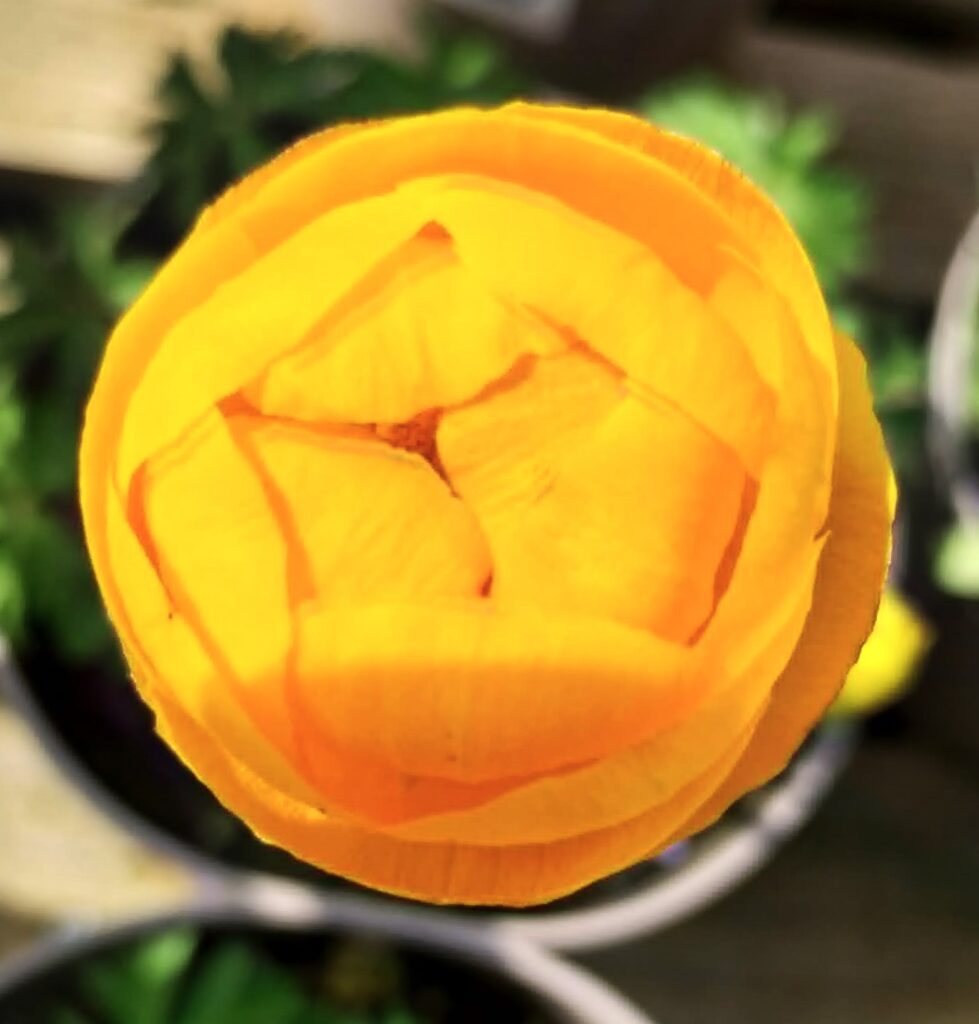
    Monday: An accidental photograph, taken in a brief rain shower, against a January sun, in the botanic gardens in St Andrews. Given the importance of light in the book of Isaiah, it isn’t hard to see glimpses of Advent, and the hope that comes toward us as entire surprise, light with shafts of hope coming from beyond our own making and doing. This is what happens when God in mercy and love intrudes into our lives. Across the path we are walking, falls the light of God’s glory, and the promise of God’s presence wherever we happen to be.

    “Arise, shine, for your light has come, and the glory of the Lord rises upon you.” (Isaiah 60.1)

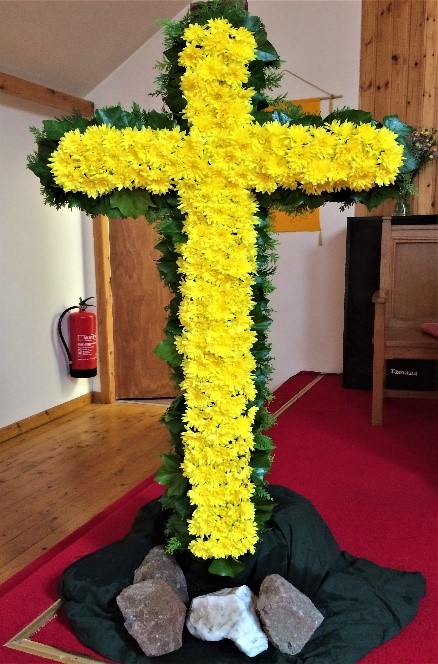
    Tuesday: About a mile from our home sits the Episcopal Community Church. The walk takes you towards the old village of Skene. On a particularly dreich day I was walking past in the mid-afternoon. On such days darkness is falling just after 3.00 p.m. From a particular angle the highlighted cross stands in the foreground, behind it a huge pylon. Both images are about power. Advent is a time when those who walk in the gloom, discover the light that shines on them, and around them. This photo takes us to the originating centre of the Advent hope, which is the redemptive purposes of God’s love. “Inscribed upon the cross we see, in shining letters ‘God is love’”

    Wednesday: One of the features of living in Aberdeenshire is what we call big skies. The landscape and the light seem to provide a huge canvas, and sunrise and sunset can be quite spectacular. This is from the edge of the forest where we walk regularly. That’s the edge of the Highlands on the horizon. Advent is a time for enlarged thinking, for far horizons, lifting up our heads because redemption draws near and God is greater than our fears. “God is light, and in him there is no darkness at all.”

    Thursday – During Advent a few years ago friends were feeling quite low, and we arranged to go out for Afternoon Tea. They had a token for an upmarket hotel so off we went. In a quiet room, lit and warmed by a fire, we talked and shared good food and at times shared silence. Yes, Advent is a time of anticipation, forward looking, expectation. It can also be a time to reflect on the road we’ve travelled so far, to remember when we walked in difficult places, to be grateful we made it to where we now are. And so in Advent we also pray, “Let the light of your face shine upon us, O Lord.” (Psalm 4.6)

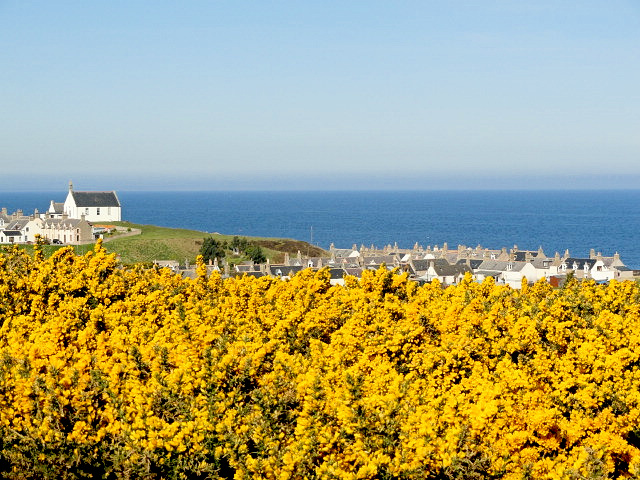
    Friday: Dawn on the Moray coast. The sun has not quite risen, but from the experience of every other day of our lives, we know it’s only a matter of time. And in the surrounding darkness of a world where there is much to cause anxiety, Advent is the hope-bringer, the promise that the sun will rise – it’s only a matter of God’s time. Isaiah knew perfectly well that darkness is real and so is its threatened triumph. But he also knew that light is the greater reality: “The Lord will be your everlasting light!” “Hail the heaven-born Prince of Peace! Hail the Sun of Righteousness!”

    Saturday – This amazing sky developed at dusk on Cullen beach. It seems to combine light and shadow. Though not often included now in Advent preaching and hymns, the second coming, or the return of Christ, is a traditional theme too easily overlooked. Charles Wesley gave us these words to sing to help us stay awake to the promised coming of Jesus, the Second Advent:

    Lo! He comes with clouds descending,
    Once for favoured sinners slain!
    Thousand, thousand saints attending,
    Swell the triumph of his train.
    Alleluia! Alleluia! Alleluia!  God appears on earth to reign.

    Sunday: I love this building! It is the Duncan Rice Library, at the University of Aberdeen. Why show its photo as an image related to Advent?

    It’s a place full of books; it’s a place where people research, learn, read, write. It’s a place where the pursuit of knowledge, the love of truth and the acquiring of wisdom are thought to be absolutely worthwhile.

    At Advent we celebrate the One who is the very Word of God, the eternal Wisdom of God, “Christ, in whom are hidden all the treasures of knowledge and wisdom.”

     So in the relentless canned music of the season, in the frantic efforts to fill our time and our minds with whatever distracts from the realities we all live with, there is the call to stop, for a moment, just stop – and pray for the Spirit of wisdom, to help us see beyond the moment. Advent encourages such pauses, when knowing how Advent ends, we quietly say to each other, “O come let us adore him, Christ the Lord!”

    Advent Prayer

    Gracious Father,

    by whose tender compassion

    the light of Christ has dawned upon us:

    open our hearts,

    so that, joyfully receiving Christ,

    we may declare his glory to the ends of the earth.

    He lives and reigns with you and the Holy Spirit,

    one God forever and ever. Amen

  • Shopping for Bread and Reading the Bible.

    Earlier today I was reflecting on what happened to my first Bible. In 1967 when I first committed my life to Jesus and needed a bible of my own, I used the King James Version (known then as the Authorised Version). It was a chunky black imitation leather edition with a zip, red edged pages, and it fell to bits in a few years. I bought it in Pickering and Inglis in Bothwell Street, Glasgow. I loved that shop until it was absorbed into other companies (Wesley Owen).

    Alongside it I had one of the first copies of the Good News New Testament or Today’s English Version. I still have the original hardback copy. By the early 1970s at University and then College, I had changed to the Revised Standard Version (RSV) which I used until the mid 1980s.

    I never had a New English Bible which was deemed in more conservative Christian circles to be a ‘liberal’ translation. Our College Principal R. E. O. White repeatedly insisted the primary criterion for choosing a Bible was its accuracy and faithfulness to the original language text. Adjectives such as liberal or evangelical had no place in the work of faithful translation – accuracy, style, readability and liturgical usefulness were more reliable criteria, and in that order. Well, REO was a traditional nonconformist!

    In the 1980s the New International Version (NIV) became the preferred bible in the circles where I moved and ministered, and I started to use it as my default translation when preaching. It has gone through several revisions to remove, wherever possible, gender exclusive language, and to edit the whole in the interests of ongoing improvement in translation as contemporary usages change.

    The New Revised Standard Version from the 90s is now the most widely used English translation in academic contexts in the UK, and along with a couple of others, it sits on my desk. It too has since been revised – again. In the study I have always used multiple translations for comparison, including each of these mentioned.

    For my personal reading I happen to value the Revised English Bible (REB) for its accuracy (so far as I can judge), its readability and style, and a general sense that the biblical text is rendered in language that is contemporary while careful to avoid transient colloquialisms. On this I am in a barely visible minority, as the REB has never commanded major take-up in the market or the church.

    The market and the church. I guess why I think this is worth mentioning is because when I quote the Bible from memory it might actually be a hybrid version from close reading of different translations 🙂 So I do wonder and worry about the future health of biblical translation given the powerful persuaders of the market, and influential religious ideologies now seeking translations that reinforce already held prejudices. Then there’s the marketability of specialist niche Bibles, and the proliferation of study Bibles. These sometimes come with helpful notes for guidance. But they can also contain firmly laid rail-tracks of interpretive bias, intended for niche groups who might prefer a text that reinforces positions already held, and give support to prejudices perhaps too embedded in identity to tolerate questioning.

    But as Spurgeon is alleged to have said, the Bible is a lion. Let it out of its cage and it will defend itself. Mind you, he was speaking at a time when the King James Version was the unrivalled and near universally used English translation. The advent of the Revised Version in 1881 started a trickle of alternative translations that has since become a deluge.

    I guess that’s simply another example of a complex culture which presents us with too many, and seemingly endless consumer choices. Think of the long supermarket aisles dedicated to the varieties of bread. Any one of those loaves will deal with the hunger that prompts the petition, “Give us this day our daily bread.” And in good old fashioned children’s talk language, “And that’s a bit like the Bible.”

    With daily bread, “Take and eat.” And with any half-decent Bible, “Take and read.”

  • TFTD Dec 8-14 “Hark! The Glad Sound…”

    Monday

    Luke 4.18-19 “The Spirit of the Lord is upon me, because he has anointed me to proclaim good news to the poor. He has sent me to proclaim freedom for the prisoners and recovery of sight for the blind, to set the oppressed free, to proclaim the year of the Lord’s favour.”

    Jesus quoted Isaiah’s words in his first sermon. This might not seem like an Advent text, but it inspired one of our Advent hymns about the promised Saviour. Good news lies at the living centre of Christmas – it’s Luke who records the angels’ song about “Good tidings of great joy.”  Philip Doddridge, the author of “Hark the glad sound! The Saviour comes” helps us imagine what the good news would look like in practice, and to recognise the grace of the One who was God’s good news in person.

    Tuesday

    Hark the glad sound! The Saviour comes, the Saviour promised long;

    Let every heart prepare a throne, and every voice a song.

    When Paul told the Corinthians that in Jesus all God’s promises are Yes, he too was echoing the good news of Advent. The long wait for the coming of God in Christ is over, and Advent is our annual celebration that God keeps His promises. And if you ever wonder what you’re supposed to do with these four weeks leading to Christmas day, and how to make Advent something practical, then Doddridge has some good spiritual advice – “Let every heart prepare a throne and every voice a song.”

    Wednesday

    On Him the Spirit largely pour’d exerts its sacred Fire;

    Wisdom and Might and Zeal and Love His holy breast inspire.

    This verse is usually left out, which is a shame because it’s “a fine description of Christ the inspired preacher”. The Spirit came upon Jesus at his baptism, strengthened him through the long forty days in the wilderness, and now is the guiding energy of his words and work. This carol has nothing to say about the nativity scene and the vulnerability of the Christ child. What the child will become, as Saviour and Immanuel, and what that means for all of humanity, that’s the focus. In this Advent child, is revealed the wisdom, power and zealous love of God.

    Thursday

    He comes the prisoner to release, in Satan’s bondage held;

    The gates of brass before him burst, the iron fetters yield.

    Jesus’ first sermon from that Isaiah text comes after the defeat of Satan’s strategies in the wilderness. Satan’s bondage is strong, but Jesus loving obedience to God and God’s redemptive purpose is stronger. In his death and resurrection “death is dead, love has won, Christ has conquered” – and that Easter truth is loudly foreshadowed in Advent. “You shall call his name Jesus because he will save his people from their sins.” Because unto us a child is born, whose name is Jesus, we hear the sounds of freedom: “The gates of brass before him burst, the iron fetters yield.”

    Friday

    He comes from thickest films of vice to clear the mental ray,

    And on the eyeballs of the blind to pour celestial day.

    When Jesus claims that he is the fulfilment of Isaiah’s promise that the Christ would proclaim and bestow recovery of sight to the blind, he is on dangerous ground. This was in Nazareth. Most people knew him as a local son of a carpenter. But the truth is, Jesus has come as the light of the world, the One who dispels darkness, and reveals in his person the grace and truth and glory of God. “The true light, that gives life to all, was coming into the world.” This too is Advent – our eyes opened so that we too can say, “We have beheld his glory, full of grace and truth.”

    Saturday

    He comes the broken hearts to bind, the bleeding soul to cure,

    And with the treasures of his grace to enrich the humble poor.

    Those words were written at a time when medical science was in its infancy, and human life much more exposed to risk from disease, poverty and danger. Such risks were a powerful metaphor of human helplessness in sin and suffering. Much has changed – but hearts are still broken, poverty both spiritual and material are no less miserable and demeaning. And our culture still haemorrhages hope and compassion. It may seem far too simplistic to say the answer is Jesus – but Advent dares us to say just that! And then to become an Advent people, ourselves proclaiming the good news, enacting the love of God in Christ, living as light in our time and place, being a community in which Jesus is self-evidently present and active.

    Sunday

    Our glad hosannas Prince of Peace, Thy welcome shall proclaim,

    And heaven’s eternal arches ring with thy beloved name.

    Prince of Peace is such a powerful title. “For Jesus himself is our peace, who has made the two groups one and has destroyed the barrier, the dividing wall of hostility…” Peace runs through the Advent season like the letters on Blackpool Rock! ”Peace on earth, and mercy mild, God and sinners reconciled!”  To be an Advent people is to be a community of reconciled reconcilers, forgiven forgivers, enlightened light-givers, outspoken apologists for shalom.

  • TFTD Dec 1-7 “Let there be light!”

    Monday   Genesis 1.3-4 “God said, “Let there be light,” and there was light. God saw that the light was good and he separated the light from the darkness.”

    God’s first command of creation was, “Let there be light!” Ever since, light has been the prerequisite of life. The separation of light from darkness, and day from night, has an important biological function. Darkness and light have deep significance for us as human beings. When we watch a sunset, see a sunrise, work in the garden, look towards the hills, or gaze at the stars – each time we are inwardly acknowledging our dependence on light. Hope, comfort, and trust are each pulled forward by dawn and the coming of light signalling a new day. Advent is our time to look for the light. We pray into the surrounding gloom and darkness of a broken world the first words of new creation, and hear God say, “Let there be light!”

    Tuesday   Isaiah 9v.2 “The people walking in darkness have seen a great light; on those living in the land of the shadow of death a light has dawned.”

    These words of Isaiah are pure Advent! People who have learned to live with despair are being called to hope. And the first sign of that hope is the promise of a child, whose names are the very reality they crave. The wisdom of a wonderful counsellor, the over-arching power of God no matter what the threat, the help and protection of an ever-present Father, and the promised reality of peace as the fullness of shalom. During Advent we are drawn into this same story of light in the darkness, of hope for a different future secure in and secured by God. Advent is when we learn to live ‘as if’ God’s promised reality is already here – because in the death and resurrection of God’s Son, Jesus, it is already here – a light has dawned that moves towards the fullness of day.

    Wednesday  John 1.5 “The light shines in the darkness and the darkness has not overcome it.”

    John means two things which are difficult to convey in one English word. The darkness has not overcome the light can also mean, “The darkness has not understood the light.” Both are true and John intended both to be understood. Darkness hasn’t a clue what light is about; and darkness however dense and determined cannot extinguish light. Referring to Jesus, John goes on to say, “The true light, that gives light to everyone, was coming into the world.” And that too is pure Advent! Christ, the Light of the World, shines with a brilliance that cannot be dulled by time or smothered by shadows, or snuffed out by the strategies of God’s Adversary. What we anticipate and celebrate in Advent is the victory of God in Christ over all that makes for darkness and loss, by a light that is “the light of life.”

    Thursday   Luke 2.8-10 “And there were shepherds living out in the fields nearby, keeping watch over their flocks at night. An angel of the Lord appeared to them, and the glory of the Lord shone around them, and they were terrified. But the angel said to them, “Do not be afraid. I bring you good news that will cause great joy for all the people.”

    The glory of the Lord shone around them like the lights of a thousand Glastonburys! The splendour and brilliance when heaven breaks through turned night into day; more than that, it was terrifying, beautiful and a complete overwhelming of human capacities to understand. Advent is good news, which has to be one of the most obvious theological understatements ever! “In Christ God was reconciling the world to himself” is how Paul described the consequences of that sleepless night for shepherds. Luke packs all that into the words of the angel: Today in the town of David a Saviour has been born to you; he is Christ the Lord.” That, in brief, is Advent.   

    Friday   John 8.12 “Jesus said, “I am the light of the world. Whoever follows me will never walk in darkness, but will have the light of life.”

    Isaiah’s promise is in the background –”The people who walked in darkness have seen a great light.” Once you see the light of the world you will never walk in darkness again. The light of life, the light of love, the light of mercy and grace, the light that banishes guilt, shame and fear – all, and each of these radiates outward from the Light of the World. Advent is a celebration of all this. In one of the finest theological carols in our hymn repertoire Wesley has us singing: “Light and life to all he brings, risen with healing in his wings.” The photo is of sunlight striking a rather dull carpet after being refracted through our church’s stained glass window. I took the photo during a communion service while bowed in prayer, capturing this visual image of what it means to gather round the table of the One whose light illumines and colours our life with love, hope and peace.

    Saturday Isaiah 60.1-2 “Arise, shine, for your light has come, and the glory of the Lord rises upon you. See, darkness covers the earth and thick darkness is over the peoples, but the Lord rises upon you and his glory appears over you.”

    So much of Isaiah’s prophecy is about motivation, persuading his listeners to open their eyes, rethink the possibilities, and face up to the darkness with a defiant trust that believes the light will come. Advent anticipates the coming of the light of the world. Isaiah tells us to “Get up, reflect the true light into the surrounding darkness.” St Francis’ prayer is a good clue about ways to do that.

    “Make me a channel of Your peace.

    Where there is hatred let me bring Your love.

    Where there is injury, Your pardon, Lord,

    And where there’s doubt, true faith in You.

    Make me a channel of Your peace.

    Where there’s despair in life, let me bring hope.

    Where there is darkness, only light,

    And where there’s sadness ever joy.”

    Sunday   2 Corinthians 4.6 “For God, who said, “Let light shine out of darkness” made his light shine in our hearts to give us the light of the knowledge of God’s glory displayed in the face of Christ.”

    Just read that again – slowly. The Creator God, who separated light from darkness, has pierced the darkness of our hearts with life –giving light, illuminating our heart, mind, conscience and will, so that we have come to know God’s full glory displayed on the face of Christ. Now looking on the Light of the World, the face of Jesus, we see the glory and splendour of God. “All the fullness of God was pleased to dwell in him.

    The essential and irreplaceable centre of Advent is the coming of Christ, the knowledge of God revealed to us in Christ, and the glory of God made visible, blazing in judgement and mercy toward us in the Eternal Word. “The Word became flesh and dwelt amongst us, and we have gazed on his glory, full of grace and truth.” In that deep and unfathomable truth lies the reality of Advent, and all our hope for ourselves and our world.

    “You are a chosen people, a royal priesthood, a holy nation, God’s special possession, that you may declare the praises of him who called you out of darkness into his wonderful light.” 1 Peter 2.9

  • TFTD Nov 24-30: “Rejoice in the Lord!”

    Monday

    Philippians 4.4 “Rejoice in the Lord always. I will say it again: Rejoice!”

    I don’t know about you, but all the hyped up excitement and happiness in the long conveyor belt of TV entertainment shows, actually annoy me! By contrast, Paul was in prison, his life at risk, separated from his usual supportive network. Yet he emphasises the importance of rejoicing. This is a man who learned to sing his way out of prison! To rejoice in the Lord is to make time to give thanks and find reasons to praise God. We count our blessings, not because they cancel out our troubles, but because “Nothing can separate us from the love of God in Christ Jesus our Lord.”

    Tuesday

    1 Chronicles 16.31-33 “Let the heavens rejoice, let the earth be glad; Let the sea resound, and all that is in it; let the fields be jubilant, and everything in them! Let the trees of the forest sing, let them sing for joy before the Lord, for he comes to judge the earth.”

    David has brought the Ark of the Covenant to Jerusalem. His Psalm is one long hymn of joy, praise, thanksgiving and worship. This is pure joy composed into a song. The oceans, the land and the forests provide Creation’s chorus to the Creator. Joy and gladness have their foundation pillars plunged deep into the reality of who God is as the one who reigns in justice, mercy and steadfast love. The Ark of the Covenant is the seal and sacrament of God’s presence, that greatest of blessings in which we have fullness of joy. The whole Psalm works well as a morning prayer.

    Wednesday

    Isaiah 35.1 “The desert and parched land will be glad; the wilderness will rejoice and blossom. Like the crocus, it will burst into bloom; it will rejoice greatly and shout for joy.”

    What turns a desert into a flower meadow? Who can turn a wilderness into a blooming miracle? These words of promise are first uttered by Isaiah to exiles whose lives had been stripped of all that enabled a human community to flourish. But God was on the move, and soon so would they. These are words of promise for every child of God experiencing wilderness, an existence that seems parched, life hemmed in and wondering how to recover the greenness of new growth. This whole chapter is nourishment for withered hope and struggling faith. When joy seems impossible there will be streams in the desert, and a return of gladness to the heart, because we will again see the splendour of our God.  

    Thursday

    Isaiah 35.10 “They will enter Zion with singing; everlasting joy will crown their heads. Gladness and joy will overtake them, and sorrow and sighing will flee away.”

    The desert is glad, the crocus blossoms, the glory of God is revealed and life is changed forever. These last lines are about the ultimate and final joy of the people of God. Just as God delivered his people and returned them to Jerusalem, so Christian hope looks forward and anticipates the gathering of all God’s people before the throne of the God who reigns. The great vision of Revelation when people of every tribe, language, nation and people bow in worship before the Lamb, is traceable to Isaiah’s visions of the new people of God being overtaken by gladness and joy!

    Friday

    Luke 1.47 My soul glorifies the Lord and my spirit rejoices in God my Saviour.”

    The first lines of the Magnificat, Mary’s Psalm of praise to God after visiting her cousin Elizabeth. The combination of giving glory to the Lord and rejoicing in our Spirit are two of the great themes of the Christian life. When Christ comes into the world, and into our lives, we are caught up into the angels’ song of good tidings of great joy for all the people. Mary anticipated this, and celebrated the liberation and lifting up of the poor, the hungry and the powerless. As Advent approaches the Magnificat is our reminder that Jesus recalibrates power towards justice and mercy.

    Saturday

    Romans 12.12 “Be joyful in hope, patient in affliction, faithful in prayer.”

    The realism of this brief verse is breath-taking. Joy is not about closing our eyes in denial of life’s hard knocks – affliction comes to us all one way or another. Nor is joy an escape mechanism as if we can talk ourselves out of anxiety, suffering and loss. Faithful prayer is that determined honesty before God about what is happening, how we feel, and asking the Holy Spirit’s strength for our faith and resilience for our hope. To be joyful in hope is to face whatever comes at us in the strength of Christ, kept hopeful by faithful prayer, and kept secure by the power of God.

    Sunday

    O come, O come, Immanuel, and ransom captive Israel,

    That mourns in lonely exile here until the Son of God appear.

    Rejoice! Rejoice! Immanuel shall come to thee, O Israel.

    O come, Thou dayspring, come and cheer, our spirits by Thine advent here

    Disperse the gloomy clouds of night, and death’s dark shadows put to flight.

    Rejoice! Rejoice! Immanuel shall come to thee O Israel.

    The word “Rejoice!” is an imperative, a command to lift up our eyes, lift up our hearts, and lift up our minds. Advent is how the Church reminds itself of its mission to be the light of the world, powered by the renewable energy of Christ the Light.

  • TFTD Nov 17-23: “Praise to the Lord, the Almighty, the King of Creation

    Monday

    Praise to the Lord, the Almighty, the King of creation!
    O my soul, praise Him, for He is thy health and salvation!
         All ye who hear,

         Brothers and sisters draw near;
    Praise Him in glad adoration!

    In 21st century terminology we describe almost everything we sing as ‘praise songs’. However, often in the Psalms, and in older hymns, praise is not so much celebration as adoration. Celebration is mostly about how we feel; adoration is more about God, and our glad and grateful response to God’s greatness and goodness. Archbishop William Temple described adoration as “the most selfless emotion of which our nature is capable.” This hymn helps us to make God, not ourselves, the centre of attention in worship.  “O my soul, praise Him, for He is thy health and salvation!”

    Tuesday

    Praise to the Lord, who o’er all things so wondrously reigneth,
    Shelters thee under his wings, yea, so gently sustaineth.
        Hast thou not seen
        All that is needful hath been
    Granted in what He ordaineth?

    Praise and adoration are rooted in our sense of God as the one in whom we live, and move, and have our being. Despite the unpredictability of life, and sometimes the chaos of circumstances around us, God reigns, and we are held and sustained by the mercy, power and love of God. Faith looks back and sees that, time and again, God has provided, often in ways we never expected. Soren Kierkegaard, a Danish Christian philosopher wrote that life can only be understood backwards, but must be lived forwards. This hymn encourages that kind of faith – looking back with thanksgiving and looking forward in trust.

    Wednesday

    Praise to the Lord, who doth prosper thy work and defend thee,
    Surely his goodness and mercy here daily attend thee:
        Ponder anew
        What the Almighty can do,
    Who with His love doth befriend thee.

    These last three lines – try using them as a prompt to write a short list of how God in his goodness and mercy has looked after you. They are amongst my own favourite words from old hymns – devotion condensed into wonder and gratitude. How does God look upon us? Three rhyming words learned by experience – defend, attend, befriend. God is on our side in whatever situations we have to face; God is at our side, always and everywhere; God, in covenant love calls us friends, and in faithful care both accompanies and goes before us on our journey. “Surely his goodness and mercy here daily attend thee.” That isn’t a question – it’s a strong assertion!

    Thursday

    Praise to the Lord, who, when tempests their warfare are waging,

    Who, when the elements madly around thee are raging;

         Biddeth them cease,

         Turneth their fury to peace,

    Whirlwinds and waters assuaging.

    This verse wasn’t in the original hymn; it was probably written 200 years later. I first heard it sung while watching a recorded service from Westminster Abbey, as Queen Elizabeth II processed at the start of a State service. Throughout that long life of service to her nation, she had seen her share of all the turmoil this verse describes. It was one of her favourite hymns. I’m not a fan of people ‘improving’ hymns written by others – often they detract from rather than add to someone else’s work. But this verse captures that high doctrine of providence and God’s creative and redemptive care for his whole creation. The allusion to Christ in the storm is unmissable.

    (Link to Westminster recording ( https://www.youtube.com/watch?v=lXhxbEjfxxc )

    Friday

    Praise to the Lord! Oh, let all that is in me adore Him!
    All that hath life and breath, come now with praises before Him!
        Let the Amen
        Sound from His people again:
    Gladly for aye we adore Him.

    “Let everything that has breath praise the Lord! Praise the Lord.” These are the last words of Psalm 150, and the final words of the Psalter. That Psalm is given a long paraphrase in this verse. This is adoration as Archbishop Temple described it – selfless praise that takes us out of ourselves, elevates our thoughts, lifts up our hearts, opens our eyes, and simply pours out love and thanksgiving as if we were made for just that- which, of course, we are! “Let the Amen sound from his people again,” is a call for the heart’s agreement and alignment with the ways of God towards us. Perhaps at a time when much seems uncertain, and many are anxious, this hymn’s call to praise and adoration points to the stance and disposition of the Church of Jesus Christ as a community of trust, praise and confidence in God. The church’s frequent liturgical reflection: “ponder anew, what the Almighty can do…”

    Saturday

    “Worship is the submission of all of our nature to God. It is the quickening of the conscience by his holiness; the nourishment of mind with his truth; the purifying of imagination by his beauty; the opening of the heart to his love; the surrender of will to his purpose–all this gathered up in adoration, the most selfless emotion of which our nature is capable.”

    During World War II, Archbishop William Temple wrote what is still one of the most perceptive devotional expositions of the Gospel of John. He called it Readings in John’s Gospel.* In my view it remains a profound commentary on the fourth Gospel. The quotation above is part of his comment on Jesus’ conversation at the well with the woman of Samaria. Jesus and the woman were in animated discussion about what true worship is. “Worship is the submission of all of our nature to God.” In that first short sentence, the good Archbishop gave one of the shortest and most comprehensive definitions of worship. Then, the second much longer sentence spells out what that means about aligning our whole inner life and outward actions with God’s will. The hymn we have thought and prayed all week is about this kind of devotion, worship that transforms and renews us in faith, hope and love.

    Sunday

    Praise God from whom all blessings flow;

    Praise him all creatures here below;

    Praise him above you heavenly host;

    Praise Father, Son, and Holy Ghost.

    We finish the week with another hymn from the 17th Century, this time lines we have come to call ‘The Doxology.’ The word comes from a Greek word that means to proclaim glory, to put glory into words, and so to glorify. It was written by Thomas Ken, and was the last verse of his morning and evening hymns. In other words at the start of the day these lines set the tone and spiritual direction for the day ahead; and at day’s end they gather together the blessings of the day in praise and thanksgiving. If we use the words of the Doxology to bracket each day, in four easily memorised lines we acknowledge and give thanks to the God “from whom all blessings flow.”  

    For those who may be interested, William Temple’s Readings in John’s Gospel is available reasonably priced on Kindle. (£3.95)

  • TFTD Nov 10-16 “If God is for Us…”

    Monday

    Psalm 138 1 “I will praise you, O Lord, with all my heart; before the ‘gods’ I will give you praise.”

    It’s a mistake to assume that as a modern sophisticated and mostly secular society we have grown out of belief in many ‘gods’ who influence our lives. Money and image, security and power, online persona and the accumulation of things – whatever takes our best energies, becomes our first priority, takes up most of our attention and which we will shape our lives around, is in danger of becoming a god. The Psalm poet has two safeguards. To our true God, ‘with all my heart’, and to give God praise. No idol can survive constant faithful love and praise directed to another.

    Tuesday

    Palm 138. “I will bow down towards your holy temple, and will praise your name for your love and your faithfulness, for you have exalted above all things your name and your word.” 

    One good reason for having a ‘devotional time’ to reset our priorities, a regular reminder of who we bow down towards. To praise God’s name for His love and faithfulness is to restate our heart’s allegiance, and to reinforce our own love and faithfulness to the God who goes on loving us faithfully! Praising God becomes, then, a habit of the heart, the inclination of mind and spirit towards God, each day. God’s name is the highest name, God’s Word is the final word. The faithfulness of God has a lifetime guarantee, because God’s promises are true and to be trusted.

    Wednesday

    Psalm 138.3 “When I called you answered me, and made me bold and strong.”

    Those times we prayed, and our heart was lifted, the day seemed more manageable, we could think more clearly about the way ahead. Whatever else changed, deep inside the sun rose, and confusion cleared, or anxiety lifted, or guilt gave way to repentance, or anger was replaced by forgiveness, or we overcame inner paralysis about a difficult decision waiting to be made. It’s called the reflexive blessing of prayer; our soul is lifted, our perspective changed and confidence in God is restored.

    Thursday

    Psalm 138.4 “May all the kings of the earth praise you, O Lord, when they hear the words of your mouth.”

    When the world is a mess, and the powerful act without sufficient restraint, and life becomes much less secure, it’s hard to know what to pray for and what to pray against. Whatever our politics, there is considerable wisdom in using this prayer of the Psalm poet. That the powerful will hear and heed the words of the all-powerful God revealed in Christ; that the great principles of truth, trust, compassion, mercy and justice will regain their purchase in the policy decisions of the powerful. Prayer is not a cop out from the mess of the world – it is an opt in, an intentional aligning of Christian faith, love and hope, in resisting all that makes for fear, hate and despair.

    Friday

    Palm 138.5 “May they sing of the ways of the Lord, for the glory of the Lord is great.”

    To sing of the ways of the Lord is to praise, give thanks, and confess the goodness of God’s ways. God’s ways are shown and seen to be holy as He is holy, righteous and just, compassionate and dependably faithful. May the powerful of the earth praise and take guidance from the ways of the Lord, and bow in recognition of a glory far greater than their own. This too can become a positive prayer for our times, with urgent constancy, and open-eyed realism about the consequences of power without such constraint. Or as Paul put it, “At the name of Jesus, every knee shall bow.”

    Saturday

    Psalm 138.6-7 “Though the Lord is on high, he looks upon the lowly, but the proud he knows from afar. Though I walk in the midst of trouble you preserve my life; you stretch out your hand against the anger of my foes, with your right hand you save me.

    Some Twentieth Century theologians defined sin as pride, when arrogance is so sure of itself it has no need of God, so doesn’t give God a minute’s thought. But God looks upon the lowly and therefore the powerless. Living as we do in difficult times, perhaps we should learn from the Psalm poet’s way of looking at the world when he “walks in the midst of trouble”. God’s hand holds back whatever threatens, and the right hand saves and preserves. The Psalm poet has learned for himself, and teaches us, that God is present in whatever we are facing, and saves us using both hands! In the midst of trouble, God is at and on our side. Or as Paul argued, “If God is for us, who can be against us…we are more than conquerors through him who loved us.” 

    Sunday

     Psalm 138.8 “The Lord will fulfil his purpose for me; your love, O Lord, endures for ever – do not abandon the work of your hands.”

    The logic is unbreakable. God’s love endures forever, so his loving purpose will come to fulfilment. That last clause is as human as any line of any prayer. Having just stated his complete confidence in the enduring love and purpose of God – he blurts out his residual anxiety! But even that is encompassed in God’s purpose. “He who began a good work in you will bring it to completion at the day of Jesus Christ.”

  • The Beatitude of Peace-making.

    Blessed are the peacemakers for they shall be called the children of God.

    Peacemaking God, in Christ you were reconciling the world to yourself, and breaking down dividing walls of hostility

    We pray for Ukraine and Russia, for Israel and Gaza, for Yemen and Sudan: For these, and other places where for generations, fear and anger has blinded and divided communities into enemies, and created communities whose history is fear, distrust and hatred of each other.

    We pray for countries and communities where grievances suffered and suffering inflicted leaves legacies of hate and suspicion, where history overshadows the present, violence silences every call for peace, and deep wounds cry so loudly they drown out voices for peace and conciliation.

    Help us to listen for the subversive wisdom of the Peacemaker Spirit of God, informing our prayers, and recalibrating our minds towards new strategies for the healing of our world, 

    Teach us to speak the language of peace with fluency and courage, and to pray for reconciliation with renewed and determined hopefulness in the God of hope.

    As at the creation your Spirit brooded upon the waters of chaos, so Peace-making Spirit of Christ, overshadow our broken world with mercy and justice, and help us to trust, not in Presidents and Prime Ministers, not in military power or economic levers, but in you the Prince of Peace and Risen Lord whose first words to your perplexed disciples were, “Peace be with you.” Amen

  • Bonhoeffer on Christ, the Church, and the World.

    I’m spending quite a lot of my reading time with Dietrich Bonhoeffer these days. Ever since 1976, when I read Mary Bosanquet’s exceptional biography, Bonhoeffer has been a regular conversation partner. I till have that book. Published in 1968, it is now seriously dated, but still has value as an early, readable, well researched, and sympathetic but not uncritical account of Bonhoeffer’s life and subsequent influence. It has the added value as a biography because it carries a Foreword written by Bonhoeffer’s sister Sabine Leibholz-Bonhoeffer. She commends the honesty, sensitivity and theological perception with which Bosanquet interpreted Bonhoeffer’s life and thought.

    Forty years later I attended a lecture by Dr Jennifer McBride as part of the Bonhoeffer for Pastors day at the University of Aberdeen. The title was ‘Who is Bonhoeffer for Today?’, and it was a tour de force in which she argued strongly against those who find in Bonhoeffer whatever they go looking for, with no regard for the overall context within which Bonhoeffer lived, and spoke and wrote. For example, ‘Religionless Christianity’, ripped from context and made into a vehicle for radical, at times radically negative theology, is a phrase that can only be understood within the overall Christological focus and cruciform shape of Bonhoeffer’s later theology.

    Mcbride’s major work, The Church for the World: A Theology of Public Witness, (OUP, 2012), examines Bonhoeffer’s insistence that Christian discipleship and the church as the Body of Christ are authentic only insofar as they engage with the world, and do so as expressions of the Lordship of the incarnate and crucified Jesus. The book explores the three primary and inter-related realities in Bonhoeffer’s theology – Christ, the Church, and the World.

    One of the genuinely creative points McBride made in her lecture was to warn the church against a moral triumphalism by which Christian communities see themselves as the moral and ethical judges of society. The church, rather, is the Body of the Christ who took upon himself the sins of the world, and was ‘numbered with the transgressors’.

    Far from being the judge and moral watchdog of society, the church is called by God to be a community of repentance, acknowledging its solidarity with human, social, and public life in all its ethical complexity and compromise. As the Body of Christ in its human form the church confesses its implication in the structures of sin, and witnesses to an alternative way of being. The new being that is the church is called to express repentance as turning away from the practices of domination to the practices of redemptive action, and these based on a discipleship of the crucified, risen Lord, whose life they embody.

    That at any rate was what I took away, and it still provides much to ponder. McBride’s work then and since has been a substantial reclaiming of Bonhoeffer as a primary resource for a theology both culturally critical and Christologically confessional. Her more recent books include Radical Discipleship: A Liturgical Politics of the Gospel, and a co-edited volume of essays on Bonhoeffer and King: Their Legacies and Import for Christian Social Thought. This volume brings Bonhoeffer’s struggle into dialogue with Martin Luther King’s struggle – both of them advocates of the radical Gospel of Jesus as cross-carrying agents of resistance to the powers that be and of transformational change in the real world of human affairs.

    At a time when, in many places, the church and the faith to which we bear witness is being co-opted by ideologies of nationalism and power seeking, there is much to be learned from the writings of Bonhoeffer, a flawed and brilliant pastor whose discipleship, ministry, writing and theological struggles, were worked out in the church struggles of his time. That’s what gives his voice relevance and urgency for our own time.

  • TFTD Nov 3-9 Safe Harbour, Still Waters and Known Paths.

    Monday

    Psalm 107.30 “They were glad when it grew calm and he brought them to a safe harbour.”

    The sea isn’t always as calm as it looks in the photo. Neither is the life we have to live every day. There are storms that disrupt our equilibrium, sometimes strong headwinds of circumstances and difficulties we have to plough through. This verse is a reminder to cry to the Lord in our trouble, “He stilled the storm to a whisper, and the waves of the sea were hushed.” Every life has its storms and at times like that we look for a safe haven, a secure harbour, a place of refuge, the providence of a merciful God.

    Tuesday

    Luke 4.40 “When the sun was setting the people brought to Jesus all who had various kinds of sickness, and laying his hands on each one, he healed them.”

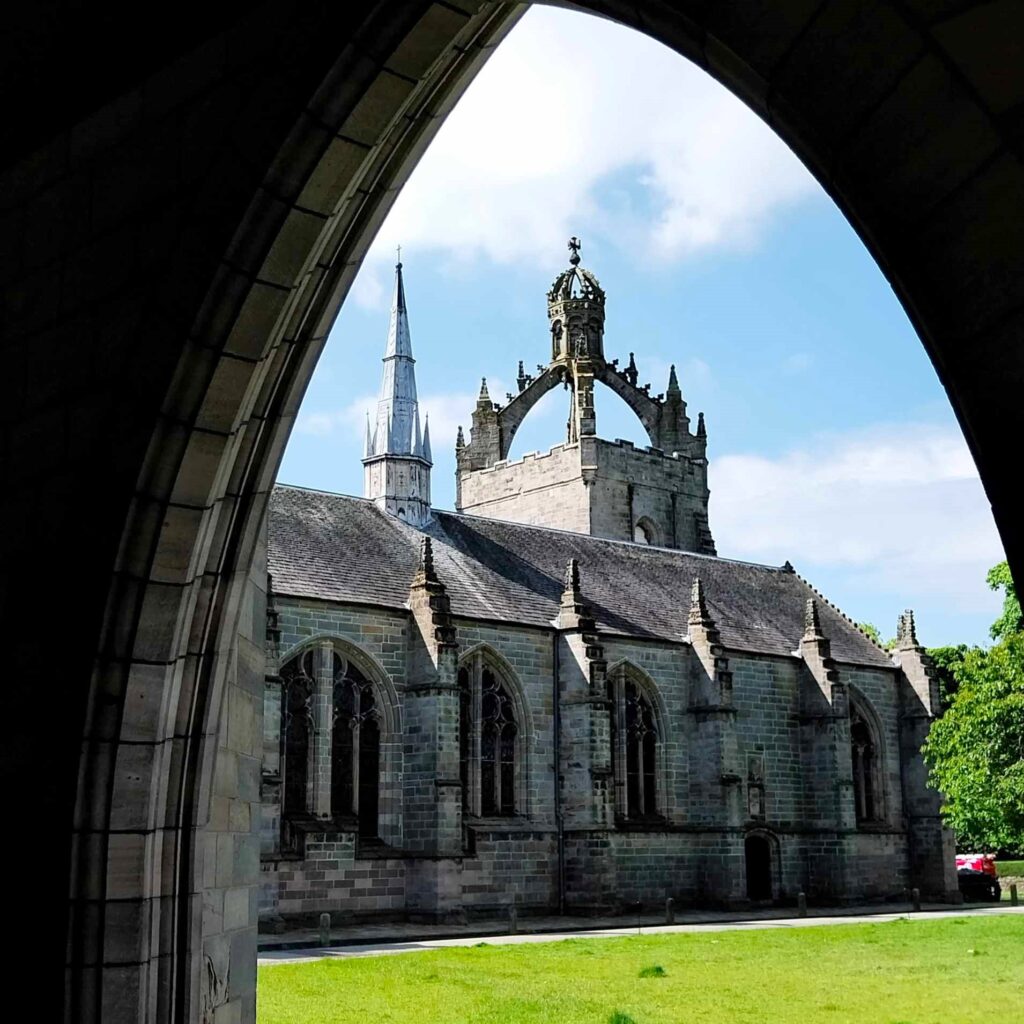
    King’s College Chapel at dusk, one of my favourite places. Evening can be a difficult time for folk who have struggled through the day with illness, weakness, mental ill-health, or emotional exhaustion. In prayer we too bring people to Jesus for healing of body, mind and spirit. We can never know what our prayers achieve. But we do know the promises of God, and that our prayers are heard, woven into the patterns of God’s purposeful care for all who are in need.  

    Wednesday

    Psalm 23.2He leads me beside still waters.

    Stillness – a break from surrounding noise, a chance to quieten the mind, and to listen to our life. Faith is many things, but for the Psalm-poet it includes that peace of mind and heart that is not self-achieved, but is the gift of God – the gift of God’s presence felt. After he was risen, Jesus “the great shepherd of the sheep”, often announced his presence with the words, “Peace be with you.” Recognising the risen Jesus, present, there, with them, in the midst – that has always been the key to Christian peace.

    Thursday

    Proverbs 3.5 “Trust in the Lord with all your heart and lean not on your own understanding; in all your ways acknowledge him and he will make your paths straight.”

    I love paths! Forest tracks, sheep tracks across the moor, or winding round and up a hill. A path is made by all the feet that have gone before us, so it’s a shared journey. Christian fellowship is to walk the same path, following faithfully after Jesus. Early Jesus followers were called precisely that, followers of the Way. Each day is another part of that long trek, “looking to Jesus the starter and the finisher” of the journey we are making. Trust is the inner attitude of humility, a firm willingness to follow, an obedience of the heart that acknowledges God as our guide.

    Friday

    Psalm 19.14b “O Lord, my Rock and my Redeemer.”

    I often walk past this rock. And yes, I’m daft enough to have a favourite rock! It’s about a metre in length and millions of years old. But here it sits, above the tide line, weathered and sculpted and, yes, solid. Poetry is about finding words and images that can tell truth differently, and help us imagine new things. That’s why the Psalm poet describes God as a Rock – God’s love and mercy are solid, forever enduring, unchanged by tide or time, his purposes eternal and wise, his promises unbreakable. As the old hymn has it, “Rock of Ages, cleft for me, let me hid myself in Thee.” Or another, “Yes! Jesus is a rock in a weary land…”

    Saturday

    John 1.1 “In the beginning was the Word, and the Word was with God, and the Word was God.”

    The symbol of John’s Gospel is the eagle. Majestic in its range of thought, soaring to the heights of eternal truth, fierce and relentless in pursuit of that truth, with deep and distant vision to see, to behold, and to gaze in awe. John’s aim is to bear witness to the One who is Creator, Light, Truth, Bread of Life, Resurrection and Life. Awe and wonder rebuke the smallness of our minds and upset our sense of familiarity with holy things. “The Word became flesh, and we beheld his glory, full of grace and truth. (John 1.14) To which our proper response is worship, kneeling, and the confession of Thomas, “My Lord, and my God!”

    Sunday

    Isaiah 1.4 “They will beat their swords into ploughshares, and their spears into pruning hooks. Nation will not take up sword against nation, nor will they train for war any more.” 

    The photo was taken outside The Gordon Highlander’s Museum in Aberdeen this week. An entire hedge of poppies, individually knitted or done in crochet. Vivid, eye-catching, and with a moment’s reflection, deeply poignant. Thousands of poppies, each one a few hundred stitches, in memory of all who have died in conflicts not of their making. Remembrance Sunday is a day of mixed and powerful emotions because that’s what memories do – they trigger our grief and sadness, and signal our loss and confusion. Isaiah looked forward to a day of peace and harmony, an age of shalom and flourishing that is yet to come. Until that time comes in the purposes of God it is a divine imperative to pray for peace. Why? Because “Blessed are the peacemakers, for they shall be called the children of God.” And because we pray to the God of peace, and in hope to the God of hope.

    (Photo from Gordon Highlander’s Museum, Facebook post. No attribution there, but credit acknowledged.)