Blog

  • TFTD Dec 1-7 “Let there be light!”

    Monday   Genesis 1.3-4 “God said, “Let there be light,” and there was light. God saw that the light was good and he separated the light from the darkness.”

    God’s first command of creation was, “Let there be light!” Ever since, light has been the prerequisite of life. The separation of light from darkness, and day from night, has an important biological function. Darkness and light have deep significance for us as human beings. When we watch a sunset, see a sunrise, work in the garden, look towards the hills, or gaze at the stars – each time we are inwardly acknowledging our dependence on light. Hope, comfort, and trust are each pulled forward by dawn and the coming of light signalling a new day. Advent is our time to look for the light. We pray into the surrounding gloom and darkness of a broken world the first words of new creation, and hear God say, “Let there be light!”

    Tuesday   Isaiah 9v.2 “The people walking in darkness have seen a great light; on those living in the land of the shadow of death a light has dawned.”

    These words of Isaiah are pure Advent! People who have learned to live with despair are being called to hope. And the first sign of that hope is the promise of a child, whose names are the very reality they crave. The wisdom of a wonderful counsellor, the over-arching power of God no matter what the threat, the help and protection of an ever-present Father, and the promised reality of peace as the fullness of shalom. During Advent we are drawn into this same story of light in the darkness, of hope for a different future secure in and secured by God. Advent is when we learn to live ‘as if’ God’s promised reality is already here – because in the death and resurrection of God’s Son, Jesus, it is already here – a light has dawned that moves towards the fullness of day.

    Wednesday  John 1.5 “The light shines in the darkness and the darkness has not overcome it.”

    John means two things which are difficult to convey in one English word. The darkness has not overcome the light can also mean, “The darkness has not understood the light.” Both are true and John intended both to be understood. Darkness hasn’t a clue what light is about; and darkness however dense and determined cannot extinguish light. Referring to Jesus, John goes on to say, “The true light, that gives light to everyone, was coming into the world.” And that too is pure Advent! Christ, the Light of the World, shines with a brilliance that cannot be dulled by time or smothered by shadows, or snuffed out by the strategies of God’s Adversary. What we anticipate and celebrate in Advent is the victory of God in Christ over all that makes for darkness and loss, by a light that is “the light of life.”

    Thursday   Luke 2.8-10 “And there were shepherds living out in the fields nearby, keeping watch over their flocks at night. An angel of the Lord appeared to them, and the glory of the Lord shone around them, and they were terrified. But the angel said to them, “Do not be afraid. I bring you good news that will cause great joy for all the people.”

    The glory of the Lord shone around them like the lights of a thousand Glastonburys! The splendour and brilliance when heaven breaks through turned night into day; more than that, it was terrifying, beautiful and a complete overwhelming of human capacities to understand. Advent is good news, which has to be one of the most obvious theological understatements ever! “In Christ God was reconciling the world to himself” is how Paul described the consequences of that sleepless night for shepherds. Luke packs all that into the words of the angel: Today in the town of David a Saviour has been born to you; he is Christ the Lord.” That, in brief, is Advent.   

    Friday   John 8.12 “Jesus said, “I am the light of the world. Whoever follows me will never walk in darkness, but will have the light of life.”

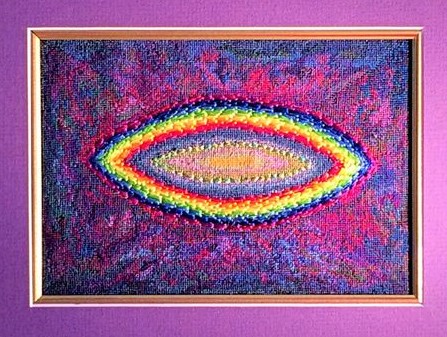
    Isaiah’s promise is in the background –”The people who walked in darkness have seen a great light.” Once you see the light of the world you will never walk in darkness again. The light of life, the light of love, the light of mercy and grace, the light that banishes guilt, shame and fear – all, and each of these radiates outward from the Light of the World. Advent is a celebration of all this. In one of the finest theological carols in our hymn repertoire Wesley has us singing: “Light and life to all he brings, risen with healing in his wings.” The photo is of sunlight striking a rather dull carpet after being refracted through our church’s stained glass window. I took the photo during a communion service while bowed in prayer, capturing this visual image of what it means to gather round the table of the One whose light illumines and colours our life with love, hope and peace.

    Saturday Isaiah 60.1-2 “Arise, shine, for your light has come, and the glory of the Lord rises upon you. See, darkness covers the earth and thick darkness is over the peoples, but the Lord rises upon you and his glory appears over you.”

    So much of Isaiah’s prophecy is about motivation, persuading his listeners to open their eyes, rethink the possibilities, and face up to the darkness with a defiant trust that believes the light will come. Advent anticipates the coming of the light of the world. Isaiah tells us to “Get up, reflect the true light into the surrounding darkness.” St Francis’ prayer is a good clue about ways to do that.

    “Make me a channel of Your peace.

    Where there is hatred let me bring Your love.

    Where there is injury, Your pardon, Lord,

    And where there’s doubt, true faith in You.

    Make me a channel of Your peace.

    Where there’s despair in life, let me bring hope.

    Where there is darkness, only light,

    And where there’s sadness ever joy.”

    Sunday   2 Corinthians 4.6 “For God, who said, “Let light shine out of darkness” made his light shine in our hearts to give us the light of the knowledge of God’s glory displayed in the face of Christ.”

    Just read that again – slowly. The Creator God, who separated light from darkness, has pierced the darkness of our hearts with life –giving light, illuminating our heart, mind, conscience and will, so that we have come to know God’s full glory displayed on the face of Christ. Now looking on the Light of the World, the face of Jesus, we see the glory and splendour of God. “All the fullness of God was pleased to dwell in him.

    The essential and irreplaceable centre of Advent is the coming of Christ, the knowledge of God revealed to us in Christ, and the glory of God made visible, blazing in judgement and mercy toward us in the Eternal Word. “The Word became flesh and dwelt amongst us, and we have gazed on his glory, full of grace and truth.” In that deep and unfathomable truth lies the reality of Advent, and all our hope for ourselves and our world.

    “You are a chosen people, a royal priesthood, a holy nation, God’s special possession, that you may declare the praises of him who called you out of darkness into his wonderful light.” 1 Peter 2.9

  • TFTD Nov 24-30: “Rejoice in the Lord!”

    Monday

    Philippians 4.4 “Rejoice in the Lord always. I will say it again: Rejoice!”

    I don’t know about you, but all the hyped up excitement and happiness in the long conveyor belt of TV entertainment shows, actually annoy me! By contrast, Paul was in prison, his life at risk, separated from his usual supportive network. Yet he emphasises the importance of rejoicing. This is a man who learned to sing his way out of prison! To rejoice in the Lord is to make time to give thanks and find reasons to praise God. We count our blessings, not because they cancel out our troubles, but because “Nothing can separate us from the love of God in Christ Jesus our Lord.”

    Tuesday

    1 Chronicles 16.31-33 “Let the heavens rejoice, let the earth be glad; Let the sea resound, and all that is in it; let the fields be jubilant, and everything in them! Let the trees of the forest sing, let them sing for joy before the Lord, for he comes to judge the earth.”

    David has brought the Ark of the Covenant to Jerusalem. His Psalm is one long hymn of joy, praise, thanksgiving and worship. This is pure joy composed into a song. The oceans, the land and the forests provide Creation’s chorus to the Creator. Joy and gladness have their foundation pillars plunged deep into the reality of who God is as the one who reigns in justice, mercy and steadfast love. The Ark of the Covenant is the seal and sacrament of God’s presence, that greatest of blessings in which we have fullness of joy. The whole Psalm works well as a morning prayer.

    Wednesday

    Isaiah 35.1 “The desert and parched land will be glad; the wilderness will rejoice and blossom. Like the crocus, it will burst into bloom; it will rejoice greatly and shout for joy.”

    What turns a desert into a flower meadow? Who can turn a wilderness into a blooming miracle? These words of promise are first uttered by Isaiah to exiles whose lives had been stripped of all that enabled a human community to flourish. But God was on the move, and soon so would they. These are words of promise for every child of God experiencing wilderness, an existence that seems parched, life hemmed in and wondering how to recover the greenness of new growth. This whole chapter is nourishment for withered hope and struggling faith. When joy seems impossible there will be streams in the desert, and a return of gladness to the heart, because we will again see the splendour of our God.  

    Thursday

    Isaiah 35.10 “They will enter Zion with singing; everlasting joy will crown their heads. Gladness and joy will overtake them, and sorrow and sighing will flee away.”

    The desert is glad, the crocus blossoms, the glory of God is revealed and life is changed forever. These last lines are about the ultimate and final joy of the people of God. Just as God delivered his people and returned them to Jerusalem, so Christian hope looks forward and anticipates the gathering of all God’s people before the throne of the God who reigns. The great vision of Revelation when people of every tribe, language, nation and people bow in worship before the Lamb, is traceable to Isaiah’s visions of the new people of God being overtaken by gladness and joy!

    Friday

    Luke 1.47 My soul glorifies the Lord and my spirit rejoices in God my Saviour.”

    The first lines of the Magnificat, Mary’s Psalm of praise to God after visiting her cousin Elizabeth. The combination of giving glory to the Lord and rejoicing in our Spirit are two of the great themes of the Christian life. When Christ comes into the world, and into our lives, we are caught up into the angels’ song of good tidings of great joy for all the people. Mary anticipated this, and celebrated the liberation and lifting up of the poor, the hungry and the powerless. As Advent approaches the Magnificat is our reminder that Jesus recalibrates power towards justice and mercy.

    Saturday

    Romans 12.12 “Be joyful in hope, patient in affliction, faithful in prayer.”

    The realism of this brief verse is breath-taking. Joy is not about closing our eyes in denial of life’s hard knocks – affliction comes to us all one way or another. Nor is joy an escape mechanism as if we can talk ourselves out of anxiety, suffering and loss. Faithful prayer is that determined honesty before God about what is happening, how we feel, and asking the Holy Spirit’s strength for our faith and resilience for our hope. To be joyful in hope is to face whatever comes at us in the strength of Christ, kept hopeful by faithful prayer, and kept secure by the power of God.

    Sunday

    O come, O come, Immanuel, and ransom captive Israel,

    That mourns in lonely exile here until the Son of God appear.

    Rejoice! Rejoice! Immanuel shall come to thee, O Israel.

    O come, Thou dayspring, come and cheer, our spirits by Thine advent here

    Disperse the gloomy clouds of night, and death’s dark shadows put to flight.

    Rejoice! Rejoice! Immanuel shall come to thee O Israel.

    The word “Rejoice!” is an imperative, a command to lift up our eyes, lift up our hearts, and lift up our minds. Advent is how the Church reminds itself of its mission to be the light of the world, powered by the renewable energy of Christ the Light.

  • TFTD Nov 17-23: “Praise to the Lord, the Almighty, the King of Creation

    Monday

    Praise to the Lord, the Almighty, the King of creation!
    O my soul, praise Him, for He is thy health and salvation!
         All ye who hear,

         Brothers and sisters draw near;
    Praise Him in glad adoration!

    In 21st century terminology we describe almost everything we sing as ‘praise songs’. However, often in the Psalms, and in older hymns, praise is not so much celebration as adoration. Celebration is mostly about how we feel; adoration is more about God, and our glad and grateful response to God’s greatness and goodness. Archbishop William Temple described adoration as “the most selfless emotion of which our nature is capable.” This hymn helps us to make God, not ourselves, the centre of attention in worship.  “O my soul, praise Him, for He is thy health and salvation!”

    Tuesday

    Praise to the Lord, who o’er all things so wondrously reigneth,
    Shelters thee under his wings, yea, so gently sustaineth.
        Hast thou not seen
        All that is needful hath been
    Granted in what He ordaineth?

    Praise and adoration are rooted in our sense of God as the one in whom we live, and move, and have our being. Despite the unpredictability of life, and sometimes the chaos of circumstances around us, God reigns, and we are held and sustained by the mercy, power and love of God. Faith looks back and sees that, time and again, God has provided, often in ways we never expected. Soren Kierkegaard, a Danish Christian philosopher wrote that life can only be understood backwards, but must be lived forwards. This hymn encourages that kind of faith – looking back with thanksgiving and looking forward in trust.

    Wednesday

    Praise to the Lord, who doth prosper thy work and defend thee,
    Surely his goodness and mercy here daily attend thee:
        Ponder anew
        What the Almighty can do,
    Who with His love doth befriend thee.

    These last three lines – try using them as a prompt to write a short list of how God in his goodness and mercy has looked after you. They are amongst my own favourite words from old hymns – devotion condensed into wonder and gratitude. How does God look upon us? Three rhyming words learned by experience – defend, attend, befriend. God is on our side in whatever situations we have to face; God is at our side, always and everywhere; God, in covenant love calls us friends, and in faithful care both accompanies and goes before us on our journey. “Surely his goodness and mercy here daily attend thee.” That isn’t a question – it’s a strong assertion!

    Thursday

    Praise to the Lord, who, when tempests their warfare are waging,

    Who, when the elements madly around thee are raging;

         Biddeth them cease,

         Turneth their fury to peace,

    Whirlwinds and waters assuaging.

    This verse wasn’t in the original hymn; it was probably written 200 years later. I first heard it sung while watching a recorded service from Westminster Abbey, as Queen Elizabeth II processed at the start of a State service. Throughout that long life of service to her nation, she had seen her share of all the turmoil this verse describes. It was one of her favourite hymns. I’m not a fan of people ‘improving’ hymns written by others – often they detract from rather than add to someone else’s work. But this verse captures that high doctrine of providence and God’s creative and redemptive care for his whole creation. The allusion to Christ in the storm is unmissable.

    (Link to Westminster recording ( https://www.youtube.com/watch?v=lXhxbEjfxxc )

    Friday

    Praise to the Lord! Oh, let all that is in me adore Him!
    All that hath life and breath, come now with praises before Him!
        Let the Amen
        Sound from His people again:
    Gladly for aye we adore Him.

    “Let everything that has breath praise the Lord! Praise the Lord.” These are the last words of Psalm 150, and the final words of the Psalter. That Psalm is given a long paraphrase in this verse. This is adoration as Archbishop Temple described it – selfless praise that takes us out of ourselves, elevates our thoughts, lifts up our hearts, opens our eyes, and simply pours out love and thanksgiving as if we were made for just that- which, of course, we are! “Let the Amen sound from his people again,” is a call for the heart’s agreement and alignment with the ways of God towards us. Perhaps at a time when much seems uncertain, and many are anxious, this hymn’s call to praise and adoration points to the stance and disposition of the Church of Jesus Christ as a community of trust, praise and confidence in God. The church’s frequent liturgical reflection: “ponder anew, what the Almighty can do…”

    Saturday

    “Worship is the submission of all of our nature to God. It is the quickening of the conscience by his holiness; the nourishment of mind with his truth; the purifying of imagination by his beauty; the opening of the heart to his love; the surrender of will to his purpose–all this gathered up in adoration, the most selfless emotion of which our nature is capable.”

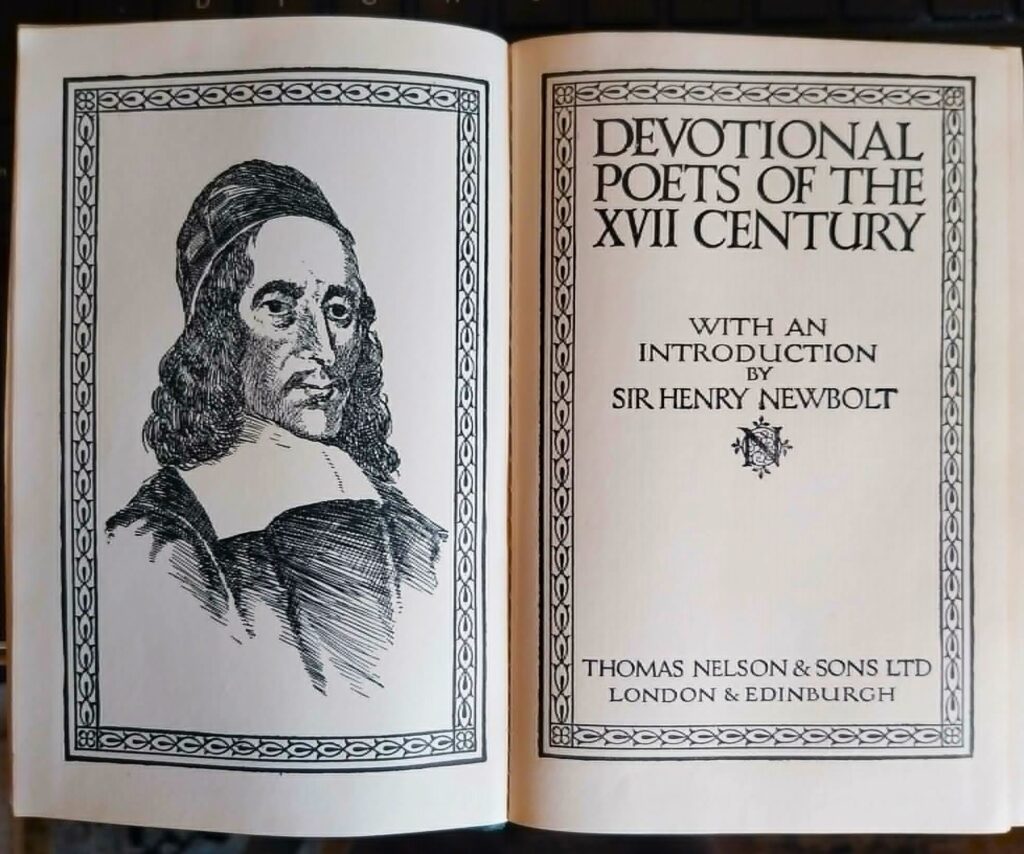
    During World War II, Archbishop William Temple wrote what is still one of the most perceptive devotional expositions of the Gospel of John. He called it Readings in John’s Gospel.* In my view it remains a profound commentary on the fourth Gospel. The quotation above is part of his comment on Jesus’ conversation at the well with the woman of Samaria. Jesus and the woman were in animated discussion about what true worship is. “Worship is the submission of all of our nature to God.” In that first short sentence, the good Archbishop gave one of the shortest and most comprehensive definitions of worship. Then, the second much longer sentence spells out what that means about aligning our whole inner life and outward actions with God’s will. The hymn we have thought and prayed all week is about this kind of devotion, worship that transforms and renews us in faith, hope and love.

    Sunday

    Praise God from whom all blessings flow;

    Praise him all creatures here below;

    Praise him above you heavenly host;

    Praise Father, Son, and Holy Ghost.

    We finish the week with another hymn from the 17th Century, this time lines we have come to call ‘The Doxology.’ The word comes from a Greek word that means to proclaim glory, to put glory into words, and so to glorify. It was written by Thomas Ken, and was the last verse of his morning and evening hymns. In other words at the start of the day these lines set the tone and spiritual direction for the day ahead; and at day’s end they gather together the blessings of the day in praise and thanksgiving. If we use the words of the Doxology to bracket each day, in four easily memorised lines we acknowledge and give thanks to the God “from whom all blessings flow.”  

    For those who may be interested, William Temple’s Readings in John’s Gospel is available reasonably priced on Kindle. (£3.95)

  • TFTD Nov 10-16 “If God is for Us…”

    Monday

    Psalm 138 1 “I will praise you, O Lord, with all my heart; before the ‘gods’ I will give you praise.”

    It’s a mistake to assume that as a modern sophisticated and mostly secular society we have grown out of belief in many ‘gods’ who influence our lives. Money and image, security and power, online persona and the accumulation of things – whatever takes our best energies, becomes our first priority, takes up most of our attention and which we will shape our lives around, is in danger of becoming a god. The Psalm poet has two safeguards. To our true God, ‘with all my heart’, and to give God praise. No idol can survive constant faithful love and praise directed to another.

    Tuesday

    Palm 138. “I will bow down towards your holy temple, and will praise your name for your love and your faithfulness, for you have exalted above all things your name and your word.” 

    One good reason for having a ‘devotional time’ to reset our priorities, a regular reminder of who we bow down towards. To praise God’s name for His love and faithfulness is to restate our heart’s allegiance, and to reinforce our own love and faithfulness to the God who goes on loving us faithfully! Praising God becomes, then, a habit of the heart, the inclination of mind and spirit towards God, each day. God’s name is the highest name, God’s Word is the final word. The faithfulness of God has a lifetime guarantee, because God’s promises are true and to be trusted.

    Wednesday

    Psalm 138.3 “When I called you answered me, and made me bold and strong.”

    Those times we prayed, and our heart was lifted, the day seemed more manageable, we could think more clearly about the way ahead. Whatever else changed, deep inside the sun rose, and confusion cleared, or anxiety lifted, or guilt gave way to repentance, or anger was replaced by forgiveness, or we overcame inner paralysis about a difficult decision waiting to be made. It’s called the reflexive blessing of prayer; our soul is lifted, our perspective changed and confidence in God is restored.

    Thursday

    Psalm 138.4 “May all the kings of the earth praise you, O Lord, when they hear the words of your mouth.”

    When the world is a mess, and the powerful act without sufficient restraint, and life becomes much less secure, it’s hard to know what to pray for and what to pray against. Whatever our politics, there is considerable wisdom in using this prayer of the Psalm poet. That the powerful will hear and heed the words of the all-powerful God revealed in Christ; that the great principles of truth, trust, compassion, mercy and justice will regain their purchase in the policy decisions of the powerful. Prayer is not a cop out from the mess of the world – it is an opt in, an intentional aligning of Christian faith, love and hope, in resisting all that makes for fear, hate and despair.

    Friday

    Palm 138.5 “May they sing of the ways of the Lord, for the glory of the Lord is great.”

    To sing of the ways of the Lord is to praise, give thanks, and confess the goodness of God’s ways. God’s ways are shown and seen to be holy as He is holy, righteous and just, compassionate and dependably faithful. May the powerful of the earth praise and take guidance from the ways of the Lord, and bow in recognition of a glory far greater than their own. This too can become a positive prayer for our times, with urgent constancy, and open-eyed realism about the consequences of power without such constraint. Or as Paul put it, “At the name of Jesus, every knee shall bow.”

    Saturday

    Psalm 138.6-7 “Though the Lord is on high, he looks upon the lowly, but the proud he knows from afar. Though I walk in the midst of trouble you preserve my life; you stretch out your hand against the anger of my foes, with your right hand you save me.

    Some Twentieth Century theologians defined sin as pride, when arrogance is so sure of itself it has no need of God, so doesn’t give God a minute’s thought. But God looks upon the lowly and therefore the powerless. Living as we do in difficult times, perhaps we should learn from the Psalm poet’s way of looking at the world when he “walks in the midst of trouble”. God’s hand holds back whatever threatens, and the right hand saves and preserves. The Psalm poet has learned for himself, and teaches us, that God is present in whatever we are facing, and saves us using both hands! In the midst of trouble, God is at and on our side. Or as Paul argued, “If God is for us, who can be against us…we are more than conquerors through him who loved us.” 

    Sunday

     Psalm 138.8 “The Lord will fulfil his purpose for me; your love, O Lord, endures for ever – do not abandon the work of your hands.”

    The logic is unbreakable. God’s love endures forever, so his loving purpose will come to fulfilment. That last clause is as human as any line of any prayer. Having just stated his complete confidence in the enduring love and purpose of God – he blurts out his residual anxiety! But even that is encompassed in God’s purpose. “He who began a good work in you will bring it to completion at the day of Jesus Christ.”

  • The Beatitude of Peace-making.

    Blessed are the peacemakers for they shall be called the children of God.

    Peacemaking God, in Christ you were reconciling the world to yourself, and breaking down dividing walls of hostility

    We pray for Ukraine and Russia, for Israel and Gaza, for Yemen and Sudan: For these, and other places where for generations, fear and anger has blinded and divided communities into enemies, and created communities whose history is fear, distrust and hatred of each other.

    We pray for countries and communities where grievances suffered and suffering inflicted leaves legacies of hate and suspicion, where history overshadows the present, violence silences every call for peace, and deep wounds cry so loudly they drown out voices for peace and conciliation.

    Help us to listen for the subversive wisdom of the Peacemaker Spirit of God, informing our prayers, and recalibrating our minds towards new strategies for the healing of our world, 

    Teach us to speak the language of peace with fluency and courage, and to pray for reconciliation with renewed and determined hopefulness in the God of hope.

    As at the creation your Spirit brooded upon the waters of chaos, so Peace-making Spirit of Christ, overshadow our broken world with mercy and justice, and help us to trust, not in Presidents and Prime Ministers, not in military power or economic levers, but in you the Prince of Peace and Risen Lord whose first words to your perplexed disciples were, “Peace be with you.” Amen

  • Bonhoeffer on Christ, the Church, and the World.

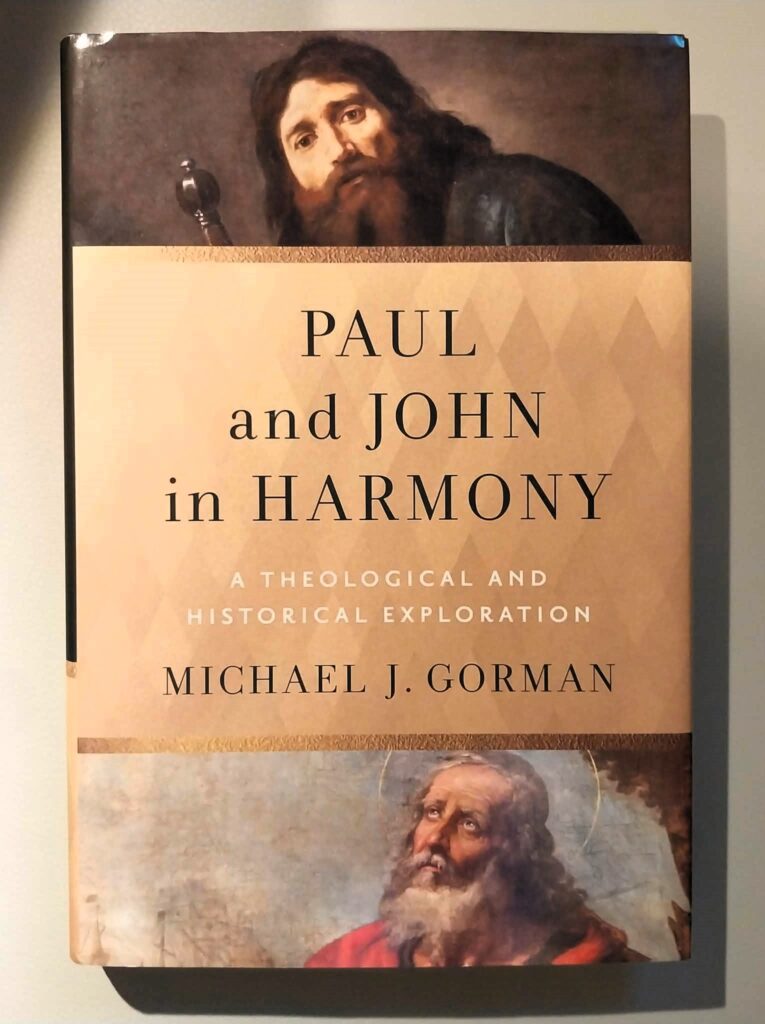
    I’m spending quite a lot of my reading time with Dietrich Bonhoeffer these days. Ever since 1976, when I read Mary Bosanquet’s exceptional biography, Bonhoeffer has been a regular conversation partner. I till have that book. Published in 1968, it is now seriously dated, but still has value as an early, readable, well researched, and sympathetic but not uncritical account of Bonhoeffer’s life and subsequent influence. It has the added value as a biography because it carries a Foreword written by Bonhoeffer’s sister Sabine Leibholz-Bonhoeffer. She commends the honesty, sensitivity and theological perception with which Bosanquet interpreted Bonhoeffer’s life and thought.

    Forty years later I attended a lecture by Dr Jennifer McBride as part of the Bonhoeffer for Pastors day at the University of Aberdeen. The title was ‘Who is Bonhoeffer for Today?’, and it was a tour de force in which she argued strongly against those who find in Bonhoeffer whatever they go looking for, with no regard for the overall context within which Bonhoeffer lived, and spoke and wrote. For example, ‘Religionless Christianity’, ripped from context and made into a vehicle for radical, at times radically negative theology, is a phrase that can only be understood within the overall Christological focus and cruciform shape of Bonhoeffer’s later theology.

    Mcbride’s major work, The Church for the World: A Theology of Public Witness, (OUP, 2012), examines Bonhoeffer’s insistence that Christian discipleship and the church as the Body of Christ are authentic only insofar as they engage with the world, and do so as expressions of the Lordship of the incarnate and crucified Jesus. The book explores the three primary and inter-related realities in Bonhoeffer’s theology – Christ, the Church, and the World.

    One of the genuinely creative points McBride made in her lecture was to warn the church against a moral triumphalism by which Christian communities see themselves as the moral and ethical judges of society. The church, rather, is the Body of the Christ who took upon himself the sins of the world, and was ‘numbered with the transgressors’.

    Far from being the judge and moral watchdog of society, the church is called by God to be a community of repentance, acknowledging its solidarity with human, social, and public life in all its ethical complexity and compromise. As the Body of Christ in its human form the church confesses its implication in the structures of sin, and witnesses to an alternative way of being. The new being that is the church is called to express repentance as turning away from the practices of domination to the practices of redemptive action, and these based on a discipleship of the crucified, risen Lord, whose life they embody.

    That at any rate was what I took away, and it still provides much to ponder. McBride’s work then and since has been a substantial reclaiming of Bonhoeffer as a primary resource for a theology both culturally critical and Christologically confessional. Her more recent books include Radical Discipleship: A Liturgical Politics of the Gospel, and a co-edited volume of essays on Bonhoeffer and King: Their Legacies and Import for Christian Social Thought. This volume brings Bonhoeffer’s struggle into dialogue with Martin Luther King’s struggle – both of them advocates of the radical Gospel of Jesus as cross-carrying agents of resistance to the powers that be and of transformational change in the real world of human affairs.

    At a time when, in many places, the church and the faith to which we bear witness is being co-opted by ideologies of nationalism and power seeking, there is much to be learned from the writings of Bonhoeffer, a flawed and brilliant pastor whose discipleship, ministry, writing and theological struggles, were worked out in the church struggles of his time. That’s what gives his voice relevance and urgency for our own time.

  • TFTD Nov 3-9 Safe Harbour, Still Waters and Known Paths.

    Monday

    Psalm 107.30 “They were glad when it grew calm and he brought them to a safe harbour.”

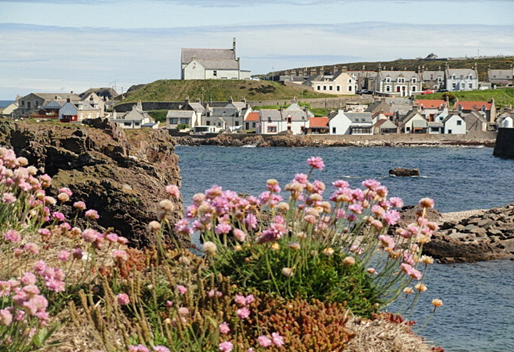
    The sea isn’t always as calm as it looks in the photo. Neither is the life we have to live every day. There are storms that disrupt our equilibrium, sometimes strong headwinds of circumstances and difficulties we have to plough through. This verse is a reminder to cry to the Lord in our trouble, “He stilled the storm to a whisper, and the waves of the sea were hushed.” Every life has its storms and at times like that we look for a safe haven, a secure harbour, a place of refuge, the providence of a merciful God.

    Tuesday

    Luke 4.40 “When the sun was setting the people brought to Jesus all who had various kinds of sickness, and laying his hands on each one, he healed them.”

    King’s College Chapel at dusk, one of my favourite places. Evening can be a difficult time for folk who have struggled through the day with illness, weakness, mental ill-health, or emotional exhaustion. In prayer we too bring people to Jesus for healing of body, mind and spirit. We can never know what our prayers achieve. But we do know the promises of God, and that our prayers are heard, woven into the patterns of God’s purposeful care for all who are in need.  

    Wednesday

    Psalm 23.2He leads me beside still waters.

    Stillness – a break from surrounding noise, a chance to quieten the mind, and to listen to our life. Faith is many things, but for the Psalm-poet it includes that peace of mind and heart that is not self-achieved, but is the gift of God – the gift of God’s presence felt. After he was risen, Jesus “the great shepherd of the sheep”, often announced his presence with the words, “Peace be with you.” Recognising the risen Jesus, present, there, with them, in the midst – that has always been the key to Christian peace.

    Thursday

    Proverbs 3.5 “Trust in the Lord with all your heart and lean not on your own understanding; in all your ways acknowledge him and he will make your paths straight.”

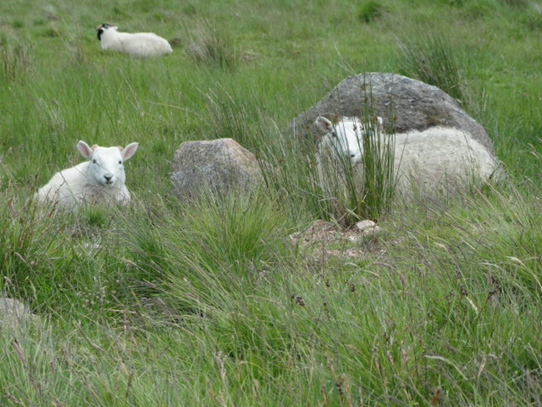
    I love paths! Forest tracks, sheep tracks across the moor, or winding round and up a hill. A path is made by all the feet that have gone before us, so it’s a shared journey. Christian fellowship is to walk the same path, following faithfully after Jesus. Early Jesus followers were called precisely that, followers of the Way. Each day is another part of that long trek, “looking to Jesus the starter and the finisher” of the journey we are making. Trust is the inner attitude of humility, a firm willingness to follow, an obedience of the heart that acknowledges God as our guide.

    Friday

    Psalm 19.14b “O Lord, my Rock and my Redeemer.”

    I often walk past this rock. And yes, I’m daft enough to have a favourite rock! It’s about a metre in length and millions of years old. But here it sits, above the tide line, weathered and sculpted and, yes, solid. Poetry is about finding words and images that can tell truth differently, and help us imagine new things. That’s why the Psalm poet describes God as a Rock – God’s love and mercy are solid, forever enduring, unchanged by tide or time, his purposes eternal and wise, his promises unbreakable. As the old hymn has it, “Rock of Ages, cleft for me, let me hid myself in Thee.” Or another, “Yes! Jesus is a rock in a weary land…”

    Saturday

    John 1.1 “In the beginning was the Word, and the Word was with God, and the Word was God.”

    The symbol of John’s Gospel is the eagle. Majestic in its range of thought, soaring to the heights of eternal truth, fierce and relentless in pursuit of that truth, with deep and distant vision to see, to behold, and to gaze in awe. John’s aim is to bear witness to the One who is Creator, Light, Truth, Bread of Life, Resurrection and Life. Awe and wonder rebuke the smallness of our minds and upset our sense of familiarity with holy things. “The Word became flesh, and we beheld his glory, full of grace and truth. (John 1.14) To which our proper response is worship, kneeling, and the confession of Thomas, “My Lord, and my God!”

    Sunday

    Isaiah 1.4 “They will beat their swords into ploughshares, and their spears into pruning hooks. Nation will not take up sword against nation, nor will they train for war any more.” 

    The photo was taken outside The Gordon Highlander’s Museum in Aberdeen this week. An entire hedge of poppies, individually knitted or done in crochet. Vivid, eye-catching, and with a moment’s reflection, deeply poignant. Thousands of poppies, each one a few hundred stitches, in memory of all who have died in conflicts not of their making. Remembrance Sunday is a day of mixed and powerful emotions because that’s what memories do – they trigger our grief and sadness, and signal our loss and confusion. Isaiah looked forward to a day of peace and harmony, an age of shalom and flourishing that is yet to come. Until that time comes in the purposes of God it is a divine imperative to pray for peace. Why? Because “Blessed are the peacemakers, for they shall be called the children of God.” And because we pray to the God of peace, and in hope to the God of hope.

    (Photo from Gordon Highlander’s Museum, Facebook post. No attribution there, but credit acknowledged.)

  • Bonhoeffer: “Your ‘yes’ to God requires your ‘no’ to all injustice, to all evil, to all lies…”

    The life and thought of Dietrich Bonhoeffer persists as an essential and critical voice even eighty years after his death. There are so many reasons to pay attention to the occasional writings and speakings of Bonhoeffer; but in our time of fractious politics, slow and sometimes blatant power grabs, growing support for right wing populism and uncritical adulation of the strong leader, it is the radically uncompromising call and cost of discipleship in following Jesus that challenges Christian communities to decide where ultimate allegiance lies. This is Bonhoeffer the pastor, preaching a Confirmation sermon in 1938. The date is essential context, and the words are explosive in their political as well as theological and spiritual reverberations:   

    You have only one master now…But with this ‘yes’ to God belongs just as clear a ‘no.’ Your ‘yes’ to God requires your ‘no’ to all injustice, to all evil, to all lies, to all oppression and violation of the weak and poor, to all ungodliness, and to all mockery of what is holy. Your ‘yes’ to God requires a ‘no’ to everything that tries to interfere with your serving God alone, even if that is your job, your possessions, your home, or your honour in the world. Belief means decision.”

    Preached to young Christians facing what we now know as life in one of the most violent, lethal and merciless regimes in European history. The use of the word “master” is likewise laden with intentional contrast, and implies an either-or from which there can be no compromising third choice. One master. Who is it to be? Yes to God means ‘no’ to all other powers demanding final loyalty of mind, heart, soul and body. Belief means decision, not only one single decision after which it is business as usual; but a confirming decision that means all other decisions take their direction from that living and central commitment to Jesus Christ.

    What makes Bonhoeffer such a necessary discomfort to those who are at ease in Zion is his reiteration of the radical, risk-laden demands of the Gospel of Christ. Earlier translations of his book on discipleship were titled, The Cost of Discipleship. The critical edition is more accurate in the technical sense of the one word title: Discipleship. However commendable that title, it remains the case that Bonhoeffer’s relentless emphasis on the nature of Christian following of Jesus focused on the cost of discipleship. That cost was inevitable and the sine qua non of faithfulness to God, and the authenticating hallmark of a life following the way of Jesus Christ, bearing a cross and headed for Calvary.

    The words from the confirmation sermon were not intended as comfortable invitation to convenient respectability, but as warning and call to a lifestyle and inner orientation at odds with all that is at odds with the way of Jesus. In other words this ongoing ‘yes’ compels a recurring ‘no’ to all that demands a different loyalty to alternative values and competing life goals. The life goal of the disciple is to be faithful to Christ, the values are rooted in the commitment of God in Christ to a reconciled world, and that ‘Yes’ carries within it a lifelong capacity for saying no; and Bonhoeffer is explicit in what is to be contradicted.

    “God requires your ‘no’ to all injustice, to all evil, to all lies, to all oppression and violation of the weak and poor, to all ungodliness, and to all mockery of what is holy.”

    Those words are freighted with responsibility for the way we live our lives in the 2025 world of political and social divisions. One of the more easily overlooked features of contemporary life is the mockery of what is holy. That isn’t new either, it was a social toxin flowing through the veins of National Socialism and its effect was the weakening of the immune system, making minds and wills less receptive and increasingly resistant to moral values of human worth, dignity and fundamental rights. 

    The mockery of what is holy is a theological version of the cliche ‘nothing is sacred anymore’. But when that which one group in society reveres and holds as of essential value to their lives is mocked, ignored, or treated as trivial, the result is a dangerous diminishing of human capital and ethical safeguards. Bonhoeffer saw that happening over the years before the 1938 sermon. The mockery of what a society has deemed to be holy, pushes back boundaries and rewrites in coarser and less humane language what is acceptable, decent and for the common good. Eventually people themselves, those who hold on to what is holy and to be respected by consensus, are themselves mocked, diminished, and devalued.

    At that point Bonhoeffer could see with prophetic clarity, the fundamental Yes to God which orients the whole of life, demanded a faithful No to all in life that contradicts justice, goodness, truth, freedom, care for the weak and poor, and reverence for the holy. Yes implies No. You cannot serve God wholeheartedly and something else at the same time. The criterion for the Christian is the cross of Christ, a dying to all other claims on our will, conscience, heart, mind and body.

    I find these words of Bonhoeffer so uncomfortably apt in 2025 Britain and beyond. But I know of no other way to be faithful to the fundamental Yes I’ve said to God as a Christian, than to say with continuing conviction, and with relentless faithfulness, No. No to words that are lies. No to policies which humiliate and threaten the poor. No to policies of injustice and callous disregard for refugees and immigrants. No to hostile environments, to racism and antisemitism. No to the abuses of power when it is used to remove the very levers put in place to hold power accountable. No to the rhetoric of division. No to the deifying of capital, money, wealth, stuff and its consequent global inequity. And No to the laying waste of the only planet we have, in pursuit of all the above.

    And in all those sayings of No, those who follow Jesus faithfully in the 21st Century do so fully  recognising that the cost of discipleship is stated very plainly. Say Yes to God, and you say No to much else that is taken for granted as the way the world works. 

    (The sermon ‘The Gift of Faith’, was preached on April 9, 1938. See The Collected Sermons of Dietrich Bonhoeffer, (ed) Isabel Best, (Minneapolis: Fortress, 2012, pp. 201-206)   

  • TFTD Oct 27-Nov 2: Love Your Enemies.

    Monday

    Luke 6.27 “But I tell you who hear me: Love your enemies, do good to those who hate you, bless those who curse you, pray for those who ill-treat you.”

    Please read that again. And again. These words of Jesus are as counter-cultural as anything he ever said. They would win a comedy competition of “Things you would never hear in a football dressing room.” But they are serious. Not deadly serious, but life-saving serious. Enmity fuels hate; hate finds words as hate speech and cursing; then verbalised hate escalates to ill treatment. We live in a culture where that connection between fear and hatred of the other makes enemies out of strangers and turns public discourse into a weapon. You cannot be a follower of Jesus and think, talk and act in ways that divide the world into those we love and those we hate. Following Jesus means going against the stream – love your enemies.

    Tuesday

    Luke 6.27 “But I tell you who hear me: Love your enemies…”

    Thought for the day can’t always be warm words of encouragement, feel-good thoughts, or devotional supplements to boost the enjoyment of our inner life. Obedience is when we hear what Jesus tells us, and say yes to the demands of life under His reign. “Love your enemies” is so counter-cultural, so counter-intuitive, that it takes an inner revolution, a conversion of heart and mind, a renewal of our whole inner apparatus of thought, feeling, conscience, and motivation. To follow Jesus is to carry our own cross, on which enmity, hatred, cursing and ill-treatment of others are crucified, with Christ. The Jesus we follow said to his crucifiers, “Father forgive them, they know not what they do.” That will take love, God’s love, poured into our hearts.

    Wednesday

    Luke 6.27 “I tell you who hear me: do good to those who hate you…”

    Those who dislike us, those we see as unlike us and we don’t want anything to do with them, those we’ve fallen out with and never sorted it, those who see us as difficult, or who blame us for something we did or didn’t do – Jesus is talking about all those folk who make life harder for us. Love them, and the first step is do good to them. Think of ways to build the bridge, show ‘indefatigable goodwill’, find ways to signal friendship and open closed doors, pray for them. There’s a thought – a prayer list populated by those we are at odds with! Love is so much more than a feeling – it’s an enacted argument based on the logic of doing good.

    Bonhoeffer Statue, Westminster Abbey

    Thursday

    Luke 6.27 “But I tell you who hear me: bless those who curse you.”

    Thirty years after Jesus said this, Paul dropped Jesus’ peace initiative into the heart of the Roman Empire: “Bless those who persecute you, bless and do not curse…Do not repay anyone evil for evil…If it is possible, so far as it depends on you, live at peace with everyone. Do not take revenge my friends…” (Read Romans 12.14-21) Paul the persecutor had so internalised the words of Jesus that he was ready to write the handbook on Christians loving their enemies. And he started with the words of Jesus!

    Friday

    Luke 6.27 “But I tell you who hear me: pray for those who ill-treat you.”

     I was serious about a prayer list for folk who, for whatever reason, we don’t get on with. From family to work-colleagues, from people we’ve fallen out with to those we’ve never met personally but can’t stand them (our least favourite politicians, celebrities, church members!) To pray for someone is to bring them with us into the presence of God, who knows their heart and ours, and to seek God’s blessing upon them through our prayers.

    Saturday

    “I can no longer condemn or hate a brother or sister for whom I pray, no matter how much trouble he causes me. His face that hitherto may have been strange to me, is transformed in intercession into the countenance of a brother or sister for whom Christ died, the face of a forgiven sinner. This is a happy discovery for the Christian who begins to pray for others. There is no dislike, no personal tension, no estrangement that cannot be overcome by intercession as far as our side of it is concerned.” (Dietrich Bonhoeffer, Life Together, page 65)

    Sunday

     Luke 6.27 “But I tell you who hear me: Love your enemies, do good to those who hate you, bless those who curse you, pray for those who ill-treat you.”               Romans 12.20-21 “If your enemy is hungry, feed him; if he is thirsty, give him something to drink. In doing this, you will heap burning coals on his head.”Do not be overcome by evil, but overcome evil with good.”

    Paul is quoting Proverbs 25.20-21. These are wisdom words. The words of Jesus that have been our focus all week are likewise wise. Wise in the sense of enacted practical goodness, patient refusal to hate, constructive bridge building with our words, and by prayer bringing every wrong relationship into the purifying, penetrating presence of God’s holy love.  To heap coals of fire on the heads of our enemies is to do what Jesus did: “Father forgive them, they know not what they do.” Love outlasts hate, the resurrection proves that, and we are resurrection people. Peace-making and peace-building are characteristic identifiers of those who are called to be children of God, those who have the family likeness of the Father.

  • Lecture by Scotland’s Chief Rabbi.

    The Hay of Seaton Lecture by Rabbi Moshe Rubin from Glasgow, was a fascinating mixture of themes. Partly it was the biography of the Jewish Community in Glasgow, from its beginnings late 18th Century with the welcome of refugees from Lithuania, Russia and Poland, expanded before World War II by the arrival of refugee Jewish children, and further enlarged by the arrival post-war of Holocaust survivors in the late 1940s. The community grew into a vibrant community, integrated with the surrounding neigbourhood, and has become a rich and enriching part of Scottish culture.

    Partly it was Rabbi Moshe’s autobiography, leaving the protective ‘dome’ of Brooklyn, arriving in Manchester then Glasgow in 1990, training for the Rabbinate and becoming in 2015 Rabbi in Giffnock on Glasgow Southside.

    He spoke of ‘Jewish influencers’ in Scotland, including a woman whose son had additional support needs at a time when such provision in the 80s was still in development stages. She was instrumental in the formation of resourced provision that modelled community care. The Goldberg brothers were successful department store merchants and their financial support through a Trust has enabled considerable community development within the Jewish communities in Scotland.

    I was particularly interested in the explanation of ‘halakha’, the gathered wisdom of Jewish law, and the call to walk the walk of social compassion, recognising that ‘charity’ in Hebrew is semantically derived from ‘justice’. I first encountered this thinking in a Talmud class on Pirque Avot, at University in the early 1970s, taught by the formidable Alexander Brodie, one of the sharpest minds I’ve ever encountered.

    It was a good evening; a genuine encounter of faith practically expressed in community cohesion, tradition cherished and passed on, and a strong sense of identity retained in the changing flux of culture and circumstance. I’m glad I went.

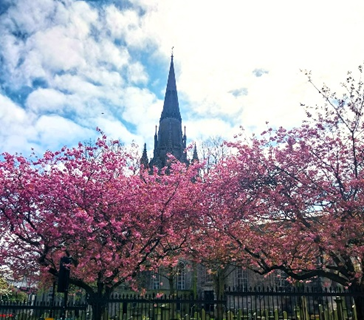
    Photo of King’s College Chapel, Aberdeen, taken as I left.