Author: Jim Gordon

  • TFTD April 13-19: I John 3.4-9: Sin and Love.

    Monday

    1 John 3.4-5 “Everyone who sins breaks the law; in fact, sin is lawlessness. But you know that he appeared so that he might take away our sins. And in him is no sin. 

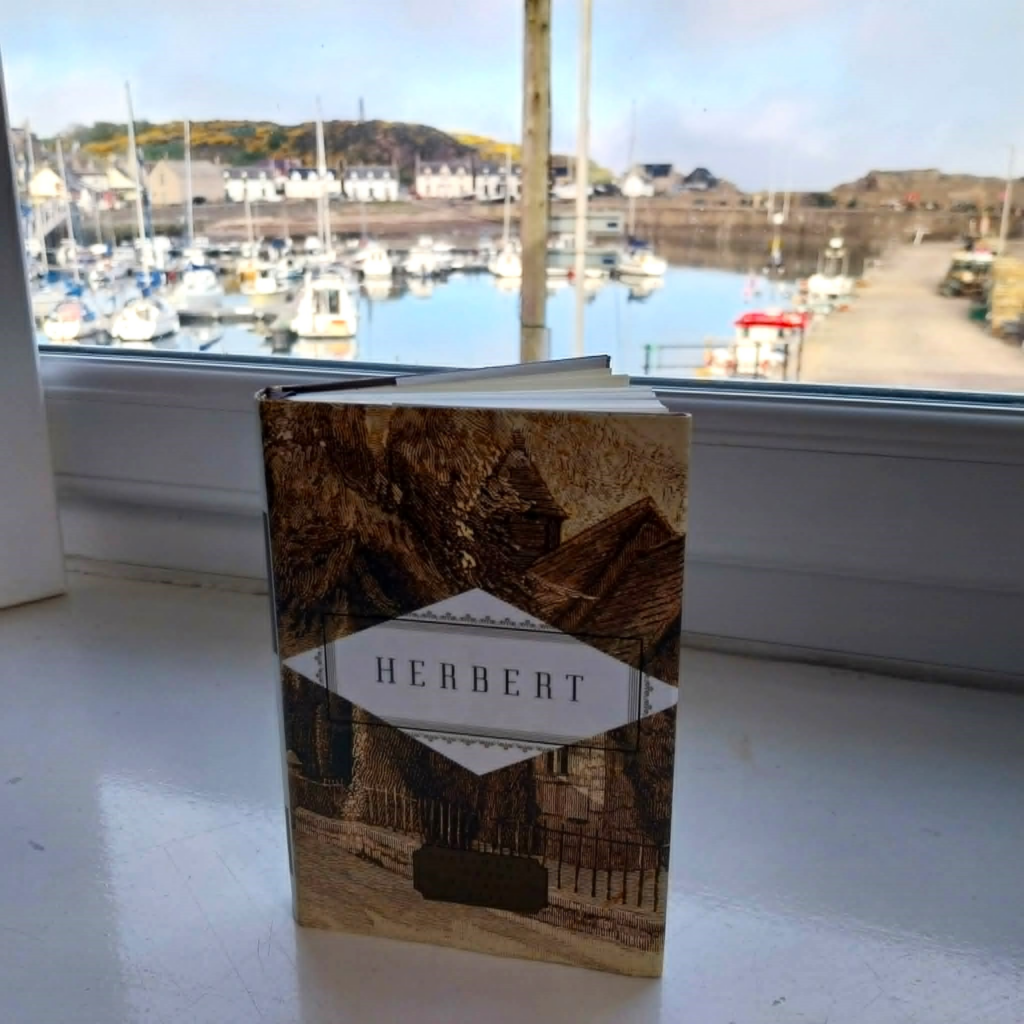
    Did you know that in this quite short letter sin and love are the two most frequently discussed truths in Christian experience? *Sin and love; our sinfulness and need of forgiveness, and God’s love making atonement in Christ. There’s nothing trivial about sin; and there is nothing trifling about God’s love. John had witnessed the cross, the cost and consequence of human sin, and our sins. Sin makes its appearance early in John’s letter because sin is deeply implicated in the why and wherefore of God’s redemptive purpose: “He is the atoning sacrifice for our sins, and not only for ours but for the sins of the whole world.” (2.2)  *See the poem I’ve included below

    Tuesday

    1 John 3.4-5 “Everyone who sins breaks the law; in fact, sin is lawlessness. But you know that he appeared so that he might take away our sins. And in him is no sin. 

    Sin is saying no to God.  Sin happens when we act as a law unto ourselves. Sin is chosen disobedience and lawlessness is effectively godlessness. Because of sin we live under the condemnation of a holy God and refuse to live within the sphere of God’s holy love. In three short sentences John tells the truth about human sinfulness, and the deeper truth of God’s holiness. The whole purpose of Christ’s appearing is to take away our sins – not just the world’s sins in general, but our sins in particular! “God made him who had no sin to be sin for us, so that in him we might become the righteousness of God.” (2 or 5.23)Paul and John singing from the same hymn sheet!

    Wednesday

    1 John 3.6No one who lives in him keeps on sinning. No one who continues to sin has either seen him or known him.”

    New life in Christ is a new creation. To live in Christ is to live in closest proximity to the holy love of God. John’s logic is unyielding. You can’t live in Christ and love the very realities that crucified him. You can’t look on beauty but prefer ugliness. Once we know Jesus, living in Him and Him living in us, faith in Christ and persistence in sin cannot co-exist in the same heart. Yes, we still sin, but it breaks our heart. We now know its cost and consequence. And John has already alerted us: “If anybody does sin, we have one who speaks to the Father in our defence – Jesus Christ the Righteous One.” This is pastoral theology at its restorative best for guilty hearts.

    Thursday

    1 John 3.7Dear children, do not let anyone lead you astray. The one who does what is right is righteous, just as he is righteous.”

    John is anxious about false teachers who may well be teaching that once forgiven subsequent sin doesn’t matter that much! A variation on what worried Paul when he argued in Romans, “Shall we go on sinning so that grace may increase? Absolutely not!” Righteousness is not only God’s gracious gift in Christ, it is earthed in the lived reality of new creation. Righteousness is to do what is right for the love of God, by the grace of God, empowered by the Christ within. We are not saved by good works, but for good works. The life we now live in the body, we live by faith in the Son of God who loved us, and gave himself for us. We live because Christ lives in us!

    Friday

    1 John 3.8 “The one who does what is sinful is of the devil, because the devil has been sinning from the beginning.

    The idea that you can claim to know Jesus and keep on sinning is absurd. It’s a lie. It’s the very essence of self-deceit to think sin and faith in Christ can happily co-exist in the same life. Sin breaks the Christian heart, and in shame and guilt we turn yet again to our “Advocate with the Father.” The devil is the cosmic expert in deceit, the originator of the lie, and a lie only has purchase on our lives if we believe it. To believe in Jesus Christ, the truth of God incarnate, the crucified and risen One, quite literally makes nonsense of such lies. God is light, and we live in the light. 

    Saturday

    1 John 3.8b “The reason the Son of God appeared was to destroy the devil’s work.”

    Jesus is the devil’s undoing! To the devil’s lies Jesus is the truth. The devil’s plan to destroy God’s creation is overthrown in the new creation. The power of temptation, sin and death is repelled by the grace of God which is made real and active in the new life in Christ. The guilt and power of sin is defeated on the Cross and overturned in the resurrection of Jesus. Not death, but life; not hate but love; not violence but peace; not the grim reality of division and power games, but a new community united in Christ, indwelt by the Spirit, and radiant with the light of God.

    Sunday

    1 John 3.9 “No one who is born of God will continue to sin, because God’s seed remains in them; they cannot go on sinning, because they have been born of God.

    No shades of grey here. This is either-or, Christ or the world, the flesh and the devil. It can never be bothand. You cannot be born of God and willingly continue in sin. God is light and has no fellowship with darkness. Our allegiance is either to Christ or the devil. Either we do right or continue in willing sin. Christian faith is a living relationship of loving trust. Being born of God we share the family likeness to light.

    I’ve included this poem as one of the best descriptions I know of the divine dilemma expressed in those two short words, sin and love. The poem is also one of the best commentaries on the text of 1 John which has so much to say about human sin and God’s love. Now and again I’ll include a hymn or poem like this if it adds to our understanding or encourages us to lift up our hearts in thankfulness and trust.

    The Agony

                     Philosophers have measured mountains,
    Fathomed the depths of seas, of states and kings;
    Walked with a staff to heav’n, and traced fountains:
                    But there are two vast, spacious things,
    The which to measure it doth more behove;
    Yet few there are that sound them—Sin and Love.

                    Who would know Sin, let him repair
    Unto Mount Olivet; there shall he see
    A Man so wrung with pains, that all His hair,
                    His skin, His garments bloody be.
    Sin is that press and vice, which forceth pain
    To hunt his cruel food through ev’ry vein.

                 Who knows not Love, let him assay
    And taste that juice which, on the cross, a pike
    Did set again abroach; then let him say
                 If ever he did taste the like,
    Love is that liquor sweet and most divine,
    Which my God feels as blood, but I as wine.

    (George Herbert, 1633)

  • “Blessed are the Merciful, for they shall obtain mercy.”

    Eklund speaks of “the many meanings of mercy”, and defines three categories: helping the needy, forgiving the offender, welcoming the outsider. Jesus said Blessed are those who do mercy, who act mercifully, who behave mercifully, who think and conspire and conjure up ways of showing mercy. Eklund mentions the ‘capaciousness’ of mercy – the elastic capacity it has to make space for the other. “Mercy is righteousness in action.”, according to Luther.

    “Mercy is defined as the opposite of cruelty.” If the merciful are blessed, what is the state of the callous and cruel, the violent and vengeful – and what will they ‘obtain’ from God?

    Gregory of Nyssa says mercy is “a voluntary sorrow that joins itself to the suffering of others.” Playing the same music, Calvin is an apologist for empathy. On behalf of those suffering under affliction he wrote: “We must assume their identity, as it were, so as to be deeply touched by their suffering and moved by love to mourn with them.” Mercy is “the grief we experience from the sadness of others.”

    When we pray, “Lord have mercy.” I guess our prayers have to carry the weight of such words, the presupposed tears of shared hurt opening ourselves to the fear and sadness and creeping despair of those whom life has broken.

    So, yes, the words of Jesus begin to sound even more demanding, requiring of us a way of looking at the world, and seeing other people, and understanding the human condition caught up in the tragic consequences of the absence of mercy.

    “Blessed are the merciful, for they shall obtain mercy.” These are words that summon us. ” Lord have mercy!”, is a prayer in response to that summons. And I genuinely wonder, and perhaps even hope, does that prayer also imply, “Lord, judge the merciless.”?

  • Things ain’t what they used to be…

    This is unabashed nostalgia. Amongst the sources of social and cultural analysis that helped shape and direct my thinking were four journals / papers to which I used to subscribe.

    The Listener, that venerable BBC weekly summary and wider analysis of radio content, cultural and political comment, book reviews and regular columns by people who could write. I bought books I would never have thought of buying, or known about, from the 1970s until it eased in 1991. One example, the biography of Helen Waddell, by the polymath nun Dame Felicitas Corrigan – which I still have.

    Third Way, a monthly Christian Journal aimed at the evangelical market and beyond. It offered up to date engagement and thoughtful Christian responses to all kinds of social issues such as racism, causes of poverty, environmental ethics and much more. The book reviews again pushed me into areas too important to be ignored by those whose ministry included preaching, pastoral care and community building in and beyond the church. There was nothing like Third Way, and its closure in 2016 was a significant loss of stimulus and good information.

    The Church Times is still going, and until recently I subscribed to the paper and digital versions. I probably will again but it did get fankled up in C of E politics for a while, , with much less wider comment on wider Christian stories. But throughout the years of my active ministry I appreciated the corrective conversations with a different Christian tradition.

    I’ve always read the Expository Times, ever since 1972! And I once bought for pennies a huge box of back issues going back into the 1950s which I spent many a happy hour browsing. I now read it online. Way back in the early 1980s my more agnostic friend used to pick it up monthly from the Church of Scotland bookshop in Buchanan St on his way home from work at Strathclyde University. There’s a fascinating article waiting to be written on the changes of style, content, format and implied readership of a journal for clergy that has run continuously since 1889.

    Nostalgia is no bad thing. It’s a way of appreciating what we once had and have since lost. Our more immediately available and often less reflective journalism and cultural comment comes at us at digital light speed and quickly passes on, displaced by what comes next. One example of what I miss now and appreciated then: in 1981 Shirley Williams wrote a book, Politics is for people. Thoughtful, compassionate, informed by facts and robust human experience – light years from the defensive and tell all post-political office biographies of 21st century memoirs. That book deservedly made it on to the review lists of Third Way, The Tablet, The Listener and the Guardian Weekly.

    The two images, the book by Shirley Williams and Stanley Hauerwas the American practical theologian, kind of sum up the rich diversity of voices from which we learn.

  • TFTD April 6-12 : Life Goes on After Easter.

    Monday

    John 20.1-2 “Early on the first day of the week, while it was still dark, Mary Magdalene went to the tomb and saw that the stone had been removed from the entrance. So she came running to Simon Peter and the other disciple, the one Jesus loved, and said, “They have taken the Lord out of the tomb, and we don’t know where they have put him!””

    After the stunned silence of Saturday, a new day starts, and with it, yet another shock. Early, still dark, and the light of the world is still eclipsed. The stone seal has been removed and Mary imagines the worst; even the body is gone. Running, breathless, urgency energised by rising panic, her words are desperate. The quiet of the garden is shattered by the fear of total loss. It is impossible now for us, who know the whole story, to imagine the terror and despair of those who loved Jesus facing such emptiness. “They have taken him…we don’t know where…” The answer to that bleak emptiness of the human heart is the resurrection of Jesus, which is both miracle, and the inevitable outcome of God’s renewing power, and determined love.

    Tuesday

    John 20. 3-5 “So Peter and the other disciple started for the tomb.Both were running, but the other disciple outran Peter and reached the tomb first. He bent over and looked in at the strips of linen lying there but did not go in.”

    John is reporting the testimony of eyewitnesses. Don’t rush him. There’s truth to be told and it has to be told through the experience of those who were there. The beloved disciple was obviously faster and fitter than Peter! He was first to the crime scene, assuming the body had been stolen. He saw the grave wrappings but stayed outside. John is giving you the reader time to catch up, time to think and imagine the impossible possibility that Jesus is indeed and in fact, the resurrection and the life! This is John’s way of saying what the other Gospel writers say: “He is not here. He is risen!” And impulsive Peter will barge right in and see for himself – and eventually, one he meets up with Jesus, will believe the evidence of his own eyes.

    Wednesday

    John 20.6-7Then Simon Peter came along behind him and went straight into the tomb. He saw the strips of linen lying there, as well as the cloth that had been wrapped around Jesus’ head. The cloth was still lying in its place, separate from the linen.” 

    The strips of linen lie there where they fell, but the face cloth was folded. In contrast to Lazarus who came from the tomb still bound, Jesus is free of all the clothes of death. The face cloth was folded – by whom? The divine passive is a way of saying things, a device that biblical writers used to suggest God is the subject, and the action is performed by God. Jesus’ absence from the tomb is not another Lazarus type story. Lazarus was raised but died again. Jesus is raised to life anew, eternal life with the Father. “No more we doubt Thee, glorious Prince of Life!”

    Thursday

    John 20. 8-9 “Finally the other disciple, who had reached the tomb first, also went inside. He saw and believed. They still did not understand from Scripture that Jesus had to rise from the dead. Then the disciples went back to where they were staying.”

    Peter established the facts – the body was gone, Jesus wasn’t there. The other disciple “Saw and believed.” Believed what? The full meaning of what has just happened will take a long time to unpack. Scripture’s prophecies and promises, the disciples’ encounters with the risen Jesus, the sharing of each other’s eyewitness testimonies – so much to process. The resurrection of Jesus is not simply another phenomenon that we can analyse and understand. It is an event that reverberates through all creation. “Death is dead, love has won, Christ has conquered.” One of the best lines in any modern worship song!

    Friday

    John 20.18Mary Magdalene went to the disciples with the news: “I have seen the Lord!” And she told them that he had said these things to her.”

    John’s telling of the meeting of Mary and Jesus can’t be split up into daily thoughts. It is a seamless garment, the story of a relationship of such intensity and intimacy it needs to be read for what it is – a story of God’s love revealed in all its life giving power; but also that same love refusing to be captured, possessed, or tied down to the interests of any one person. Mary’s words, “I have seen the Lord”, are said through smiling tears and tempered joy. She can’t keep Jesus; it is He who will keep her, and all those whom he loves and who love him. But having seen him, she can never again doubt Him or be lost to Him. So it is with each believer drawn into the love of God in Christ. Jesus promise includes all who believe; “I am returning to my Father and your Father, to my God and your God.”  

    Saturday

    John 20.19On the evening of that first day of the week, when the disciples were together, with the doors locked for fear of the Jewish leaders, Jesus came and stood among them and said, “Peace be with you!” 

    Locked doors are intended to keep out danger and provide security. Human fear is both a primitive and a survival emotion. It can galvanise or paralyse. The disciples were in that difficult place of locked in anxiety, no clear plan going forward, and no control of events. But Jesus ignores locked doors and comes and stands in the very place where fear lives. “Peace be with you.” This is not mere well-wishing. These words are like those first words of creation – God spoke, and it was so. Peace was with them because Jesus was with them. After the horrendous events of Friday, the long shock of Saturday, the emotionally shredding experiences of knowing and not knowing that had been the day so far, “Jesus came and stood among them and said, “Peace be with you.”

    Sunday

    John 20.20 “After he said this, he showed them his hands and side. The disciples were overjoyed when they saw the Lord.”

    Yes, it was indeed Jesus. The wounds leave no room for doubt. The one who now stands amongst them is the crucified one, the buried one, the one who said himself, “It is finished.” But it is only beginning. The resurrection is the definitive negation of death and the demonstrated triumph of God over all the powers and forces that frustrate and challenge the reign of God. God has given Jesus the name that is above every name, whether Caesar, or king or president. And the regalia of honour are eternal and visible in “his hands and his side.” The Lord of glory crucified, the Lamb in the midst of the throne. Or as Paul stated withgout apology to the Roman churches: “He was declared with power to be the Son of God, by his resurrection from the dead, Jesus Christ our Lord.” That is Easter. That is the good news. “This is our God the Servant King.”

  • Holy Week: “Ride on, Ride on in Majesty.

    Monday

    “Say to Daughter Zion, ‘See, your king comes to you, gentle and riding on a donkey, and on a colt, the foal of a donkey.’”

    Palm Sunday is full of echoes from Old Testament prophets. Every event of Holy Week is embedded in the promises and purposes of God. It may seem as the week goes on that those events run out of control, and the religious authorities and Roman power have a master plan to work together to crush and finally silence Jesus. But Isaiah had already pointed beyond human scheming to divine wisdom: “For my thoughts are not your thoughts, neither are your ways my ways…my word will not return to me empty.” The anointing, the upper room supper, Gethsemane, a friend’s betrayal, the show trial, public crucifixion, secret burial, – the whole sorry story of human scheming and political expediency gets the last word. But in all the machinations of human choices, God’s majesty is being revealed, unfolding before their eyes and ours.

    Tuesday    

    Ride on, ride on in majesty; hark, all the tribes Hosanna cry.
    Thine humble beast pursues his road with palms and scattered garments strowed
    .

    Many hymn books edit out the humble beast and write “O Saviour meek, pursue thy road.” But the donkey is essential. This is the Messiah coming gently, not to conquer but to redeem. The crowds see Jesus as the conquering deliverer and liberator the Romans feared. But God’s ways are not their ways, or ours. Jesus rides in majesty, but it is meekness and majesty, a public show of strength under constraint of love for all to see. In a world ruled by power and domination, this King comes with redemptive purpose, in obedience to the Father, as the Prince of Peace. The Hosannas of the crowd will soon take on the language of the Empire, “Crucify him!” And the Empire will, as it always does, crush and silence opposition. But only till Sunday morning, when the Son will rise! 

    Wednesday
    Ride on, ride on in majesty; in lowly pomp ride on to die.
    O Christ, thy triumphs now begin o’er captive death and conquered sin.

    I’m convinced Paul knew the scandalous splendour of this story. “For the foolishness of God is wiser than man’s wisdom, and the weakness of God is stronger than man’s strength.”  The triumphal entry is theological theatre, the enacted drama of God’s redemptive purpose. The lowly pomp of a Messiah hailed by Hosanna-yelling crowds, and riding a donkey, carried a message that went right over the heads of the powerful and wise. The triumph is hidden but will become obvious. Jesus was captured and conquered and crucified. But in Jesus’ death, death itself is captured and sin is more than conquered. The foolishness of the cross is the wisdom of God, its weakness God’s strength, and on Easter Sunday morning, to the surprise of the whole creation, the tomb will be as empty as the cross!

    Thursday

    Ride on, ride on in majesty; the winged squadrons of the sky
    look down with sad and wondering eyes to see the approaching sacrifice.

    Every verse of this hymn is ironic. The repeated ‘Ride on, ride on in majesty’ emphasises the determined, purposeful journey of Jesus towards Gethsemane, Pilate and Golgotha. Even the angels are helpless to intervene. For this is the wisdom of God. The deep and eternal mystery of God’s redemptive purposes for sinful humanity is hidden even from the angels. God is restoring a broken creation and quelling the disruptive powers of evil busy undoing God’s initial judgment on Creation that “it was very good.” Holy Week from start to finish is the condensation into time of an eternal plan unfolding in human history. We could well be amongst the crowd wishing for a Messiah of triumphant power. Or be looking on with the angels, knowing the story, dreading with them, ‘the approaching sacrifice.’

    Friday

    Ride on, ride on in majesty; the last and fiercest strife is nigh.
    Thy Father on the sapphire throne, expects thee, loved, anointed Son.

    It is easy to sink into sad despair by having to revisit, accompany, and think through the Passion story yet again. We know about the fiercest strife, gratuitous cruelty, and the normalised institutional violence of powerful forces and people who think they are doing God’s work in crucifying the Lord of Glory. But the hymn opens a forward and upward looking window. The Father awaits the homecoming of the Son. John’s Gospel repeatedly talks of Jesus being glorified by being ‘lifted up’ on the Cross, the same Cross that culminates in the final movements towards death and resurrection. The return of the Son to the Father is here imagined as the prepared welcome and enthronement of the Son at the right hand of the Father.

    Saturday
    Ride on, ride on in majesty; in lowly pomp ride on to die.
    Bow thy meek head to mortal pain; then take, O God, thy power and reign.

    The Triumphant entry to Jerusalem now gives way to the anticipated triumphal entry of Jesus to heaven. There is no avoiding the mortal pain, though. ‘He who knew no sin was made to be sin.’ ‘He became obedient to death, even death on a cross.’ ‘My God, my God, why have you forsaken me?’ That question mark is there for every human heart that has ever asked in bewildered pain, “Why?” The day after the crucifixion Jesus was in the grave. Dead. Buried. But not finished. Just as our hymn anticipates the real ending, we too become impatient to sing of the triumph of the Crucified: “Death is dead, love has won, Christ has conquered.” ‘Then take, O God, thy power and reign.’ That last line of our hymn hints at the resurrection and ascension of Jesus, the theological pivot-point of the Gospel story of Christ’s victory.

    Sunday

    Lo! Jesus meets us, risen from the tomb.
    Lovingly He greets us, scatters fear and gloom;
    let His church with gladness hymns of triumph sing,
    for her Lord now liveth; death hath lost its sting. [Refrain]

    Thine be the glory, risen, conqu’ring Son;
    endless is the vict’ry Thou o’er death hast won.

    ‘Thine be the glory’ seems like the ideal hymn to sing after ‘Ride on, ride on in majesty.’ Why? Because the Palm Sunday hymn anticipates the resurrection as the final, definitive, revolution of human thought about the cross as mere instrument of capital punishment. On Golgotha, ‘place to lose all hope of living’, Jesus bowed his head and said, “It is finished!” From that moment the fiercest strife was ended, the power of death was broken, sin was borne in the judgment and mercy of God, and the Light of the World would blaze out of an empty tomb scattering fear and gloom. That line, “Lo! Jesus meets us, risen from the tomb”, makes all of this personal, real, and for the here and now of our lives. “No more we doubt Thee, glorious Prince of Life.” May our hearts vibrate with hope, and our lives be daily renewed by the presence of the risen Lord.     

    Images.

    1. Easter Cross, display by Isobel Sinclair, Montrose Baptist.
    2. Palm Sunday, Chinese artist, He Qi.
    3. Door of Walled Garden, Echt Estate.
    4. Two Planetary Nebulae, Hubble Image.
    5. Studio model of Christ and Mary, by Sandy Stoddart.
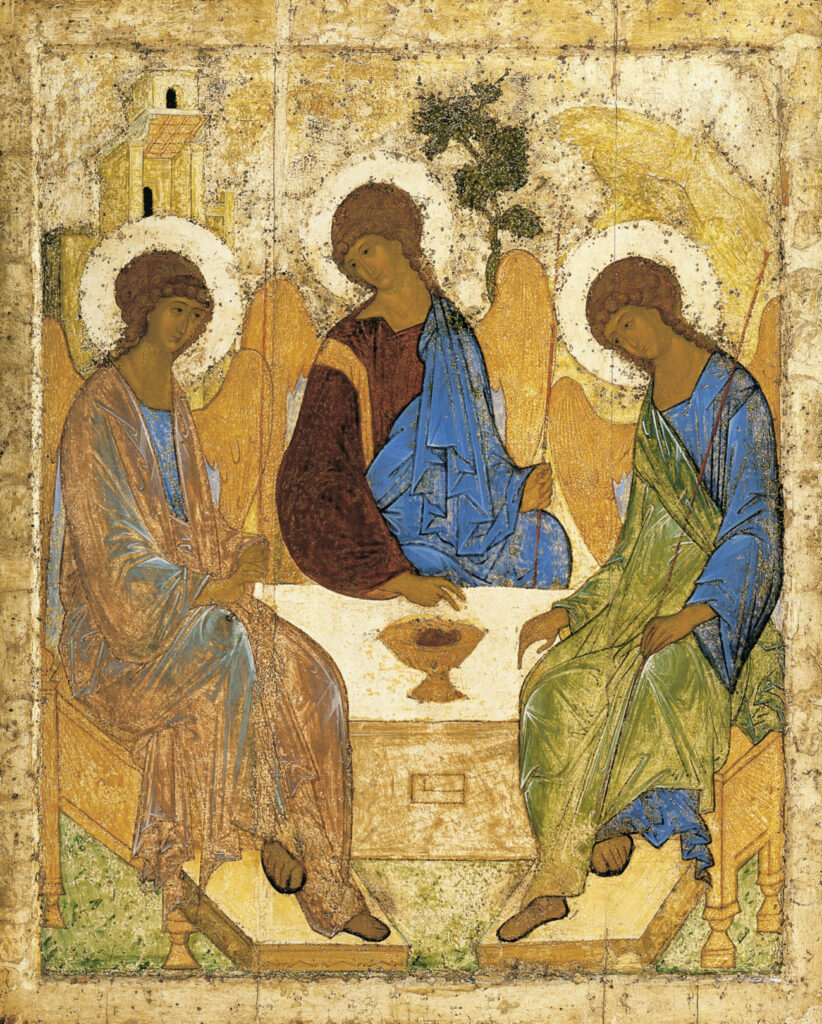
    6. The Trinity, icon by Andrei Rublev, Russian, 15th century.
    7. Studio model of Resurrection Angels, by Sandy Stoddart.

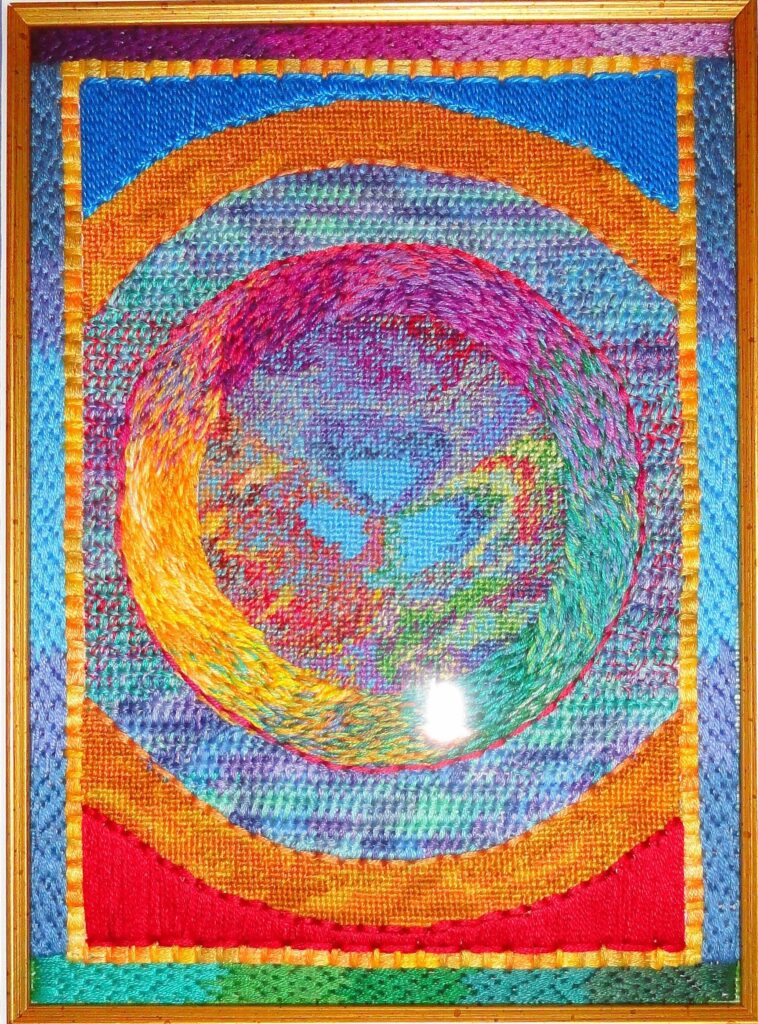
  • Working the Beatitudes Tapestry.

    Working on the Beatitudes tapestry for a while today. This will consist of nine miniature panels expressing the promise and the paradox of the Kingdom of God. While I stitch I think, imagine, listen to music, and pray the second petition of the Lord’s Prayer:”Your kingdom come, your will be done on earth as it is in heaven.” The coming of the kingdom of God, and the fulfilment of the promises of the Beatitudes will, in God’s time, coincide.

    “Blessed are they who hunger and thirst for right to prevail; they shall be satisfied.” (REB)

    This translation seems to capture the urgency of ache and longing for the very things that make for life; such as food and drink, justice and righteousness. This saying of Jesus was first articulated in a conquered and occupied country, under the shadow of a superpower with overwhelming military capability, and by someone who would one day stand before a Roman court and Governor, when right would not prevail.

    Except. Our human longing for right to prevail, for justice to become a torrent of righteousness, is exactly what Jesus came to fulfil, and to fully satisfy. But God’s righteousness and justice are not established by force that violates. The Kingdom of God is of a different order – “My kingdom is not of this world,” said Jesus to Pilate, the face and force of Empire, combining political cunning with lethal power.

    That promise, so apparently unrealistic, is nevertheless a fertile seedbed of hope – they (and we) shall be satisfied. On God’s say so, and in God’s way. That promise of righteousness and justice was said finally and definitively by the very same Jesus who spoke those words, and whose death and resurrection made such an outcome certain: “God was in Christ reconciling the world to himself…”

    All of the Beatitudes have this eschatological trajectory, looking forward to God’s full restoration of a new creation. Meanwhile we hunger and thirst, we pray and we wait, we work and bear witness towards all that anticipates that great righting of wrong. Our resistance of evil is part of that same process of faithful waiting and hopeful action.

    The Beatitudes tapestry is slow meticulous work. Each stitch is a small protest at the disorder of the world, the slow building of meaning and imagination, and enacted longing for the healing of the wounds of the world. In that sense hunger and thirst for righteousness, and for justice.

    Photograph of the River Dee, near Braemar.

  • TFTD March 23-29: Ruled by the Peace of Christ.

    The image is a piece of colouring art by my friend Ben, who sometimes allows me to help, when we meet for coffee.

    Monday

    Isaiah 26.3 “You will keep in perfect peace those whose minds are steadfast, because they trust in you.

    Or the older translation “whose mind is stayed on Thee.” Stability in a destabilised world, peace when everything suddenly seems uncertain; this is part of Isaiah’s song of praise, sung to God. This isn’t the preacher telling whoever listens to have peace, as if that were achievable. This is a promise. Trust is when we take seriously the promises of God, believing God is faithful. Our mind is steadfast because God is steadfast. Peace isn’t manufactured inside us, it comes to us as gift, grace, and mercy. Perfect peace rests on belief that the end goal is in God’s hands, whose grip is strong.  

    Tuesday

    Isaiah 26. 4 Trust in the Lord for ever, for the Lord, the Lord himself, is the Rock eternal.”

    Exuberant hope is built on faith with deep foundation pillars. Isaiah looks around at a people 70 years into exile. Every day and everywhere the symbols of empire taunt their memories of home. “Never stop trusting God”, he says. History is fluid and everything changes; God, on the other hand is rock, everlasting rock. Faith is the steadfast set of the mind towards God, who is as unchanging as the Rock of Ages in his gracious care and purposeful wisdom. Isaiah calls us to long term faith, a constant, resilient, determined set of mind and heart that goes on hoping in God, our Rock!

    Wednesday

    John 14.27 “Peace I leave with you; my peace I give you. I do not give to you as the world gives. Do not let your hearts be troubled, and do not be afraid.”

    Those words were spoken to disciples stunned by talk of betrayal, and Jesus’ impending arrest and coming death. “Don’t worry, it will be fine” is never likely to persuade people out of their worst fears! Peace has to have an anchor point, bedrock for foundations, deep roots into realities more powerful than what we fear. Not just any peace, “My peace”, says Jesus. Not peace that passes, but peace that passes understanding. Peace like a hand stretched across the waves hauling to safety. Peace that commands the waves “Be still!” For troubled and fearful hearts, peace is the promised presence of one who goes with us, stands with us, and stays with us.

    Thursday

    Colossians 3.15 “Let the peace of Christ rule in your hearts, since as members of one body you were called to peace. And be thankful.”

    Peace is one of the authenticating living documents of the church’s identity. Not just any peace – the peace of Christ. Peace is not a by-product of our ability to get on with each other. The peace of Christ is reconciling peace, brought about by the costly forgiveness that doesn’t give up on relationships. As members of one body, the Body of Christ, we are exemplars of God’s peace-making, a community of reconciled reconcilers, ambassadors of Christ, who is our peace.

    Friday

    Colossians 3.15 “Let the peace of Christ rule in your hearts, since as members of one body you were called to peace. And be thankful.”

    That word ‘rule’ is worth a second post! Paul uses a word with which many of us will be familiar: “to referee, to be an umpire, to make a decision.” And the referee’s decision is final! The peace of Christhas the last word in every disagreement. Why? Because we were called, by God, to peace. The Christian community was born through the peace-making work of Christ on the cross, and is now called, summoned by God, to live into and live out of that dearly bought peace of Christ. I love that wee pastoral nudge Paul can’t resist! “And be thankful.” Christ is the referee, not us!

    Saturday

    James 3.18 “Peacemakers who sow in peace will raise a harvest of righteousness.”

    Trust James to get to the point and be embarrassingly practical! He insists that our faith is as much about who we are and what we do, as it is about what we believe and think and feel about Jesus. Following on from all we have been thinking about this week, about God’s peace as gift, the peace that reassures troubled hearts, the peace of Christ, James gets us talking about peace-making that aims for results. When misunderstandings are cleared up; grievances are forgiven; conciliation is not grudged but humbly sought; words that have wounded are taken back; apologies are celebrated as signs of strength and spiritual health. Peace is not our private project or possession – it is a calling, the vocational training of the heart towards Christ.

    Sunday

    James 3.17 “The wisdom that comes from heaven is first of all pure; then peace-loving, considerate, submissive, full of mercy and good fruit, impartial and sincere.”

    These are the qualities of the peacemaker. The peace of Christ to which we are called requires of us a whole cluster of Christ-like character traits, starting with wisdom that comes from heaven. In other words all this is both gift and discipline, faith and works, the outworking of the peace of Christ in our lives. Christ is the referee who has the final word on how we conduct ourselves in every relationship to others. This verse can be a powerful corrective when used at the end of the day as a review of how we have played our part in being the peace of Christ to others. “May the Lord of peace himself give us peace at all times and in every way; and the Lord be with us all.”

  • Reading Karl Barth in a Disordered World.

    I have found Karl Barth a wise counsellor these past weeks, and at this point in the life and history of our world. What on earth, what on this God loved but disordered earth, am I to think and believe and do in a world spiralling so dangerously towards disorder and the chaos of political power resorting to violence?

    According to Barth, the second petition of the Lord’s prayer is the beginning of an answer, a response of revolt against disorder – to pray, with “sighing, calling and crying,” Thy Kingdom come.”

    “The decisive action of [Christian] revolt against disorder, which, correctly understood, includes within itself all others, is their calling upon God in the second petition of the Lord’s Prayer: Thy Kingdom come.

    The Kingdom of God is awaited and comes from God, from above, from heaven. It is the universal and definitive revelation of the righteousness of God which judges and establishes humanity. It is the institution of his perfect lordship in human relations and inter-connections. It is the setting up of his salutary order in human life and fellowship.

    The Kingdom of God is God Himself in the act of normalizing human existence. It is thus God Himself in the victorious act of overcoming the disorder which still rules humanity.

    Christians have the freedom to pray that God’s Kingdom, God Himself in this act, will appear and come — will come to us, from heaven to earth. Their use of this freedom, their sighing, calling and crying “Thy Kingdom come,” is, when they say it and mean it comprehensively,their demanded revolt against disorder.”

    (Page 236)

    Perhaps the second petition of the Lord’s Prayer is all we have the energy and will to say watching the madness of our times playing across our screens; Thy Kingdom come. Not as passive resignation, but as revolt against disorder, as hope defiant of despair, and as faith in God’s victory in Christ over the powers that sow disorder in God’s created order. “Thy Kingdom come; Thy will be done on earth, as it is in heaven.” Amen.

    And having prayer that vertically, then to go looking for ways to redeem the disorder closest to us by acts of kindness, justice, compassion, forgiveness, cherishing human life in each person God brings our way.

  • TFTD Mar 16-22: “Behold What Manner of Love…”

    Monday

    1 John 2.26 “I am writing these things to you about those who are trying to lead you astray. As for you the anointing you received from him remains in you, and you do not need anyone to teach you.”

    We don’t use the word ‘heresy’ much these days. But in the earliest Christian communities the truth of who Jesus is as Son of God, the meaning of his death as atonement of sins, the reality of his resurrection and living presence – these were contested. There was always the danger of false teaching. By the anointing of the Spirit the Christian mind and heart have received the Word of God, which takes root and grows and bears fruit. Just as Jesus promised, the Spirit takes the things of Jesus and leads them, and us, teaches all things and leads us into the truth of Jesus.

    Tuesday

    I John 2.28 “And now, dear children, continue in him, so that when he appears we may be confident and unashamed before him at his coming.”

    To ‘continue in him’ is to stay faithful, to follow and obey Jesus’ teaching, to trust in the grace that is always sufficient, to confess our sins and rely on the ‘blood of Jesus Christ that cleanses from all unrighteousness.” Christian perseverance is continuing trust in the keeping power of God. One day we will be face to face with Jesus – just as Peter had to face Jesus having denied him. To be confident and unashamed is not self-confidence; but that deep assurance that he who began a good work in us will bring it to completion at that moment when we look on His face, and we know and are fully known.

    Wednesday

    1 John 2.29 “If you know that he is righteous, you know that everyone who does what is right has been born of him.”

    Like produces like. Righteousness produces character and behaviour that is righteous. To follow Jesus is to have the mind of Christ, to hear his words and obey them, to have his Spirit within us as the gift of new life in Christ as children of the Father. We know we are not saved by our own performance. Allow Paul to explain: “We are God’s workmanship, created in Christ Jesus to do good works, which God prepared in advance for us to do.” (Eph 2.10) Doing what is right is in our DNA!

    Thursday

    1 John 3.1 “How great is the love the Father has lavished on us, that we should be called the children of God. And that is what we are.”

    Lavished is a word that knows no calculation, only the urge to generosity and self-giving. I still know this verse by heart in the older version: “Behold what manner of love the Father has bestowed upon us.” John will keep coming back to the love of God as the first and last reality of the universe. The love of God in Christ, poured into our hearts by the Holy Spirit, is the truth by which we live, the originating source of all that we have been made to be in Christ. Children of God – that is what we are!

    Friday

    1 John 3.1b “The reason the world does not know us is that it did not know him. 

    The world of power and money, of competitive greed and claimed freedom from God’s requirements has no time for the way of Jesus. Acting justly, loving mercy and walking humbly get in the way of human ambition, personal advantage, living our own life in our own way. If we truly and faithfully follow Jesus, that kind of ‘me first’ world will either laugh or resist. The whole Sermon on the Mount is a description of life under the rule of God – and it contradicts all the structures of social power and unrestricted self-interest. As Jesus said, “My kingdom is not of this world.”  

    Saturday

    1 John 3.2 “Dear friends, now we are children of God, and what we will be has not yet been made known. But we know that when Christ appears, we shall be like him, for we shall see him as he is.” 

    Now and not yet – we are and we will be: this verse may sound complicated, but John is doing his work as a pastor deepening the foundations of assurance. The reality of life now doesn’t compare with the fulfilment of all reality when we shall see Jesus as he is. All our Christian lives we strive to be like Jesus, we fail and try again, our devotion and longing and persisting is our love reaching for “the prize of the high calling of God in Christ Jesus.” Be patient. We are who we are, no more or less, but eventually, and finally “we shall be like him for we shall see Him as he is.”

    Sunday

    1 John 3.3 “All who have this hope in him purify themselves, just as he is pure.”

    “Blessed are the pure in heart, for they shall see God.” Purity of heart is that singleness of motive to please God, above all else, and before all else. The blood of Jesus, God’s son cleanses us from all unrighteousness – but we are cleansed to enable us to live as children of God who is Light and Love. Hope is one of the most powerful motives of the human heart. Without hope life is emptied of the inner energy that keeps us going. The hope of seeing Jesus, and being like him, of a renewed creation and God’s triumph, of God’s name hallowed throughout creation that is the purifying Christian motive – and its energy source is the love of God. 

  • TFTD: March 9-15. Knowing and Living in the Truth.

    Monday

    1 John 2.18-19a “Dear children, this is the last hour; and as you have heard that the antichrist is coming, even now many antichrists have come. This is how we know it is the last hour.They went out from us, but they did not really belong to us.

    This is a Christian community in trouble. Those who claim to belong to Christ don’t behave in ways that hurt or weaken the fellowship of the faith community. Here John uses the word antichrist to describe those “who deny that Jesus is the Christ…” One of the tests of Christian faith, is the faithfulness and fellowship of those who belong together in Jesus’ name. What we believe about Jesus defines us. John made that very clear. The Word of life appeared – we have seen it! In Jesus God’s light and love blazed into the world. To deny that, denies what matters most in Christian faith.

    Tuesday

    1 John 2.19They went out from us, but they did not really belong to us. For if they had belonged to us, they would have remained with us; but their going showed that none of them belonged to us.”

    Schism, division, breaking fellowship, splitting a community of people who belong together in Jesus’ name, is a wound to the Body of Christ. To deny that Jesus is the goal and centre of God’s redeeming purpose is to question the foundation stone of Christian faith. “They went out from us” doesn’t only mean they physically went elsewhere; it also means that they had already in their hearts left the very basis of belonging within the community of faith: “Our fellowship is with the Father and with his Son, Jesus Christ.” (1.4) To deny that Jesus is the Son of God is to be antichrist; it means denying the life-giving truth of the Word of Life who appeared in Jesus.

    Wednesday

    1 John 2.20 “But you have an anointing from the Holy One, and all of you know the truth. I do not write to you because you do not know the truth, but because you do know it and because no lie comes from the truth.”   

    Truth is crucial. In the church visible there are real members and apparent members; only God knows who truly belongs in the church invisible. How do we know we belong? The anointing from the Holy One is what makes the difference. The word anoint is the same word as lies behind the title ‘Christ’. Perhaps Paul gives the best help in understanding John: “He anointed us, set his seal of ownership on us, and put his Spirit in our hearts as a deposit…” (2 Cor 1.21) And John himself recalls Jesus’ words: “If you abide in my word, you are truly my disciples,and you will know the truth, and the truth will set you free.” These are words of “Blessed assurance” based on personal experience and the glad confession of faith, “Jesus is mine!”

    Thursday

    1 John 2.22-23 “Who is the liar? It is whoever denies that Jesus is the Christ. Such a person is the antichrist—denying the Father and the Son. No one who denies the Son has the Father; whoever acknowledges the Son has the Father also.”

    It’s no small thing to call someone a liar! John’s language is urgent, uncompromising, and as clear as he can make it. If this community is to survive it can only do so by its faithfulness to Jesus as the Son of the Father. John’s concern is about maintaining the truth-based foundations of faith, acknowledging the Son and the Father. Out of such truth comes assurance of everything else: God is light, God is love, the Son is our Advocate with the Father, reconciliation by the cross, forgiveness of sins, God’s love in us perfecting our faith, new life that has the quality and promise of eternity.

    Friday

    1 John 2.24 “See that what you have heard from the beginning remains in you.”

    “From the beginning” is a phrase John uses repeatedly. In fact it’s the first sentence of his letter. Truth founded on the testimony of witnesses is confirmed in the experience of those who were there at the beginning. He means the pillars of faith are plunged deeply into the eternal purposes of God in Creation and Redemption. We are established by truth believed in the heart. John’s word is used by Jesus in the Gospel: “As the Father has loved me, so have I loved you. Now remain in my love.”

    Saturday

    1 John 2.24b “If it does, you also will remain in the Son and in the Father.”

    The older word for remain is ‘abide’. It is still the best word, because it suggests taking up residence, making somewhere a long-term home and permanent dwelling place. We inhabit the truth we believe. To acknowledge the Son and the Father is a lifelong commitment of faith, love and hope in Christ; it is to remain in the Son and the Father as our true and lasting home. It is to abide in the love of God in Christ.

    Sunday

    1 John 2.25And this is what he promised us – even eternal life.”

    This is the only use of the word ‘promise’ in all of John’s writings, and it is linked to one of his favourite themes – eternal life. For John, eternal life is the reality of the life of heaven which has already begun here, in those who abide in Christ and Christ in them. “Blessed assurance Jesus is mine! O what a foretaste of glory divine.” Eternal life is to live in the grace, fellowship and love of God as our abiding place now, with the secure promise of our completion and fullness in the eternal life and presence of God beyond earthly life. This is what it is to know the Father and the Son.