Author: Jim Gordon

  • The Beatitude of Peace-making.

    Blessed are the peacemakers for they shall be called the children of God.

    Peacemaking God, in Christ you were reconciling the world to yourself, and breaking down dividing walls of hostility

    We pray for Ukraine and Russia, for Israel and Gaza, for Yemen and Sudan: For these, and other places where for generations, fear and anger has blinded and divided communities into enemies, and created communities whose history is fear, distrust and hatred of each other.

    We pray for countries and communities where grievances suffered and suffering inflicted leaves legacies of hate and suspicion, where history overshadows the present, violence silences every call for peace, and deep wounds cry so loudly they drown out voices for peace and conciliation.

    Help us to listen for the subversive wisdom of the Peacemaker Spirit of God, informing our prayers, and recalibrating our minds towards new strategies for the healing of our world, 

    Teach us to speak the language of peace with fluency and courage, and to pray for reconciliation with renewed and determined hopefulness in the God of hope.

    As at the creation your Spirit brooded upon the waters of chaos, so Peace-making Spirit of Christ, overshadow our broken world with mercy and justice, and help us to trust, not in Presidents and Prime Ministers, not in military power or economic levers, but in you the Prince of Peace and Risen Lord whose first words to your perplexed disciples were, “Peace be with you.” Amen

  • Bonhoeffer on Christ, the Church, and the World.

    I’m spending quite a lot of my reading time with Dietrich Bonhoeffer these days. Ever since 1976, when I read Mary Bosanquet’s exceptional biography, Bonhoeffer has been a regular conversation partner. I till have that book. Published in 1968, it is now seriously dated, but still has value as an early, readable, well researched, and sympathetic but not uncritical account of Bonhoeffer’s life and subsequent influence. It has the added value as a biography because it carries a Foreword written by Bonhoeffer’s sister Sabine Leibholz-Bonhoeffer. She commends the honesty, sensitivity and theological perception with which Bosanquet interpreted Bonhoeffer’s life and thought.

    Forty years later I attended a lecture by Dr Jennifer McBride as part of the Bonhoeffer for Pastors day at the University of Aberdeen. The title was ‘Who is Bonhoeffer for Today?’, and it was a tour de force in which she argued strongly against those who find in Bonhoeffer whatever they go looking for, with no regard for the overall context within which Bonhoeffer lived, and spoke and wrote. For example, ‘Religionless Christianity’, ripped from context and made into a vehicle for radical, at times radically negative theology, is a phrase that can only be understood within the overall Christological focus and cruciform shape of Bonhoeffer’s later theology.

    Mcbride’s major work, The Church for the World: A Theology of Public Witness, (OUP, 2012), examines Bonhoeffer’s insistence that Christian discipleship and the church as the Body of Christ are authentic only insofar as they engage with the world, and do so as expressions of the Lordship of the incarnate and crucified Jesus. The book explores the three primary and inter-related realities in Bonhoeffer’s theology – Christ, the Church, and the World.

    One of the genuinely creative points McBride made in her lecture was to warn the church against a moral triumphalism by which Christian communities see themselves as the moral and ethical judges of society. The church, rather, is the Body of the Christ who took upon himself the sins of the world, and was ‘numbered with the transgressors’.

    Far from being the judge and moral watchdog of society, the church is called by God to be a community of repentance, acknowledging its solidarity with human, social, and public life in all its ethical complexity and compromise. As the Body of Christ in its human form the church confesses its implication in the structures of sin, and witnesses to an alternative way of being. The new being that is the church is called to express repentance as turning away from the practices of domination to the practices of redemptive action, and these based on a discipleship of the crucified, risen Lord, whose life they embody.

    That at any rate was what I took away, and it still provides much to ponder. McBride’s work then and since has been a substantial reclaiming of Bonhoeffer as a primary resource for a theology both culturally critical and Christologically confessional. Her more recent books include Radical Discipleship: A Liturgical Politics of the Gospel, and a co-edited volume of essays on Bonhoeffer and King: Their Legacies and Import for Christian Social Thought. This volume brings Bonhoeffer’s struggle into dialogue with Martin Luther King’s struggle – both of them advocates of the radical Gospel of Jesus as cross-carrying agents of resistance to the powers that be and of transformational change in the real world of human affairs.

    At a time when, in many places, the church and the faith to which we bear witness is being co-opted by ideologies of nationalism and power seeking, there is much to be learned from the writings of Bonhoeffer, a flawed and brilliant pastor whose discipleship, ministry, writing and theological struggles, were worked out in the church struggles of his time. That’s what gives his voice relevance and urgency for our own time.

  • TFTD Nov 3-9 Safe Harbour, Still Waters and Known Paths.

    Monday

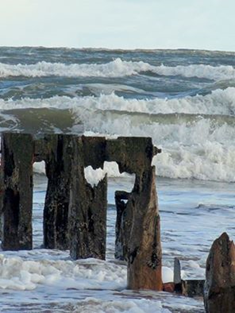
    Psalm 107.30 “They were glad when it grew calm and he brought them to a safe harbour.”

    The sea isn’t always as calm as it looks in the photo. Neither is the life we have to live every day. There are storms that disrupt our equilibrium, sometimes strong headwinds of circumstances and difficulties we have to plough through. This verse is a reminder to cry to the Lord in our trouble, “He stilled the storm to a whisper, and the waves of the sea were hushed.” Every life has its storms and at times like that we look for a safe haven, a secure harbour, a place of refuge, the providence of a merciful God.

    Tuesday

    Luke 4.40 “When the sun was setting the people brought to Jesus all who had various kinds of sickness, and laying his hands on each one, he healed them.”

    King’s College Chapel at dusk, one of my favourite places. Evening can be a difficult time for folk who have struggled through the day with illness, weakness, mental ill-health, or emotional exhaustion. In prayer we too bring people to Jesus for healing of body, mind and spirit. We can never know what our prayers achieve. But we do know the promises of God, and that our prayers are heard, woven into the patterns of God’s purposeful care for all who are in need.  

    Wednesday

    Psalm 23.2He leads me beside still waters.

    Stillness – a break from surrounding noise, a chance to quieten the mind, and to listen to our life. Faith is many things, but for the Psalm-poet it includes that peace of mind and heart that is not self-achieved, but is the gift of God – the gift of God’s presence felt. After he was risen, Jesus “the great shepherd of the sheep”, often announced his presence with the words, “Peace be with you.” Recognising the risen Jesus, present, there, with them, in the midst – that has always been the key to Christian peace.

    Thursday

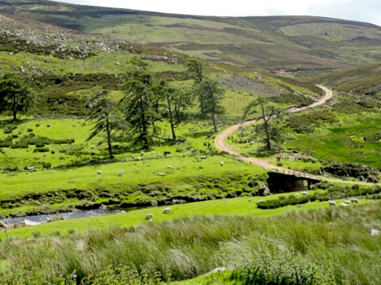
    Proverbs 3.5 “Trust in the Lord with all your heart and lean not on your own understanding; in all your ways acknowledge him and he will make your paths straight.”

    I love paths! Forest tracks, sheep tracks across the moor, or winding round and up a hill. A path is made by all the feet that have gone before us, so it’s a shared journey. Christian fellowship is to walk the same path, following faithfully after Jesus. Early Jesus followers were called precisely that, followers of the Way. Each day is another part of that long trek, “looking to Jesus the starter and the finisher” of the journey we are making. Trust is the inner attitude of humility, a firm willingness to follow, an obedience of the heart that acknowledges God as our guide.

    Friday

    Psalm 19.14b “O Lord, my Rock and my Redeemer.”

    I often walk past this rock. And yes, I’m daft enough to have a favourite rock! It’s about a metre in length and millions of years old. But here it sits, above the tide line, weathered and sculpted and, yes, solid. Poetry is about finding words and images that can tell truth differently, and help us imagine new things. That’s why the Psalm poet describes God as a Rock – God’s love and mercy are solid, forever enduring, unchanged by tide or time, his purposes eternal and wise, his promises unbreakable. As the old hymn has it, “Rock of Ages, cleft for me, let me hid myself in Thee.” Or another, “Yes! Jesus is a rock in a weary land…”

    Saturday

    John 1.1 “In the beginning was the Word, and the Word was with God, and the Word was God.”

    The symbol of John’s Gospel is the eagle. Majestic in its range of thought, soaring to the heights of eternal truth, fierce and relentless in pursuit of that truth, with deep and distant vision to see, to behold, and to gaze in awe. John’s aim is to bear witness to the One who is Creator, Light, Truth, Bread of Life, Resurrection and Life. Awe and wonder rebuke the smallness of our minds and upset our sense of familiarity with holy things. “The Word became flesh, and we beheld his glory, full of grace and truth. (John 1.14) To which our proper response is worship, kneeling, and the confession of Thomas, “My Lord, and my God!”

    Sunday

    Isaiah 1.4 “They will beat their swords into ploughshares, and their spears into pruning hooks. Nation will not take up sword against nation, nor will they train for war any more.” 

    The photo was taken outside The Gordon Highlander’s Museum in Aberdeen this week. An entire hedge of poppies, individually knitted or done in crochet. Vivid, eye-catching, and with a moment’s reflection, deeply poignant. Thousands of poppies, each one a few hundred stitches, in memory of all who have died in conflicts not of their making. Remembrance Sunday is a day of mixed and powerful emotions because that’s what memories do – they trigger our grief and sadness, and signal our loss and confusion. Isaiah looked forward to a day of peace and harmony, an age of shalom and flourishing that is yet to come. Until that time comes in the purposes of God it is a divine imperative to pray for peace. Why? Because “Blessed are the peacemakers, for they shall be called the children of God.” And because we pray to the God of peace, and in hope to the God of hope.

    (Photo from Gordon Highlander’s Museum, Facebook post. No attribution there, but credit acknowledged.)

  • Bonhoeffer: “Your ‘yes’ to God requires your ‘no’ to all injustice, to all evil, to all lies…”

    The life and thought of Dietrich Bonhoeffer persists as an essential and critical voice even eighty years after his death. There are so many reasons to pay attention to the occasional writings and speakings of Bonhoeffer; but in our time of fractious politics, slow and sometimes blatant power grabs, growing support for right wing populism and uncritical adulation of the strong leader, it is the radically uncompromising call and cost of discipleship in following Jesus that challenges Christian communities to decide where ultimate allegiance lies. This is Bonhoeffer the pastor, preaching a Confirmation sermon in 1938. The date is essential context, and the words are explosive in their political as well as theological and spiritual reverberations:   

    You have only one master now…But with this ‘yes’ to God belongs just as clear a ‘no.’ Your ‘yes’ to God requires your ‘no’ to all injustice, to all evil, to all lies, to all oppression and violation of the weak and poor, to all ungodliness, and to all mockery of what is holy. Your ‘yes’ to God requires a ‘no’ to everything that tries to interfere with your serving God alone, even if that is your job, your possessions, your home, or your honour in the world. Belief means decision.”

    Preached to young Christians facing what we now know as life in one of the most violent, lethal and merciless regimes in European history. The use of the word “master” is likewise laden with intentional contrast, and implies an either-or from which there can be no compromising third choice. One master. Who is it to be? Yes to God means ‘no’ to all other powers demanding final loyalty of mind, heart, soul and body. Belief means decision, not only one single decision after which it is business as usual; but a confirming decision that means all other decisions take their direction from that living and central commitment to Jesus Christ.

    What makes Bonhoeffer such a necessary discomfort to those who are at ease in Zion is his reiteration of the radical, risk-laden demands of the Gospel of Christ. Earlier translations of his book on discipleship were titled, The Cost of Discipleship. The critical edition is more accurate in the technical sense of the one word title: Discipleship. However commendable that title, it remains the case that Bonhoeffer’s relentless emphasis on the nature of Christian following of Jesus focused on the cost of discipleship. That cost was inevitable and the sine qua non of faithfulness to God, and the authenticating hallmark of a life following the way of Jesus Christ, bearing a cross and headed for Calvary.

    The words from the confirmation sermon were not intended as comfortable invitation to convenient respectability, but as warning and call to a lifestyle and inner orientation at odds with all that is at odds with the way of Jesus. In other words this ongoing ‘yes’ compels a recurring ‘no’ to all that demands a different loyalty to alternative values and competing life goals. The life goal of the disciple is to be faithful to Christ, the values are rooted in the commitment of God in Christ to a reconciled world, and that ‘Yes’ carries within it a lifelong capacity for saying no; and Bonhoeffer is explicit in what is to be contradicted.

    “God requires your ‘no’ to all injustice, to all evil, to all lies, to all oppression and violation of the weak and poor, to all ungodliness, and to all mockery of what is holy.”

    Those words are freighted with responsibility for the way we live our lives in the 2025 world of political and social divisions. One of the more easily overlooked features of contemporary life is the mockery of what is holy. That isn’t new either, it was a social toxin flowing through the veins of National Socialism and its effect was the weakening of the immune system, making minds and wills less receptive and increasingly resistant to moral values of human worth, dignity and fundamental rights. 

    The mockery of what is holy is a theological version of the cliche ‘nothing is sacred anymore’. But when that which one group in society reveres and holds as of essential value to their lives is mocked, ignored, or treated as trivial, the result is a dangerous diminishing of human capital and ethical safeguards. Bonhoeffer saw that happening over the years before the 1938 sermon. The mockery of what a society has deemed to be holy, pushes back boundaries and rewrites in coarser and less humane language what is acceptable, decent and for the common good. Eventually people themselves, those who hold on to what is holy and to be respected by consensus, are themselves mocked, diminished, and devalued.

    At that point Bonhoeffer could see with prophetic clarity, the fundamental Yes to God which orients the whole of life, demanded a faithful No to all in life that contradicts justice, goodness, truth, freedom, care for the weak and poor, and reverence for the holy. Yes implies No. You cannot serve God wholeheartedly and something else at the same time. The criterion for the Christian is the cross of Christ, a dying to all other claims on our will, conscience, heart, mind and body.

    I find these words of Bonhoeffer so uncomfortably apt in 2025 Britain and beyond. But I know of no other way to be faithful to the fundamental Yes I’ve said to God as a Christian, than to say with continuing conviction, and with relentless faithfulness, No. No to words that are lies. No to policies which humiliate and threaten the poor. No to policies of injustice and callous disregard for refugees and immigrants. No to hostile environments, to racism and antisemitism. No to the abuses of power when it is used to remove the very levers put in place to hold power accountable. No to the rhetoric of division. No to the deifying of capital, money, wealth, stuff and its consequent global inequity. And No to the laying waste of the only planet we have, in pursuit of all the above.

    And in all those sayings of No, those who follow Jesus faithfully in the 21st Century do so fully  recognising that the cost of discipleship is stated very plainly. Say Yes to God, and you say No to much else that is taken for granted as the way the world works. 

    (The sermon ‘The Gift of Faith’, was preached on April 9, 1938. See The Collected Sermons of Dietrich Bonhoeffer, (ed) Isabel Best, (Minneapolis: Fortress, 2012, pp. 201-206)   

  • TFTD Oct 27-Nov 2: Love Your Enemies.

    Monday

    Luke 6.27 “But I tell you who hear me: Love your enemies, do good to those who hate you, bless those who curse you, pray for those who ill-treat you.”

    Please read that again. And again. These words of Jesus are as counter-cultural as anything he ever said. They would win a comedy competition of “Things you would never hear in a football dressing room.” But they are serious. Not deadly serious, but life-saving serious. Enmity fuels hate; hate finds words as hate speech and cursing; then verbalised hate escalates to ill treatment. We live in a culture where that connection between fear and hatred of the other makes enemies out of strangers and turns public discourse into a weapon. You cannot be a follower of Jesus and think, talk and act in ways that divide the world into those we love and those we hate. Following Jesus means going against the stream – love your enemies.

    Tuesday

    Luke 6.27 “But I tell you who hear me: Love your enemies…”

    Thought for the day can’t always be warm words of encouragement, feel-good thoughts, or devotional supplements to boost the enjoyment of our inner life. Obedience is when we hear what Jesus tells us, and say yes to the demands of life under His reign. “Love your enemies” is so counter-cultural, so counter-intuitive, that it takes an inner revolution, a conversion of heart and mind, a renewal of our whole inner apparatus of thought, feeling, conscience, and motivation. To follow Jesus is to carry our own cross, on which enmity, hatred, cursing and ill-treatment of others are crucified, with Christ. The Jesus we follow said to his crucifiers, “Father forgive them, they know not what they do.” That will take love, God’s love, poured into our hearts.

    Wednesday

    Luke 6.27 “I tell you who hear me: do good to those who hate you…”

    Those who dislike us, those we see as unlike us and we don’t want anything to do with them, those we’ve fallen out with and never sorted it, those who see us as difficult, or who blame us for something we did or didn’t do – Jesus is talking about all those folk who make life harder for us. Love them, and the first step is do good to them. Think of ways to build the bridge, show ‘indefatigable goodwill’, find ways to signal friendship and open closed doors, pray for them. There’s a thought – a prayer list populated by those we are at odds with! Love is so much more than a feeling – it’s an enacted argument based on the logic of doing good.

    Bonhoeffer Statue, Westminster Abbey

    Thursday

    Luke 6.27 “But I tell you who hear me: bless those who curse you.”

    Thirty years after Jesus said this, Paul dropped Jesus’ peace initiative into the heart of the Roman Empire: “Bless those who persecute you, bless and do not curse…Do not repay anyone evil for evil…If it is possible, so far as it depends on you, live at peace with everyone. Do not take revenge my friends…” (Read Romans 12.14-21) Paul the persecutor had so internalised the words of Jesus that he was ready to write the handbook on Christians loving their enemies. And he started with the words of Jesus!

    Friday

    Luke 6.27 “But I tell you who hear me: pray for those who ill-treat you.”

     I was serious about a prayer list for folk who, for whatever reason, we don’t get on with. From family to work-colleagues, from people we’ve fallen out with to those we’ve never met personally but can’t stand them (our least favourite politicians, celebrities, church members!) To pray for someone is to bring them with us into the presence of God, who knows their heart and ours, and to seek God’s blessing upon them through our prayers.

    Saturday

    “I can no longer condemn or hate a brother or sister for whom I pray, no matter how much trouble he causes me. His face that hitherto may have been strange to me, is transformed in intercession into the countenance of a brother or sister for whom Christ died, the face of a forgiven sinner. This is a happy discovery for the Christian who begins to pray for others. There is no dislike, no personal tension, no estrangement that cannot be overcome by intercession as far as our side of it is concerned.” (Dietrich Bonhoeffer, Life Together, page 65)

    Sunday

     Luke 6.27 “But I tell you who hear me: Love your enemies, do good to those who hate you, bless those who curse you, pray for those who ill-treat you.”               Romans 12.20-21 “If your enemy is hungry, feed him; if he is thirsty, give him something to drink. In doing this, you will heap burning coals on his head.”Do not be overcome by evil, but overcome evil with good.”

    Paul is quoting Proverbs 25.20-21. These are wisdom words. The words of Jesus that have been our focus all week are likewise wise. Wise in the sense of enacted practical goodness, patient refusal to hate, constructive bridge building with our words, and by prayer bringing every wrong relationship into the purifying, penetrating presence of God’s holy love.  To heap coals of fire on the heads of our enemies is to do what Jesus did: “Father forgive them, they know not what they do.” Love outlasts hate, the resurrection proves that, and we are resurrection people. Peace-making and peace-building are characteristic identifiers of those who are called to be children of God, those who have the family likeness of the Father.

  • Lecture by Scotland’s Chief Rabbi.

    The Hay of Seaton Lecture by Rabbi Moshe Rubin from Glasgow, was a fascinating mixture of themes. Partly it was the biography of the Jewish Community in Glasgow, from its beginnings late 18th Century with the welcome of refugees from Lithuania, Russia and Poland, expanded before World War II by the arrival of refugee Jewish children, and further enlarged by the arrival post-war of Holocaust survivors in the late 1940s. The community grew into a vibrant community, integrated with the surrounding neigbourhood, and has become a rich and enriching part of Scottish culture.

    Partly it was Rabbi Moshe’s autobiography, leaving the protective ‘dome’ of Brooklyn, arriving in Manchester then Glasgow in 1990, training for the Rabbinate and becoming in 2015 Rabbi in Giffnock on Glasgow Southside.

    He spoke of ‘Jewish influencers’ in Scotland, including a woman whose son had additional support needs at a time when such provision in the 80s was still in development stages. She was instrumental in the formation of resourced provision that modelled community care. The Goldberg brothers were successful department store merchants and their financial support through a Trust has enabled considerable community development within the Jewish communities in Scotland.

    I was particularly interested in the explanation of ‘halakha’, the gathered wisdom of Jewish law, and the call to walk the walk of social compassion, recognising that ‘charity’ in Hebrew is semantically derived from ‘justice’. I first encountered this thinking in a Talmud class on Pirque Avot, at University in the early 1970s, taught by the formidable Alexander Brodie, one of the sharpest minds I’ve ever encountered.

    It was a good evening; a genuine encounter of faith practically expressed in community cohesion, tradition cherished and passed on, and a strong sense of identity retained in the changing flux of culture and circumstance. I’m glad I went.

    Photo of King’s College Chapel, Aberdeen, taken as I left.

  • TFTD: Eagles, Sparrows, Swallows and Hens.

    Monday

    Deuteronomy 32.10 “In a desert land he found him, in a barren and howling waste. He shielded him and cared for him; he guarded him as the apple of his eye.”

    This is about God’s love for Israel, and God’s eternal love for all his people. Without God’s gracious call, all of us are lost in a hard place. These words are part of Moses’ song about the steadfast love and mercy of God. Shielded, cared for, guarded – the protective care of God for each one of us is faithful, constant, and focused because we are ‘the apple of his eye.’ It is God’s call and grace and love that confer our worth and our dignity. Not what we offer, redeemed sinners as we are – only by His mercy.

    Tuesday

    Deuteronomy 32.11 “Like an eagle that stirs up its nest and hovers over its young, that spreads its wings to catch them and carries them on its pinions.”

    When you’ve wandered in the desert for decades, eagles have become a familiar sight. The adult eagle’s fierce yet tender attentiveness to its young is a powerful image of God’s protective care and support. We are not meant to fly alone, but are upheld, accompanied, looked after. Eagles don’t carry their young – the verse is using the strength of the wings and the fierce tenderness of the parent bird to describe the provident love of God. We are borne on eagle’s wings.

    Wednesday

    Psalm 103.1&5 “Praise the Lord, O my soul…who satisfies your desires with good things so that your youth is renewed like the eagle’s.”

    Desire is no bad thing. To desire love and to be loved; to desire a closer walk with God; to desire a deeper faith, a larger trust, a stronger hope – all of these are ‘good things’, and they find their fulfilment in the Lord who heals, redeems, forgives and crowns us with compassion. Such serial blessing lifts us up, enables us to soar like an eagle using thermal uplift. Think of God’s blessings as exactly that, an undercurrent of grace that raises us towards God and draws from the soul a song of praise.

    Thursday

    Psalm 84.1&3 “How lovely is your dwelling place, O Lord Almighty! Even the sparrow has found a home and the swallow a nest for herself, where she can have her young– a place near your altar.”

    This time the bird image is not about God, but about the Psalm poet (and us) imagining God’s protective care for us in the ordinary and natural structures of a sparrow’s home and a swallow’s nest in the borrowed space of the temple. Not just that though, near the altar, close to God where God keeps an eye on them – and us. In our technologically advanced world, given our casual familiarity with our own human cleverness, these words are a reminder that we are not self-sufficient. Staying close to God, being near God’s altar, making our home in the place of sure safety – that is the same recurring act of faith and trust as the tiny birds looking for safe space. Every year they come back, because each year they have been safe.

    Friday

    Matthew 10.29 “Are not two sparrows sold for a penny? Yet not one of them will fall to the ground apart from the will of your Father…so don’t be afraid, you are worth more than many sparrows.

    “Don’t be afraid” is something Jesus said quite a lot! And always against the background of the power and purposes of our Heavenly Father. Our worth is not calculated on our usefulness, our moral performances, or our gifts and possessions. God made us, and God loves all that He has made. Christ redeemed us through that same creative love. When Jesus talks like this to his disciples, and to us, he aims to change our perspective, and to see our lives as part of the story of God’s purposes.

    Saturday

    Psalm 91.4 “He will cover you with his feathers, and under his wings you will find refuge; his faithfulness will be your shield and rampart.”

    The mother hen sheltering her chickens was another obvious metaphor ready to hand for the psalm-poet. Reinforced by a trio of protective words; a place of refuge, a defensive shield, a strong rampart. The solicitous tenderness of the mother hen switches to the military prowess of the God who takes sides against peril, evil and danger. “O spread Thy covering wings around till all our wanderings cease; and at our Father’s loved abode, our souls arrive in peace.” A wonderful old paraphrase, and in this verse the bold prayer for a whole life-care plan under the wings of God’s refuge!

    Sunday

    Matthew 6.25-26 “Therefore I tell you, do not worry about your life, what you will eat or drink; or about your body, what you will wear. Is not life more than food, and the body more than clothes? Look at the birds of the air; they do not sow or reap or store away in barns, and yet your heavenly Father feeds them. Are you not much more valuable than they?”

    Jesus closing question is a firm argument for the providence of God. The answer is an obvious yes! Much of our lives is spent worrying about whether we will have enough, wondering if life can be made safe from harm, anxious about a future that isn’t ever in our own hands. The index of the Christian’s value is the Cross; “he who did not spare his only Son, will he not, with him, freely give you all things?” Of course He will!

  • Looking for and Enacting Different Kinds of Light

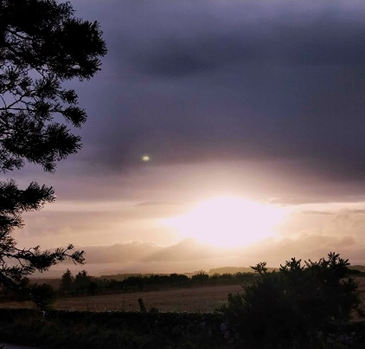
    Picture this. On holiday in Whitby, walking along West Cliff, looking out to sea. It has rained all morning, and is now reduced to a dreich mizzle. The sky lightens as the sun turns some of the clouds into a festival of cream and grey Lalique. Then, across the horizon, overarching two Victorian repro street lamps, a rainbow in watercolour lightens the sea and surrounding dark clouds.

    Such beauty in a world that can be made to turn ugly, suddenly feeling unsafe and somehow darker. There are different kinds of darkness – hatred, lying, cruelty, racism and prejudice, violence, etc. – there is always an etcetera.

    But, and this is the truth of the rainbow, there are different kinds of light – love, truth-telling, compassion, respect for persons and welcome, peace-making, etc. – here too, there is always an etcetera.

    These are uncertain times, and one way or another we’ll have to choose how we will work our way through them towards a renewal of our shared life in our local communities, embracing and living into our wider social diversity. Looking at the photograph of those two street lamps, framed by an over-arching rainbow, I’m wondering what it might cost us to live towards the light as we work together at negotiating the cultural shifts we are living through. Speaking truth with bold humility, practising compassion as a habit of the heart, answering hate with love, overcoming fear with hope, converting complaint into gratitude. These would be a start.

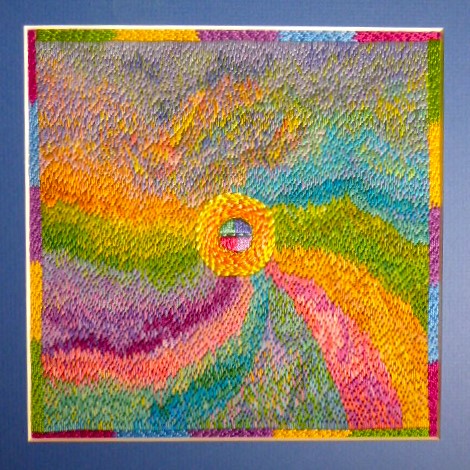
    Perhaps we can draw energy from this defiant confession of faith in Christ the Light of the World: “The light shines on in the darkness, and the darkness has not overcome it.” John 1.5

    Tapestry I designed as a visual interpretation of John 1.5. Completed Easter, 2021. (c) Jim Gordon.

  • Stanza 77 and the Walk of Faith.

    “He is a path, if any be misled…”

    That line comes from stanza 77 of a long four part poem by Giles Fletcher, a 17th Century Church of England clergyman. At a key point in the poem Fletcher strings together a catena of metaphors describing who and what Christ is to the sinner seeking mercy. Here is the whole stanza:

    He is a path, if any be misled ;
    He is a robe, if any naked be :
    If any chance to hunger, he is bread ;
    If any be a bondman, he is free ;
    If any be but weak, how strong is he !
    To dead men life he is, to sick men health ;
    To blinde men sight, and to the needie wealth—
    A pleasure without losse, a treasure without stealth.

    I first came across these lines in an anthology of poems on the life of Christ. I memorised them, not knowing they came from one of the great epic poems in English religious literature. In my own spiritual life this one stanza ranks alongside John Newton’s ‘How sweet the name of Jesus sounds in a believer’s ear’; and from a very different source, Bernard of Clairvaux’s long paean of praise to the name of Jesus found in his sermons on the Song of Songs.

    But it was that first line that etched an image on my mind and spirit that I can’t forget, and which comes alive and visible on many a forest walk! Those who know me have plenty of evidence here and on Facebook that I like to photograph paths.

    ‘He is a path, if any be misled…’

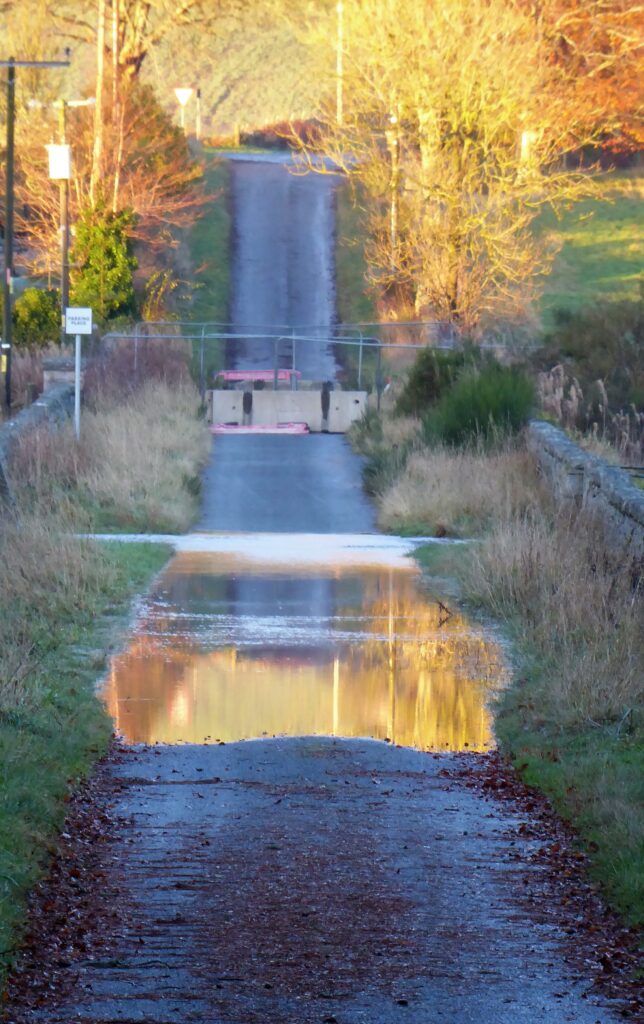
    That solitary line is an inner invitation every time I see an image like the one in the photo above. It isn’t hard to imagine that the light at the end of the path has its own devotional nudge towards the One who is the path, and the light, and the companion on the way.

    Such a tenuous thread seems the providence of God. A 17th Century puritan poet priest writes an epic with hundreds of stanzas, it was published then largely forgotten, revived again when published in the 19th Century by the Scottish literary editor Alexander B. Grosart. Neglected ever since apart from the occasional stanza harvested into anthologies of religious poetry.

    And in one such anthology, I read it in my late twenties, when stanza 77 became part of my devotional vocabulary, and that first line has since been a kindly corrective, a gentle reminder, a summons to courage, and an assurance of faith:

    ‘He is a path, if any be misled…’

  • Prayer for Others, Using Words of ‘God Be in My Head.’

    God be in my head,
    And in my understanding;
    God be in mine eyes,
    And in my looking;
    God be in my mouth,
    And in my speaking;
    God be in my heart,
    And in my thinking;
    God be at mine end,
    And at my departing.

    Jesus the Prophet, you spoke truth to power and you spoke peace to the troubled, love to the unloved and hope to those whose lives had stopped working. Whenever we come across people who are broken,

    God be in my mouth and in my understanding.

    Jesus the Friend, you looked with compassion on people who were harassed and helpless, like sheep without a shepherd. You looked right through the leaves of the sycamore tree and saw Zacchaeus. Whenever there are people around us who are struggling and lonely

    God be in my eyes and in my looking.

    Jesus the Truth teller, you spoke in defence of the woman caught in adultery, you spoke the name of Legion and brought him back to freedom, you spoke forgiveness to all who were open to receive it. Wherever there are people who need to hear a supportive voice

    God be in my mouth and in my speaking.

    Jesus Heart of the Father, your heart broke for the suffering you saw around you, and you wept at your friend Lazarus’s grave, and your heart went out to the poor beggar and the rich young ruler. Wherever and whenever we too witness suffering we can help, and hurt we can help to heal,

    God be in my heart, and in my thinking.

    Jesus, the Alpha and Omega, Lord of Creation and giver of life to us all, Saviour who died for the sins of the whole world, and for us. Give us strength to understand, to see, to speak, and to think as those who try every day of our lives, to follow faithfully after you.

    God be at my end, and at my departing.