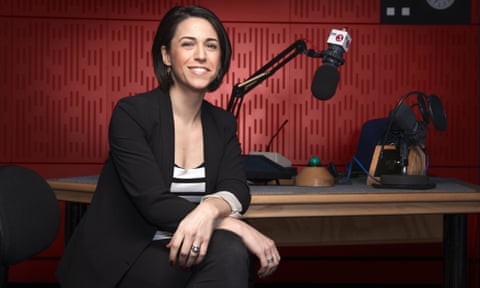
BBC arts chief hits back at accusations from Dimbleby and Bragg
Suzy Klein defends BBC’s ‘incredibly strong and passionate’ commitment to culture programming

Suzy Klein defends BBC’s ‘incredibly strong and passionate’ commitment to culture programming
Monday
Nehemiah 8.10 “Go and enjoy choice food and sweet drinks, and send some to those who have nothing prepared. This day is holy to our Lord. Let there be no sadness, for the joy of the LORD is your strength.”
This isn’t an instruction never to grieve, feel sad, be low in spirits, or depressed. This is a special day for God’s people Israel. They had just heard the Law being read, and were upset because their lives were out of sync with what God requires of faithful and faith-filled hearts. But if they delight in God, commit their hearts once more in love and faith and hope, they will discover a new joy, the joy of obedience.
Tuesday
Nehemiah 8.10 “Send some to those who have nothing prepared.
For followers of Jesus, celebrations should never be selfish; having plenty, take time to remember those who have nothing. Joy in God can never be all about me, me, me. Joy in God is like that spring of water that wells up inside and pours itself out as love, kindness, and an urge to share what is good in our lives with others. Our own sense of blessing sows seeds of gratitude, which grow into thoughtful generosity to others.
Wednesday
1 Chronicles 16.10&27 “Let the hearts of those who seek the Lord rejoice…Splendour and majesty are before him, strength and joy in his holy place.”
In this thanksgiving Psalm of David, joy and gratitude feed each other when we come to God. There are few more energising emotions than thankfulness. Gratitude produces resilience and strength to go on serving God, even when it’s hard. God’s sufficient grace in Christ enables and empowers us. Grace creates gratitude and so thankfulness turns to joy. Our glad obedience to God is the outcome of that cycle of seeking, and asking and knocking and finding the “grace to help us in time of need.”
Thursday
1 Chronicles 16.32 “Let the sea resound and all that is in it; let the fields be jubilant and everything in them. Then the trees of the forest will sing, they will sing for joy before the Lord, for he comes to judge the earth.”
Use your imagination! Look at the world and hear and see a symphony performed in colour, motion and sound. The background beat is the sea, the music and movement are fields ripe for harvest waving and dancing in sun and wind. This choral symphony is accompanied by forests of trees, all keeping time with the music of Creation, conducted by the Creator, their song a hymn of grateful praise. Those who sing and play in this orchestra believe God’s justice is coming. Wrong will be made right, God will bring shalom in God’s good time. This is not wishful thinking. This Psalm is music composed in the heart of God, performed in movements, from Creation to Calvary, to the Empty Tomb, and to the Ascension of Christ seated as “the Lamb slain from the foundation of the world.” This is the music of redemption, orchestrated by the Triune God of holy love and grace, its finale the coming of Christ “to judge the earth.
Friday
Proverbs 12.20 “There is deceit in the hearts of those who plot evil, but joy for those who promote peace.”
This is about what the mind thinks, the heart feels, and the will decides. What gives us joy – other people’s troubles, or finding ways to make other people’s lives better? Another translation reads, “There is joy for those who seek the common good.” Jesus focused on this even more sharply, “Love your neighbour as yourself.” Joy doesn’t just happen – when we promote peace, or seek the common good, there is the joy of knowing that’s exactly the internal bias God approves. Evil boomerangs on those who wish harm upon others; whereas joy is the inevitable by-product for those who work to heal, build, and sustain community as their service to the God of peace.
Saturday
Isaiah 55.12 “You shall go out with joy and be led forth in peace, the mountains and hills will burst into song before you, and the trees of the field will clap their hands”
This promise is to those who seek the Lord with all their heart. (v6) Of course, life can close in on us, or fall to pieces, or we lose our direction, we long for a life worth living and a purpose that re-energises and motivates us. As the prophet said, “Give ear and come to me, hear me that your soul may live.” (v3) There are times when joy seems to ebb away and we need inner renewal. For those who feel like that, this promise is for you: “Seek the Lord while he may be found.” Joy in God is infinitely more than pleasure, happiness, status or ‘enjoyment of stuff.” When we live towards God, and seek God’s company and grace, “we shall go out with joy and be led forth in peace!
Sunday
Isaiah 12. 5 “Sing to the Lord for he has done glorious things; let this be known to all the world. Shout aloud and sing for joy people of Zion!”
If ever there was a mission text for the church, this is it! Isaiah is the mission prophet who writes of beautiful feet on the mountains bringing good news! Christian worship is to sing of the glories of the Gospel of Christ. Christian witness is to “let this be known to all the world.” To shine as light, to penetrate and cleanse like salt, to live as communities of the Spirit, and to sing for joy as people who believe and know and trust that “God was in Christ reconciling the world too himself.” Aye, sing for joy!
I love gates. Iron, wooden, old, not so much new. My first 15 years were spent on farms where my dad was the dairyman. I came to understand gates. Gates are for closing, they are for letting animals out and letting animals in. A gate is both a safety mechanism and a convenient point of access for tractors – once upon a time, and I remember that far back, it was for working horses!
Gates are visible and tangible metaphors, but are they obstacles or opportunities? Are they there to keep us out, or to invite us to open up the next stage of the path, and walk on? To open a gate, and close it behind us, is one of those actions that is both intentional and purposeful. I doubt if opening and closing a gate is ever thoughtless or careless.
In my own growth and development into the person I now am, or am becoming, I've walked through many a gate. There are those life experiences when you know that you have gone through a definite point of transition, the landscape has changed and so have you. The day I came to faith in Jesus, and decided to surrender my life to the loving service of "the Son of God who loved me and gave himself for me", a gate was opened by God into a new future, and that same gate closed on a life to which I could never go back.
The words of that Billy Graham anthem, "I have decided to follow Jesus, no turning back, no turning back" are life-changing testimony, accompanied by the clicking shut of a gate on what was, and moving into a new future and a different path.
The moment of discovered vocation is also a gate, a hinge point that swings open to the next field of the life we are to live. For me that call to be a minister of the Gospel, and to spend my life as servant of the community of Christ's people was another gate opened and closed behind me. And since then many other gates, each requiring a decision of whether to open and move on, after closing that gate behind us.
I've been wondering about how and why we make the decisions we do, why we go through some gates and not others. Discerning what is good for us, and trying to fit that with where we believe God is calling us is one of the more scary and risk-laden tensions of the spiritual life.
God's voice is of the heart.
I do not therefore say all voices of the heart are God's,
And to discern his voice amongst the voices
Is that hard task to which we each are born.
I came across that anonymous verse in an old devotional long since lost. But these lines have given me significant wisdom in the big decisions. They, along with mind and heart open to Scripture, guidance from trusted friends, prayer to tell the ego to pipe down, and trying to read and understand our own life story, – these are what significantly shape our decisions when we come to another gate.
All of this perhaps explains my need to take a photo of a good gate! Obstacle or opportunity, there to halt me or give me access; but often enough, a challenge to see if I'm ready to walk another path through another field and into a wider landscape. Or so it seems to me.
Monday
How sweet the name of Jesus sounds in a believer's ear!
It soothes his sorrow, heals his wounds, and drives away his fear.
John Newton based this hymn on references to fragrant ointment in the Song of Solomon. ‘Sweet’ evokes love, devotion and comfort, a familiar reassuring voice ‘in a believer’s ear.’ The power of the name of Jesus to make sorrow bearable, to be as ointment in wounds, as assurance in danger, gathers so many biblical texts from the Psalms to the Gospels. Newton could be deeply affected emotionally when thinking of the mercy of God and the grace of Christ, ever wondering about that ‘amazing grace’ which for the believer distils into the name above all names, ‘Jesus.’
Tuesday
It makes the wounded spirit whole and calms the troubled breast;
'tis manna to the hungry soul, and to the weary, rest.
The wounded spirit, troubled breast, hungry soul, and weary body all find their answers in wholeness, calm, manna and rest. Newton ransacks the Bible for metaphors of how the name of Jesus is medicine, consolation, food and a Sabbath for the whole person. Down the centuries many Christians have not only prayed in the name of Jesus, but at times simply speaking his name becomes all that need be said to the One who knows the deepest realities of the heart.
Wednesday
Dear Name! the Rock on which I build; my shield and hiding-place;
My never-failing treasury, fill'd with boundless stores of grace.
“Jesus is a rock in a weary land” is a line from another hymn that alludes to the Psalms, and God is the Rock on which life can be safely built. Newton may well have been thinking of the house built on the rock of obedience to Jesus’ teaching, as in Matthew 7. Not content with three images, the name of Jesus is also the key to ‘the unsearchable riches of Christ.’ None of the variations of contemporary worship should over-indulge our experience nor over-emphasise what we feel – the focus of worship is beyond ourselves, a bowing before the name that is above every name, and an acknowledgement of our indebtedness to God’s boundless stores of grace in Christ.
Thursday
By Thee my prayers acceptance gain, although with sin defil'd;
Satan accuses me in vain, and I am own'd a child.
Yes. I know. We don’t usually sing that verse, and no modern hymn book includes it. But John Newton was deeply conscious of the power of sin and Satan, and the hold of guilt and shame on his heart and conscience. His own personal history as a slave ship captain was a guilt-burden he carried all his life. Our prayers for forgiveness and grace will never become redundant; our gratitude for the grace that saves us is a lifelong hymn of the heart. And despite all Satan’s subterfuges, we remain, securely, children of God, our every prayer accepted in the name of Jesus.
Friday
Jesus, my Shepherd, Husband, Friend, my Prophet, Priest, and King,
my Lord, my Life, my Way, my End, accept the praise I bring.
This could be a worship and prayer list, a prayer list of contemplative images that, like Mary, can be pondered and kept in the heart. That might be quite enough as a Thought for the Day – or a whole week. Modern versions change ‘husband’ to ‘brother.’ They shouldn’t be so quick to ‘improve’ Newton! When he used the word ‘husband’ in the late 18th Century, it could also mean ‘one who attends to a ship’s stores and provisions.’ (Oxford English Dictionary) And that makes perfect sense to Newton the retired seaman!
Saturday
Weak is the effort of my heart, and cold my warmest thought;
but when I see Thee as Thou art, I'll praise Thee as I ought.
John Newton, evangelical Church of England vicar, anti-slavery convert, pastor of immense sensitivity and spiritual affection, looks forward to the beatific vision, the full gaze of the redeemed soul on Jesus the Saviour. Like each of us, Newton could be strict with his own heart, critical of his changeable love and unreliable inner climate. But it will be all right, and all will be made right, when he sees the beauty and the glory, the grace and the mercy of redeeming Love. Then, and perhaps not until then, he will be enabled to praise Jesus as he ought, and as freely and fully as throughout his life he longed to do
Sunday
Till then I would Thy love proclaim with every fleeting breath;
and may the music of Thy name refresh my soul in death.
Another hymn written a century later, echoes this verse: “There is a name I love to hear, I love to sing its worth; it sounds like music in my ear, the sweetest name on earth.” Newton and Cowper between them wrote The Olney Hymns, originally for the weekly prayer meeting in Olney. That the name of Jesus was music in Newton’s ears is no surprise, nor is his desire to use every fleeting breath to proclaim, make known, and convince others to receive and be owned by the Love that had saved a wretch like him! Towards the end of his life he wrote: “My memory is nearly gone, but I remember two things; that I am a great sinner, and Jesus is a great Saviour.” Rest in peace, and rise in glory, John Newton.

Monday
Psalm 15.1 “Lord, who may dwell in your sacred tent? Who may live on your holy mountain?”
Sacred. Holy. Two words you don’t hear every day. I wonder if the church’s anxiety to downplay the distinction between sacred and secular has back-fired? We need words like reverence and awe. They describe our recognition that life has boundaries. The word ‘holy’ lies at the heart of Christian worship: “Worship the Lord in the beauty of holiness, bow down before him, his glory proclaim.” I wonder too if we have become too self-important to feel the need to bow down. We could do with recovering at least some of the Psalm poet’s sense of the holiness, majesty and glory of God.
Tuesday
Psalm 15.2a “The one whose walk is blameless, who does what is righteous, who speaks the truth from their heart.”
Blameless and righteous living has to do with behaviour and action, what we do and why we do it. Righteousness is strongly flavoured with justice, fairness and mercy. To use a phrase too tritely used by politicians – Righteousness is “to do the right thing.” And for the right reasons. The blameless walk is about a way of life, the settled disposition of someone for whom doing what God approves is sufficient reason.
Wednesday
Psalm 15.2b “The one whose walk is blameless, who does what is righteous, who speaks the truth from their heart.”
A blameless walk and righteous action are complemented by speech that can be trusted, and words that can be believed. Now more than ever, in a culture of devalued truth and easily distorted words, integrity in our speech is an important sign of those who take truth seriously, because we take God seriously. The complaint “Nothing is sacred anymore,” suggests that deep down we know that such things as truth, goodness, beauty, God and God’s ways, have a claim on us. God requires integrity, a close match between our words, our heart and the world we live in.
Thursday
Psalm 15.3 “Whose tongue utters no slander, who does no wrong to a neighbour, and casts no slur on others.”
Words wound. Words spoil reputations. Words ignite conflicts. No wonder the Bible repeatedly warns against words that are false, malicious, trouble-making, forged in anger and spoken in spite. “The tongue is a fire”, says James. “Every word you speak must be accounted for”, warned Jesus. It isn’t possible to come into God’s presence to pray and praise, if much of our speaking elsewhere causes damage, hurt and misunderstanding. We get to enjoy God’s presence when our daily conversations at home, work and wherever, are consistent with what we say in our worship and prayers; when our words are also blameless and righteous.
Friday
Psalm 15.4 “Who despises a vile person but honours those who fear the Lord; who keeps an oath even when it hurts, and does not change their mind.”
The Psalm-poet warns about bad company. We can be a bit self-righteous if we baulk at ‘despising a vile person.’ To fear the Lord is to put the values and ways of God first in our relationships. So if we make promises we keep them, however inconvenient it turns out to be. In a society like that of our Psalm-poet, doing business depended on keeping your word, being trusted on the strength of a promise. Indeed the steadfast love of the Lord is a belief embedded in a culture where the word was a bond. God doesn’t change his mind about what he has promised – nor should those who come into God’s presence on the strength of those promises. Our word should be as dependable as God’s promises to us. There’s a thought!
Saturday
Psalm 15.5 “Who lends money to the poor without interest; who does not accept a bribe against the innocent.”
What we do with our money, and what we allow our money to do to us, is absolutely central to a life of practical obedience to God, and faithful Christian discipleship. Luther said property is fellowship through created things. Money is a sacrament, a means of grace, a means to the end of loving our neighbour. In a consumerist and competitive world, how we as Christians use our money becomes counter-cultural, subversive of barcodes and Q8 scan codes. Banksy’s newest art says: “When you give to the poor leave the camera at home.” Aye. That!
Sunday
Psalm 15.6 “Whoever does these things will never be shaken.”
Living with integrity is a present continuous process. Integrity is the outcome of habits of thought and action, countless choices for good, so that such behaviour becomes characteristic of the doer. They are predictably trustworthy. That’s a big ask. But the good character of a Christian is a powerful statement, a persuasive argument, a recurring witness to our faith in a faithful God.
This whole Psalm is about how we behave outside the church affecting the quality and sincerity of what we do inside God’s house. Doing righteousness, speaking truth, blameless walk, making our money talk the language of compassion – do these things and life is well founded.
I Thess. 3.10 “Night and day we pray most earnestly that we may see you again face to face and supply what is lacking in your faith.”
Paul understands the importance of face to face meetings. Relationships grow by the way we see and behave towards each other. Phone, text, email, WhatsApp are all fine – just as in Paul’s day papyrus and ink could communicate across distance. But to encourage others, build friendship, and deepen affection and understanding nothing substitutes for being present, being there FOR, and being there WITH, each other, face to face. Christian love is embodied and enacted best in each other’s presence.
Tuesday
Galatians 2.11 “When Peter came to Antioch I opposed him to his face, because he was clearly in the wrong.”
This is another kind of face to face meeting altogether! Paul is fighting for the freedom of Gentile converts, saved by grace through faith, not through any other means. Peter refused to eat with these Gentile converts to avoid offending those of a different mind. Paul doesn’t simmer with resentment – he faces Peter, speaks truth, and names what is wrong. Sometimes we have to face up to difficult people and situations. Just remember – in this same letter Paul lists the fruit of the Spirit, those built in safeguards of Christian behaviour – and he includes love and self-control!
Wednesday
Matthew 6.16-17 “When you fast, do not look sombre as the hypocrites do, for they disfigure their faces to show others they are fasting. Truly I tell you, they have their reward in full. But when you fast, put oil on your head and wash your face…,”
Jesus is insisting that the face we present to the world is truthful, not pretending to be who we are not. There is an honesty required in the words we speak – but also in what we communicate with our faces. There is a Scottish banter question, “What’s up with your face”? Usually a way of calling out someone in a bad mood, made visible by their whole body language. Jesus is talking about not making a show of our piety and pretending we are super-spiritual. A Christian’s face should avoid being a visible and convincing contradiction of the Good News!
Thursday
Acts 6.15 “All who were sitting in the Sanhedrin looked intently at Stephen, and they saw that his face was like the face of an angel.”
The first martyr’s face bears witness to his faith as he speaks truth to his accusers. In telling Stephen’s story, Luke describes the face of a man at peace in the midst of a storm that will engulf him. He is a follower of Jesus, and like Jesus, he prays for those who will kill him. The intense and unflinching face of Stephen tells of his faithfulness to Jesus, forgiveness to his executors, and bears witness to the hope of the Gospel – “I see heaven open, and the Son of Man standing at the right hand of God.” (7.56) The face of this faithful witness, looks up in faith to Jesus risen and enthroned.
Friday
Matthew 17.2&6 “Jesus was transfigured before them and his face shone like the sun, and his clothes became as white as the light…”
When God said “This is my Beloved Son”, the disciples “fell face down to the ground.” The face of Jesus’ ablaze with glory, and the hidden faces of disciples awed into silence by the voice from heaven, each tell a story. Awe, wonder, the fear of God – I wonder if we are losing that sense of the Holy? Are we less attuned to reverence in the presence of Almighty God? The Transfiguration reminds us that God is not our pal, and we have no right to take liberties in God’s presence. Should we really need to be reminded that Jesus is the Christ, the Beloved Son, and Lord as well as Saviour?
Saturday
1 Corinthians 13.12 “Now we see but a poor reflection, as in a mirror, then we shall see face to face.”
At the end of the Love chapter, come these words about the vision of God in Christ that awaits all whose faith and love pull the heart towards heaven. The Bible is quite clear that we cannot look on the face of God and live. But if it is the face of God in Christ, the human face of God, the Word made flesh and now glorified, then we will look on Jesus face to face, and we shall know even as we are fully known. Heaven is this personal meeting, face to face, in which our relationship to God in Christ comes to fulfilment. That’s why the greatest of these three, faith, hope and love, is Love.
Sunday
2 Corinthians 4.6 “For God, who said, “Let light shine out of darkness” made his light shine in our hearts to give us the light of the knowledge of God’s glory displayed in the face of Christ.”
The light that glowed at the Transfiguration on the face of Jesus, now shines in Christian hearts. This light is what we know, in our experience, in the deeper life of our mind, in those hidden places of the heart only God sees and understands. “The light of the knowledge of God’s glory in the face of Christ” is the light of life, the energy source of all that we are and hope to be in Christ, the presence in all our living of the risen Christ. Turn your eyes upon Jesus, look full in His wonderful face, and the things of earth will grow strangely dim, in the light of His glory and grace.
Paintings used above:
Icon of The Holy Trinity, Rublev – the interchange of the three faces expressing the life and love of the Triune God.
Jesus in the Home of Martha and Mary, Vermeer – this painting is in the National Galleries of Scotland, and is the only known biblical subject Vermeer painted.
The Head of the Virgin, Rogier van der Weyden – a rare silverpoint sketch, and for me, the loveliest face of Mary I have seen as artistic representation.