Category: Uncategorised

  • Longing for the Infinite…you have put eternity in human hearts, O God.

    In the beginning was the Word….all things were made through him, and without him was not anything made that was made…

    When I consider the heavens, the work of your hands….what are human beings that you care for them, mortal people that you keep them in mind?

    Horsehead Nebula

    The new images from the Herschel telescope mirror, 3.5 metres in diameter.

    This image reminded me of the work of the late Rebecca Elson. I wrote about her in an earlier post here. I quoted the following poem, written by Elson, a brilliant astro-physicist, a deeply thoughtful human being, and one who, suffering a terminal cancer, explored her own mortality with courage, honesty and a deep longing for more.


    Let there Always be Light (Searching for Dark Matter)

    For this we go out dark nights, searching

    For the dimmest stars,
    For signs of unseen things:

    To weigh us down.
    To stop the universe
    From rushing on and on:

    Into its own beyond
    Till it exhausts itself and lies down cold,
    Its last star going out.

    Whatever they turn out to be,
    Let there be swarms of them,
    Enough for immortality,
    Always a star where we can warm ourselves.

    Let there be enough to bring it back
    From its own edges,
    To bring us all so close we ignite
    The bright spark of resurrection.

    I find few things more moving than those moments when human beings, and perhaps most of all pure scientists, who recognise mortality as both the given limits of life, and yet hold to a deeper trust that there is that which enables such limits to be transcended by a power and creativity beyond our ken….

    And the Word became flesh and dwelt amongst us, and we beheld his glory, full of grace and truth.
  • Give peace a chance – the mission of the Body of Christ, the Church.

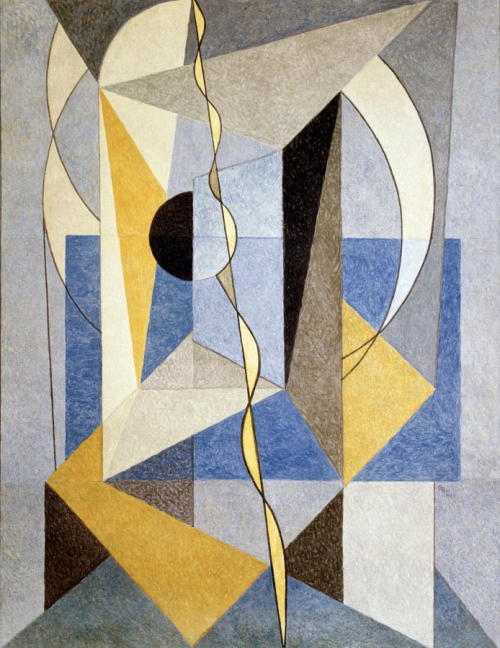
    Fresco Painted by Bo Beskow of Sweden for the UN Meditation Room that opened in the winter of 1957. The space is dedicated to silence, where people can withdraw into themselves, regardless of their faith, creed or religion.
It was planned by Dag Hammarskjöld (UN Secretary-General 1953-61), who personally supervised its creation; he believed that the UN “should have one room dedicated to silence in the outward sense and stillness in the inner sense.”

    Fresco painted by the Swedish artist, Bo Beskow, illuminated within the Quiet Room at UN Headquarters, New York. 

    "This is a room devoted to peace

    and those who are giving  their

    lives for peace. It is a room of quiet

    where only thoughts should speak."

    (Dag Hammarskjold)

    Blessed are the peacemakers, for they shall be called the children of God.

    Lord, make me an instrument of thy peace.

    So far as it depends on you, live at peace with all people.

    Our work for peace must begin within the private world of each one of
    us. To build for man a world without fear, we must be without fear. To
    build a world of justice, we must be just. (Dag Hammarskjold)

    When was the theme of peace,

            in its length and breadth,

                      and height and depth,

                              last on the agenda of your local church meeting

                                      as an essential missional question for followers of Jesus?


  • Keep playing Vivaldi – Winter gives way to Spring, Eventually

    DSC01253

    On the road up the Cairn o' Mount this intrepid tree seemed to be hanging on for dear life. Its angle of repose has been shaped by years of windswept exposure, and roots more likely spread outwards than plunging deeply. No other trees are near it. How it got there, how it stays there, part of the accidental landscaping of a Scottish high level moor. I'm going to try for another photo of it in the summer – that might be some time away yet! I love trees.

    Curved resilience

    leaning away from wind chill;

    but after snow, Spring.

  • Not a poem but a footnote

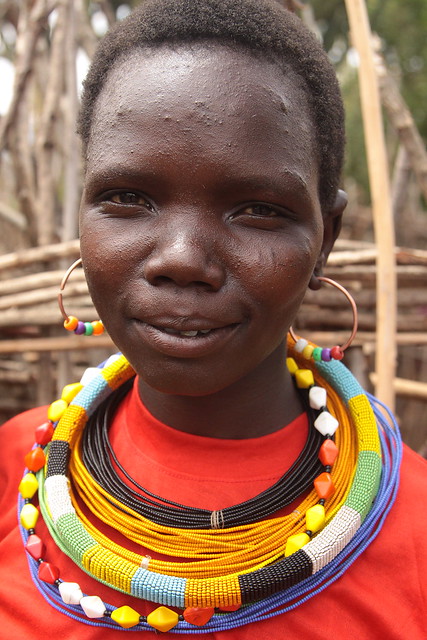
    uganda - tribes and culture

    "The Human Other"

    We must, in short,

    descend into detail,

    past the misleading tags,

    past the metaphysical types,

    past the empty similarities

    to grasp firmly the essential character

    of not only the various cultures

    but the various sorts of individuals

    within each culture,

    if we wish

    to encounter humanity

    face to face."

    I came across this as footnote 210 on page 139, in Graham Buxton's excellent Creation, The Trinity and Pastoral Ministry. Imaging the Perichoretic God. The quote is from Clifford Geertz the sociologist, in his book The Interpretation of Cultures. Typed like that it reads more as a poem than a footnote.

    The photo can be found here on a site that is a marvellous celebration of culture, difference and otherness and the diverse richness of the varied beauty of the human face and the human family. The expression "face to face", happily a non-jargon description of cultural encounter, has so much potential for understanding, compassion, celebration and the shared enjoyment of God's creation.

  • “Let me just pray – and you can just listen”.


    DSC01082I first came across the name of Caryl Micklem as the writer of a slim volume of "Contemporary Prayers for Church Worship", published in the 1970's. The book is long gone, as is the contemporary world for which the prayers were written. But the collection included the kind of prayers that required eyes open to the world in compassion rather than eyes closed in inner reverie. Intercessions were specific, ways of addressing God less consxtrained by tradition.

    To lead a congregation in prayer is one of the most significant acts of service and humility before God and before the people. On this I am I guess, old fashioned. After all I still wear a tie both for the formality and for the joy of colour! But it is difficult to feel included when the person leading worship uses the first person singular – they are not leading us in prayer, but forcing us to overhear a private conversation. The unrehearsed, unconsidered outpouring of words and thoughts with blanks filled in with 'just' and 'Lord' and moving in and out of cliched devotion are not so much the outpourings of the heart, as what R E O White, my former College Principal once called, "pouring out the contents of your mental waste paper basket upon the heads of an unsuspecting congregation".

    Geroge Macleod, whose small book of prayers "The Whole Earth is Full of His Glory", is in  my view one of the most beautifully composed volumes around, spent as much time, and sometimes he confessed, more time, composing the prayers that would give voice to the spiritual longings, life hurts, celebrations and perplexities of a gathered community of believers, bowing their heads in worship. That kind of thoughtfulness is itself a pastoral discipline that requires the best of those who aspire to "lead" a congregation in  prayer or in worship.

    For such reasons, contemporary or not, I have always valued books of prayers, both those that can be used and acknowledged, and those that push us to think differently and with a larger horizon, those that stir imagination and open us up to the range of human experience so infinitely varied from our own – these are amongst the treasures of the church. And sometimes they are written as hymns, like the one below, also by Caryl Micklem. I can still say or sing this and feel that important things I might not have thought of, are now thought about in the presence of God who knows my heart, and my limits of thought and word!

    Give to me, Lord, a thankful heart


    And a discerning mind;


    Give, as I play the Christian’s part,


    The strength to finish what I start


    And act on what I find.

    When, in the rush of days, my will


    Is habit bound and slow,


    Help me to keep in vision, still,


    What love and power and peace can fill


    A life that trusts in you.

    By your divine and urgent claim,


    And by your human face,


    Kindle our sinking hearts to flame,


    And as you teach the world your name


    Let it become your place.

    Jesus, with all your church I long


    To see your kingdom come:


    Show me your way of righting wrong


    And turning sorrow into song


    Until you bring me home.

    The photo was taken on Aberdeen beach one day when I pondered as I wandered.

  • Jewish Spirituality, Christian Humility and the Wisdom that Repairs the World


    Amongst the Jewish writers whose wisdom and exeprience of God has touched and opened my heart to important truths are Abraham Joshua Heschel, Chaim Potok, Jonathan Sacks, Elie Wiesel, Joseph Kaplan, Susannah Heschel, Martin Buber and Emmanuel Levinas. And of course Isaiah, Jeremiah, Qoheleth, the Psalmists, the writers of Torah, and the other writers and communities behind the Hebrew Bible.

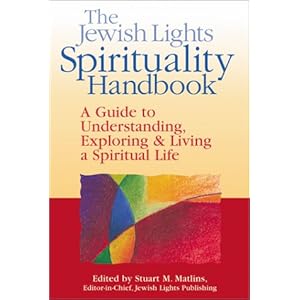
    This collection of contemporary Jewish Spirituality doesn't include those classic expressions of jewish faith and practice. What it does offer is a wide ranging selection of wisdom and reflection on such themes as God, community, prayer, meditation, mysticism, study, blessing, repairing the world and other characteristic emphases of a faith that is profoundly practical as well as profoundly reflective. Either browsing and dipping, or reading more intentionally in this book, you become aware that you are invited to read and think on the rich history of a people's rich experience and the changing contiuity of its story of the journey with God.

    Some of what is written here is lightweight, a kind of self-help with a religious underpinning. Some of it presupposes, as it should, an active practice of Jewish faith, ritual and liturgy. But much of it offers wisdom and guidance in what it means to make room in our lives for God, to pay attention to the world around us, and that radical goal of Jewish compassionate action, "to repair the world".

    As spiritual reading it is a good balance and corrective that reminds me as a Christian that my own faith and the faith of the Christian church, has deep roots in the soil of the Jewish people and an indebtedness and incorporation into their story which has become our story. And our story, not because the Church co-opts the elected preciousness of the people of God, or renders the Jewish story and faith superfluous. But because from the story of the Jewish people, came the One we call Messiah, and in the purposes of God, Jesus fulfils the great messianic promise that the Suffering and Sovereign Servant will be a light to the nations, and  the blessing of the world. And that to act justly, to love mercy and walk humbly with God is an imperative within the Christian faith as in the faith from which the Church was born.

  • Madathilparamphil Mammen Thomas – or “MM” for short


    Now here's a description of someone who knew without having to agonise and strategise, what the cutting edge of Mission has to be in a pluralist, globalised, postmodern, post Christendom, and post much else world.It comes from Lesslie Newbigin, quoted in Geoffrey Wainwright's biography of Newbigin, and it concerns M M Thomas. The initials are shorthand for Madathilparamphil Mammen Thomas – photo above – Newbigin clearly found the nickname M M took less time!

    "In a very rare measure he has held together the things which tear most of us apart. Deeply committed to involvement in the secular issues of our time, he has at the same time lived by a deep and growing personal faith in the risen Jesus. Realistic in his exposure of the sins of the churches, he has yet remained deeply rooted in and loyal to the Church of his birth. "[His] coherent theological pattern has had the risen Christ as its centre and the whole world as its circumference."

    If your church is looking for a strap line mission statement, please consider that sentence:

    "The Risen Christ as our centre, the whole world as our circumference"


  • Another Take on the Walk to Emmaus – The Company of Strangers

    I've already posted this mosaic of the walk to Emmaus. There are a good number of artistic alternatives that also portray one of the most poignant and powerful stories of the Christian Gospel. But I am currently staying with this one for the aesthetically uncritical reason that I like it – plain, simple, almost naive, muted in colour, but communicating the burning heart of the story. 

    It's often emphasised that the two disciples in their bewilderment, anxiety, disbelief at the turn of events, and pre-occupation with their own voices as they talked out their confusion, didn't recognise that the stranger who fell in step alongside was Jesus. What's not often remarked is that in their ignorance of who was there, in their non-recognition  of Jesus the very one they discussed, missed and grieved over, one thing was obviously and persistently true. Despite their non-recognition, their closed eyes, their sense of being abandoned and left just to get on with the aftermath of disaster, the one they didn't recognise was the Risen Lord. They thought they were deserted, but he was closer to their hearts, and eyes, than they could possibly believe; they complained to the one they were sure was irrevocably gone, about the One who had failed their hopes. But they kept walking, and as they did the stranger helped them move from not knowing to discovery, from confusion to clarity, from eyes closed in the shocked trauma of grief, to eyes opened at the breaking of bread, and from lonely inner coldness of loss, to hearts burning again with hope. 

    And I wonder if at times what might restore some faith to tired sorrowing hearts is not the end of the story and the joy of recognition that He is Risen, but our privileged knowing as readers of the story, that in those dark empty moments and on those lonely unseeing miles, the One who comes alongside, though we don't recognise or see Him, is the same one who will stay with us when the day is far spent, and will be made known in the breaking of bread. Yes – the start of the story may well be about the dark night of the soul, and our chance to glimpse how, when we are least aware of it, the Risen Lord is nearer than we think – or believe. Or so it seems to me, on the Monday after Low Sunday, and the frost and snow persist, and the daffodils are still refusing to risk opening. But Spring is here, even if it doesn't seem like it – and they will flower, yes they will!

  • Browsing Off-Line in My Library, Amongst Friends that Matter.


    JohnIt's a shame if the word 'browsing' becomes confined to that desultory form of internet information gathering that requires a browser. This week I've been a browser browsing in my own library. Books I haven't looked at for a while I've handled, leafed through, read, reminded myself why I have it on my shelves, and even decided that maybe the time has come for some books to make way for others.

    I'm in the process of re-uniting my library which for 11 years has been split between College Study and home. How to accomodate a library that embodies an intellectual, spiritual and theological journey is not so much a problem as a life-changing challenge and searching process of remembering and reflecting. Some will have to go, but that's OK as long as there's room for the ones that matter, and the ones that really matter, and the ones I couldn't do without. Now these seem four sufficiently broad, arbitrary selection criteria. But there aren't many that sit in the fourth category of those outside the standard of being important now or at some time past, or will some time in the future. I don't buy much ephemera. And by far most of my books have been read, consulted, or used "in the pursuit of learning in Divinity", that lovely Victorian phrase that describes the purpose of St Deiniol's Library down in Hawarden – (where my friend Jason has been for the last wee while and I am trying so hard not to be envious, and not succeeding – bless you Jason!).

    So over the next few months I'll post some of the recovered treasure and rediscovered wisdom, and newly uncovered insights as I browse, commune, reminisce, anticipate and celebrate the wonderful gift of books.

    Yes I have a Kindle. And yes I think it's a good thing. But it ain't a book, it has no smell of familiarity, no substance of which real friends are made. OK for novels and the occasional theological middleweight. Brilliant for classics so that I have several of the big novels wherever I go. Just made it through Middlemarch reading mainly in rescued minutes. But do I want to read poetry without the feel and weight of even a slim paperback? Maybe. But only if I have to. What about that large volume of Vermeer's paintings reduced to Kindle or I-pad – don't get me started! And as for Raymond Brown's commentary on John, all 1000 plus pages of it, They are an obvious can't do without. I've had those two volumes since I was 22 and they are foundation bricks in my intellectual and spiritual structure. They are un-kindleable!

    Yesterday I was browsing along my Bonhoeffer shelf and there's not much there that doesn't matter any more. I came across this –

    There is no part of the world, no matter how lost, no matter how godless, that has not been accepted  by God in Jesus Christ and reconciled to God. Whoever perceives the body of Jesus Christ in faith can no longer speak of the world as if it were lost, as if it were separated from God: they can no longer separate themselves in clerical pride from the world. The world belongs to Christ, and only in Christ is the world what it is. It needs, therefore, nothing less than Christ himself. Everything would be spoiled if we were to reserve Christ for the church while granting the world only some law, Christian though it may be. Christ has died for the world, and Christ is Christ only in the m idst of the world. It is nothing but unbelief to give the world…less than Christ. It means not taking seriously the incarnation, the crucifixion and the bodily resurrection. It means denying the body of Christ.

    That from his Ethics, and it is Bonhoeffer at his most passionately Christological.

  • I to the hills will lift mine eyes…. Learning to pray with our eyes

    DSC01274 (1)
    Yesterday I spent the morning helping cut logs for the woodburner. The journey took me up through Inverurie to Oldmeldrum. This is the view of Bennachie from the road. It isn't all that high but it still dominates Aberdeenshire and is a loved landmark.

    I spent some time recently pondering the psalms, including Psalm 121. The Scottish Paraphrase remains for me a devotional standard:


    1 I to the hills will lift mine eyes:

    from whence doth come mine aid?


    My safety cometh from the Lord,


    who heaven and earth hath made.

    2 Thy foot he'll not let slide, nor will

    he slumber that thee keeps.


    Behold, he that keeps Israel,


    he slumbers not, nor sleeps.

    3 The Lord thee keeps; the Lord thy shade

    on thy right hand doth stay;


    the moon by night thee shall not smite


    nor yet the sun by day.

    4 The Lord shall keep thy soul; he shall

    preserve thee from all ill;


    henceforth thy going out and in


    God keep for ever will.

    The paraphrase translates the first stanza as a Question and answer rather than a statement. I confess that's how I have always read it. When it all gets too much, and it's hard to see the way ahead, or our attention is so focused on the here and the now with all its demands and uncertainties, then that question is both urgent and apt. Lifting the eyes above our limited horizons and the remorseless present, the outline of a mountain forces the attention upwards, and the question "From whence doth come mine aid", is both existentially unavoidable and personally directed to God. For people of faith, the connection between the hill line, prayer and personal circumstances is only completed by that second couplet. "My safety cometh from the Lord, who heaven and earth hath made".

    Bennachie in the winter looks bleak and yet when the sun hits the snow it's also a familiar and reassuring landmark. In the days before digital cameras I was coming home from Pluscarden Abbey and passing Bennachie in a winter twilight. Flying across the skyline, against a rose and peach sky fringed with purple, a long skein of geese in chevron formation. That was another mystical ornithological moment when God seemed near, beauty laid my heart open, and prayer was in the compelling urge to stop the car and look – which I did. And perhaps such moments are best left unconstrained by digital technology. The theatre of God's glory remains a sellout of splendour and spectacle. That's why eyes lifted to the hills ask a question that most times is rhetorical, and has the expected answer, "My safety cometh from the Lord, who heaven and earth hast made."

    It was those lines that were in mind while doing one of the panels of the Shalom tapestry a few weeks ago. The tapestry is now at the framers, and consists of five panels. One each on Psalm 1,8,23,104, 121. The one below is 121 and is done entirely freehand as a visual impression of a psalm that is now embedded in my spirituality. Once the completed and framed work is back I'll post a photo of it.


    DSC01182