Blog

  • “Let me just pray – and you can just listen”.


    DSC01082I first came across the name of Caryl Micklem as the writer of a slim volume of "Contemporary Prayers for Church Worship", published in the 1970's. The book is long gone, as is the contemporary world for which the prayers were written. But the collection included the kind of prayers that required eyes open to the world in compassion rather than eyes closed in inner reverie. Intercessions were specific, ways of addressing God less consxtrained by tradition.

    To lead a congregation in prayer is one of the most significant acts of service and humility before God and before the people. On this I am I guess, old fashioned. After all I still wear a tie both for the formality and for the joy of colour! But it is difficult to feel included when the person leading worship uses the first person singular – they are not leading us in prayer, but forcing us to overhear a private conversation. The unrehearsed, unconsidered outpouring of words and thoughts with blanks filled in with 'just' and 'Lord' and moving in and out of cliched devotion are not so much the outpourings of the heart, as what R E O White, my former College Principal once called, "pouring out the contents of your mental waste paper basket upon the heads of an unsuspecting congregation".

    Geroge Macleod, whose small book of prayers "The Whole Earth is Full of His Glory", is in  my view one of the most beautifully composed volumes around, spent as much time, and sometimes he confessed, more time, composing the prayers that would give voice to the spiritual longings, life hurts, celebrations and perplexities of a gathered community of believers, bowing their heads in worship. That kind of thoughtfulness is itself a pastoral discipline that requires the best of those who aspire to "lead" a congregation in  prayer or in worship.

    For such reasons, contemporary or not, I have always valued books of prayers, both those that can be used and acknowledged, and those that push us to think differently and with a larger horizon, those that stir imagination and open us up to the range of human experience so infinitely varied from our own – these are amongst the treasures of the church. And sometimes they are written as hymns, like the one below, also by Caryl Micklem. I can still say or sing this and feel that important things I might not have thought of, are now thought about in the presence of God who knows my heart, and my limits of thought and word!

    Give to me, Lord, a thankful heart


    And a discerning mind;


    Give, as I play the Christian’s part,


    The strength to finish what I start


    And act on what I find.

    When, in the rush of days, my will


    Is habit bound and slow,


    Help me to keep in vision, still,


    What love and power and peace can fill


    A life that trusts in you.

    By your divine and urgent claim,


    And by your human face,


    Kindle our sinking hearts to flame,


    And as you teach the world your name


    Let it become your place.

    Jesus, with all your church I long


    To see your kingdom come:


    Show me your way of righting wrong


    And turning sorrow into song


    Until you bring me home.

    The photo was taken on Aberdeen beach one day when I pondered as I wandered.
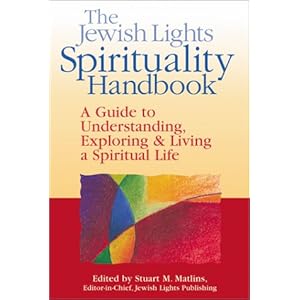
  • Jewish Spirituality, Christian Humility and the Wisdom that Repairs the World


    Amongst the Jewish writers whose wisdom and exeprience of God has touched and opened my heart to important truths are Abraham Joshua Heschel, Chaim Potok, Jonathan Sacks, Elie Wiesel, Joseph Kaplan, Susannah Heschel, Martin Buber and Emmanuel Levinas. And of course Isaiah, Jeremiah, Qoheleth, the Psalmists, the writers of Torah, and the other writers and communities behind the Hebrew Bible.

    This collection of contemporary Jewish Spirituality doesn't include those classic expressions of jewish faith and practice. What it does offer is a wide ranging selection of wisdom and reflection on such themes as God, community, prayer, meditation, mysticism, study, blessing, repairing the world and other characteristic emphases of a faith that is profoundly practical as well as profoundly reflective. Either browsing and dipping, or reading more intentionally in this book, you become aware that you are invited to read and think on the rich history of a people's rich experience and the changing contiuity of its story of the journey with God.

    Some of what is written here is lightweight, a kind of self-help with a religious underpinning. Some of it presupposes, as it should, an active practice of Jewish faith, ritual and liturgy. But much of it offers wisdom and guidance in what it means to make room in our lives for God, to pay attention to the world around us, and that radical goal of Jewish compassionate action, "to repair the world".

    As spiritual reading it is a good balance and corrective that reminds me as a Christian that my own faith and the faith of the Christian church, has deep roots in the soil of the Jewish people and an indebtedness and incorporation into their story which has become our story. And our story, not because the Church co-opts the elected preciousness of the people of God, or renders the Jewish story and faith superfluous. But because from the story of the Jewish people, came the One we call Messiah, and in the purposes of God, Jesus fulfils the great messianic promise that the Suffering and Sovereign Servant will be a light to the nations, and  the blessing of the world. And that to act justly, to love mercy and walk humbly with God is an imperative within the Christian faith as in the faith from which the Church was born.

  • Madathilparamphil Mammen Thomas – or “MM” for short


    Now here's a description of someone who knew without having to agonise and strategise, what the cutting edge of Mission has to be in a pluralist, globalised, postmodern, post Christendom, and post much else world.It comes from Lesslie Newbigin, quoted in Geoffrey Wainwright's biography of Newbigin, and it concerns M M Thomas. The initials are shorthand for Madathilparamphil Mammen Thomas – photo above – Newbigin clearly found the nickname M M took less time!

    "In a very rare measure he has held together the things which tear most of us apart. Deeply committed to involvement in the secular issues of our time, he has at the same time lived by a deep and growing personal faith in the risen Jesus. Realistic in his exposure of the sins of the churches, he has yet remained deeply rooted in and loyal to the Church of his birth. "[His] coherent theological pattern has had the risen Christ as its centre and the whole world as its circumference."

    If your church is looking for a strap line mission statement, please consider that sentence:

    "The Risen Christ as our centre, the whole world as our circumference"


  • Another Take on the Walk to Emmaus – The Company of Strangers

    I've already posted this mosaic of the walk to Emmaus. There are a good number of artistic alternatives that also portray one of the most poignant and powerful stories of the Christian Gospel. But I am currently staying with this one for the aesthetically uncritical reason that I like it – plain, simple, almost naive, muted in colour, but communicating the burning heart of the story. 

    It's often emphasised that the two disciples in their bewilderment, anxiety, disbelief at the turn of events, and pre-occupation with their own voices as they talked out their confusion, didn't recognise that the stranger who fell in step alongside was Jesus. What's not often remarked is that in their ignorance of who was there, in their non-recognition  of Jesus the very one they discussed, missed and grieved over, one thing was obviously and persistently true. Despite their non-recognition, their closed eyes, their sense of being abandoned and left just to get on with the aftermath of disaster, the one they didn't recognise was the Risen Lord. They thought they were deserted, but he was closer to their hearts, and eyes, than they could possibly believe; they complained to the one they were sure was irrevocably gone, about the One who had failed their hopes. But they kept walking, and as they did the stranger helped them move from not knowing to discovery, from confusion to clarity, from eyes closed in the shocked trauma of grief, to eyes opened at the breaking of bread, and from lonely inner coldness of loss, to hearts burning again with hope. 

    And I wonder if at times what might restore some faith to tired sorrowing hearts is not the end of the story and the joy of recognition that He is Risen, but our privileged knowing as readers of the story, that in those dark empty moments and on those lonely unseeing miles, the One who comes alongside, though we don't recognise or see Him, is the same one who will stay with us when the day is far spent, and will be made known in the breaking of bread. Yes – the start of the story may well be about the dark night of the soul, and our chance to glimpse how, when we are least aware of it, the Risen Lord is nearer than we think – or believe. Or so it seems to me, on the Monday after Low Sunday, and the frost and snow persist, and the daffodils are still refusing to risk opening. But Spring is here, even if it doesn't seem like it – and they will flower, yes they will!

  • Browsing Off-Line in My Library, Amongst Friends that Matter.


    JohnIt's a shame if the word 'browsing' becomes confined to that desultory form of internet information gathering that requires a browser. This week I've been a browser browsing in my own library. Books I haven't looked at for a while I've handled, leafed through, read, reminded myself why I have it on my shelves, and even decided that maybe the time has come for some books to make way for others.

    I'm in the process of re-uniting my library which for 11 years has been split between College Study and home. How to accomodate a library that embodies an intellectual, spiritual and theological journey is not so much a problem as a life-changing challenge and searching process of remembering and reflecting. Some will have to go, but that's OK as long as there's room for the ones that matter, and the ones that really matter, and the ones I couldn't do without. Now these seem four sufficiently broad, arbitrary selection criteria. But there aren't many that sit in the fourth category of those outside the standard of being important now or at some time past, or will some time in the future. I don't buy much ephemera. And by far most of my books have been read, consulted, or used "in the pursuit of learning in Divinity", that lovely Victorian phrase that describes the purpose of St Deiniol's Library down in Hawarden – (where my friend Jason has been for the last wee while and I am trying so hard not to be envious, and not succeeding – bless you Jason!).

    So over the next few months I'll post some of the recovered treasure and rediscovered wisdom, and newly uncovered insights as I browse, commune, reminisce, anticipate and celebrate the wonderful gift of books.

    Yes I have a Kindle. And yes I think it's a good thing. But it ain't a book, it has no smell of familiarity, no substance of which real friends are made. OK for novels and the occasional theological middleweight. Brilliant for classics so that I have several of the big novels wherever I go. Just made it through Middlemarch reading mainly in rescued minutes. But do I want to read poetry without the feel and weight of even a slim paperback? Maybe. But only if I have to. What about that large volume of Vermeer's paintings reduced to Kindle or I-pad – don't get me started! And as for Raymond Brown's commentary on John, all 1000 plus pages of it, They are an obvious can't do without. I've had those two volumes since I was 22 and they are foundation bricks in my intellectual and spiritual structure. They are un-kindleable!

    Yesterday I was browsing along my Bonhoeffer shelf and there's not much there that doesn't matter any more. I came across this –

    There is no part of the world, no matter how lost, no matter how godless, that has not been accepted  by God in Jesus Christ and reconciled to God. Whoever perceives the body of Jesus Christ in faith can no longer speak of the world as if it were lost, as if it were separated from God: they can no longer separate themselves in clerical pride from the world. The world belongs to Christ, and only in Christ is the world what it is. It needs, therefore, nothing less than Christ himself. Everything would be spoiled if we were to reserve Christ for the church while granting the world only some law, Christian though it may be. Christ has died for the world, and Christ is Christ only in the m idst of the world. It is nothing but unbelief to give the world…less than Christ. It means not taking seriously the incarnation, the crucifixion and the bodily resurrection. It means denying the body of Christ.

    That from his Ethics, and it is Bonhoeffer at his most passionately Christological.

  • I to the hills will lift mine eyes…. Learning to pray with our eyes

    DSC01274 (1)
    Yesterday I spent the morning helping cut logs for the woodburner. The journey took me up through Inverurie to Oldmeldrum. This is the view of Bennachie from the road. It isn't all that high but it still dominates Aberdeenshire and is a loved landmark.

    I spent some time recently pondering the psalms, including Psalm 121. The Scottish Paraphrase remains for me a devotional standard:


    1 I to the hills will lift mine eyes:

    from whence doth come mine aid?


    My safety cometh from the Lord,


    who heaven and earth hath made.

    2 Thy foot he'll not let slide, nor will

    he slumber that thee keeps.


    Behold, he that keeps Israel,


    he slumbers not, nor sleeps.

    3 The Lord thee keeps; the Lord thy shade

    on thy right hand doth stay;


    the moon by night thee shall not smite


    nor yet the sun by day.

    4 The Lord shall keep thy soul; he shall

    preserve thee from all ill;


    henceforth thy going out and in


    God keep for ever will.

    The paraphrase translates the first stanza as a Question and answer rather than a statement. I confess that's how I have always read it. When it all gets too much, and it's hard to see the way ahead, or our attention is so focused on the here and the now with all its demands and uncertainties, then that question is both urgent and apt. Lifting the eyes above our limited horizons and the remorseless present, the outline of a mountain forces the attention upwards, and the question "From whence doth come mine aid", is both existentially unavoidable and personally directed to God. For people of faith, the connection between the hill line, prayer and personal circumstances is only completed by that second couplet. "My safety cometh from the Lord, who heaven and earth hath made".

    Bennachie in the winter looks bleak and yet when the sun hits the snow it's also a familiar and reassuring landmark. In the days before digital cameras I was coming home from Pluscarden Abbey and passing Bennachie in a winter twilight. Flying across the skyline, against a rose and peach sky fringed with purple, a long skein of geese in chevron formation. That was another mystical ornithological moment when God seemed near, beauty laid my heart open, and prayer was in the compelling urge to stop the car and look – which I did. And perhaps such moments are best left unconstrained by digital technology. The theatre of God's glory remains a sellout of splendour and spectacle. That's why eyes lifted to the hills ask a question that most times is rhetorical, and has the expected answer, "My safety cometh from the Lord, who heaven and earth hast made."

    It was those lines that were in mind while doing one of the panels of the Shalom tapestry a few weeks ago. The tapestry is now at the framers, and consists of five panels. One each on Psalm 1,8,23,104, 121. The one below is 121 and is done entirely freehand as a visual impression of a psalm that is now embedded in my spirituality. Once the completed and framed work is back I'll post a photo of it.


    DSC01182

  • “Good News to the Poor?” Not a Chance!!!

    Iain Duncan Smith has insisted that he could live on 53 pounds a week

    "I could live on £53 a week if I had to."

    No sir, you could not – nor should you be expected to.

    But the desperation that makes you claim such a ridiculous improbability is part of the visual impairment of a Government lacking ears to hear, eyes to see, experience to understand and a heart to feel the rich possibilities of the people who make up our communities.

    When it comes to U turns, the transformation from weeping compassion in 2002 Easterhouse, and the body swerve given to the exhortation you preached at a fringe labour meeting in 2006 to aim at a level of income that supported and helped the poorest, requires a sufficient causal explanation for an effect that is gratuitously callous.

    Bob Holman is one of my heroes; he along with Kay Carmichael taught me Social Administration at Glasgow Uni in the 1970's. I learned from him the meaning of the word poor. Coming from the family of a dairyman on the farms, though never thinking of myself as poor even if we were, I heard someone explain how the real world works, and how it can be made to work in different ways depending on the choices made by Governments and the powerful. You, IDS, met Bob Holman and took time to see, listen and respond to people in Easterhouse, many of them on benefits, who shatter stereotypes such as undeserving poor, work-shy, benefit fraud and various other bogey words used to justify current policies.

    Last June Bob wrote in the Guardian a piece that now seems like a Micah type prophecy. Or maybe Amos who talked about grinding the faces of the poor in the dust and selling them for the price of a pair of slippers.  By the way, I suspect the slippers worn in your home may have cost the best part of a week's survival money for those on £53 a week.You can read Bob's considered outrage here

    So now IDS, you are back to stereotypes, scapegoats and soft targets for the populist right. And the demonstrable foolishness, hard to hide cynicism, or otherworldly ignorance exposed by the claim you could live on £53 per week, further diminishes the integrity let alone residual integrity of a coalition brokered on the self-interest of the parties. And I'm sorry to say, based on the arrogant naivete of those who say they know, when in fact they cannot possibly know what it's like to live on benefits.

    And as for the claim that the changes will make the benefot system fairer – I am not at all persuaded the word fair is the same as the word just, right and humane. It seems to me a playground word, used by those who think others are being treated unfairly generously. I'm more concerned about those treated unfairly callously.

    I recognise but cannotd apologise for the political partisanship of what I've written. I follow One who preached good news to the poor, and worship a God who requires that we act justly, love mercy and walk humbly, and live for the coming of a Kingdom of justice and joy and righteousness.

  • Remaking Our Planned Future – the Road to Emmaus.


    The image of this mosaic was sent to me me by a friend as an Easter greeting. It can be found in a small chapel in Ravenna in the North East of Italy. Amongst the post-resurrection stories the road to Emmaus captures our contemporary love affair with the metaphor of the journey.

    Not that our fascination with the journey is particularly remarkable. From Abraham's travelling from Ur to the place God would take him, to Moses fleeing from, returning to, and fleeing from Egypt and leading the wandering of the people of Israel in the desert; from Naomi leaving Bethlehem for Moab to her bereavement and return with her daughter in law Ruth; from Elijah's 40 day scarper to mount Horeb, the long trek of the pilgrims in Psalm 121, and Jonah's failed attempt at giving God a body swerve to avoid Nineveh; from Israel's long forced march and exile in Babylon to the triumphant return through deserts that will blossom three generations later; from Joseph and Mary's slow progress to Bethlehem, and nocturnal flight to Egypt, to their son's 40 day walk in the wilderness, and from Jesus long walk to Jerusalem and death, to the disciples long walk to Emmaus and life, the biblical narrative is woven through with the metaphor and the story of people on a journey.

    But the story of Emmaus retains its power and persuasion as a story of Christian experience. Confusion and fear, sadness and regret, broken dreams and emotional pain, minds closed to further hopefulness by the trauma of shattered hope. And yet they are travelling, as if movement at least had the impetus to get life going again. And talking as they go, because talking about things somehow eases the pressure of hurt, recognises and gives in to the human need to make sense, to put into words what can't ever be fully described. Communication, knowing another heart feels something similar, that the loss and hurt aren't borne alone, that by talking we try to salvage sense and purpose out of what has wrecked a hoped for future.

    So they walk and talk, and are joined by a third. And their confusion and fear and pain blind them to the presence of one who understands more than they have ever known. No wonder they wanted him to stay over, to keep them company. Indeed this story is one of the great moments in the Bible when our need of others, their support and help, their strength and love, is most plainly stated and most fully understood. And then the moment of breaking bread, the lightning flasho insight and recognition, and the vanishing of the one who made it clear he would always be there.

    It is a stunning story of those life-transforming moments of encounter, when Jesus is fully present to us, but we can be so inwardly focused we don't notice. And even if we never notice at the time, we look back and wonder how we got here, where the strength came from, how hope began to grow again, and our hearts burn within us, because he was there, and is here.

    All of that, and so much more, is in that lovely mosaic, an art form in which thousands of tiny pieces are arranged into a completeness that requires skill, imagination, patience and planned purpose. Not a bad description of how God works on the mosaic of our circumstances and experiences.

  • Make no mistake! Jesus is Risen! The Unambiguous John Updike.


    IconResurrectionSometimes Christian theology needs to stop qualifying and nuancing and just announce what it believes is the truth that dissolves all other claimed certainties. Now I know that when it comes to the central mysteries of our faith the last thing necessary is strident certainty, shouted loudly, with eyes closed to other possibilities and mind sealed against deeper apprehension, so that the truth so mistakenly protected is limited to our own human criteria.

    Still. There's something refreshing when someone decides to draw an epistemic line in the sand, to say it as he sees it, to do a Thomas from the other side of doubt and say My Lord and My God. That's what John Updike did in 1960 when he wrote his Seven Stanzas for Easter. Every year I read them, and smile at the take no prisoners bluntness of a poet defending a mystery by insisting on miracle.

    Seven Stanzas for Easter

    Make no mistake: if he rose at all

    It was as His body;


    If the cell’s dissolution did not reverse,the molecule reknit,


    The amino acids rekindle,


    The Church will fall.

    It was not as the flowers,

    Each soft spring recurrent;


    It was not as His Spirit in the mouths and fuddled eyes of the


    Eleven apostles;


    It was as His flesh; ours.

    The same hinged thumbs and toes

    The same valved heart


    That-pierced-died, withered, paused, and then regathered


    Out of enduring Might


    New strength to enclose.

    Let us not mock God with metaphor,

    Analogy, sidestepping, transcendence,


    Making of the event a parable, a sign painted in the faded


    Credulity of earlier ages:


    Let us walk through the door.

    The stone is rolled back, not papier-mache,

    Not a stone in a story,


    But the vast rock of materiality that in the slow grinding of


    Time will eclipse for each of us


    The wide light of day.

    And if we have an angel at the tomb,

    Make it a real angel,


    Weighty with Max Planck’s quanta, vivid with hair, opaque in


    The dawn light, robed in real linen


    Spun on a definite loom.

    Let us not seek to make it less monstrous,

    For our own convenience, our own sense of beauty,


    Lest, awakened in one unthinkable hour, we are embarrassed


    By the miracle,


    And crushed by remonstrance.

  • Liberation Theology is the original Gospel – If the Son shall set you free….

    File:IMG 6047-1.JPG
    Amongst the many debts I owe to Jurgen Moltmann as theologian and disturber of the Christian peace, is his eye for the connection between Trinitarian theology, and the way we structure our lives – in society, in church and in our personal ambitions and lifestyle. A conversation with some students this morning produced another of those enjoyable exchanges – Moltmann's book on the Trinity was tough, at times infuriating, or obscure, they struggled with it, and except for class requirements I think would have given it a body swerve. But they all were glad they persevered, read, wrestled and faced up to Moltmann's theological challenges, and they came away with a changed view of what Christian theology and life can be, what church is, and what it means to talk of the Triune God of love.

    In one his less known books, a collection of occasional essays very loosely tied together by the title Experiences in Theology, there is a section of what could almost be called Trinitarian Tracts – 7 pieces amounting to just over 30 pages in total, entitled "The Broad Place of the Trinity". The fifth one, The Trinitarian Experience of God begins like this:

    A few years ago, in Granada, Spain, I came across an old Catholic order which I had never heard of before. They call themselves 'Trinitarians', were founded in the eleventh century, and have devoteds themselves ever since to the 'liberation of prisoners'. Originally that meant the redemption of the enslaved Christians from M oorish prisons, but not only that. The arms of the Church of the Trinitarians in Rome, St Thomas in Formis, show Christ sitting on the throne of his glory, while at his right hand and his left are prisoners with broken chains, on the one side a Christian with a crossw in his hand, on the other a black prisoner without  a cross. Christ frees them both and takes them into fellowship, with him, and together. 'Trinity' was the name for this original liberation theology more than eight hundred years ago." (Page 324)

    It's interesting he talks of the Arms of the Church – because the m osaic does indeed show the arms of Christ reaching out in welcome and firm grasp in a way that is so radically inclusive it must have raised eyebrows and blood pressure amongst the hardliners about who is in and who is out, when it comes to the Church.

    It is a beautiful, subversive, inclusive, uncompromising, boundary-breaking image, of a Love that is also all these things. 

    .